

The sculpture that catches your eye first may not be the one that feels most at home in your space. With contemporary crystal art sculptures, material is only part of the appeal: a bold silhouette, a measured splash of color or a more contemplative mood can shape how a work sits within a room.
It’s natural to be drawn to several pieces for different reasons. Product listings can also make scale and visual presence difficult to judge. Daum’s handcrafted glass brings artistic expression together with skilled craftsmanship, while the Street Art & Art Urbain collection offers a curated selection of expressive urban art for the home.
This guide shows you how to compare form, color, listed dimensions and edition details. It also offers practical ways to picture a sculpture in its intended setting, so you can browse with a clearer sense of the character, scale and mood you want to bring into your space.
Key Takeaways
- Choose contemporary crystal art sculptures by considering how their form, color and mood relate to your room, not by material alone.
- Use listed dimensions and edition wording to compare works, and remember that details can vary from one piece to another.
- Explore the Street Art & Art Urbain selection to compare distinct expressions of urban art and find a visual character that resonates with you.
- Before choosing a display spot, identify the room, picture the artwork’s scale and consider how a clear sightline can give it presence.
How to Choose Contemporary Crystal Art Sculptures for Your Space
When several pieces appeal for different reasons, start with the mood you want to create. Then consider form, color, scale and the room’s existing character. A contemporary crystal art sculpture is a sculptural work in crystal glass whose form and artistic character make the material part of the artwork. The right choice doesn’t need to match every nearby object. Look for a presence that feels intentional in the room.
Start with the feeling you want the artwork to create
Decide whether you want the sculpture to command attention or act as a quieter accent. An expressive silhouette or vivid color can establish a focal point. A more restrained form can add interest without competing with existing artwork or furnishings. Notice which shapes, colors and artistic moods draw your eye naturally. That response can help you distinguish a piece you admire from one you’ll enjoy living with.
Picture the sculpture in its intended setting
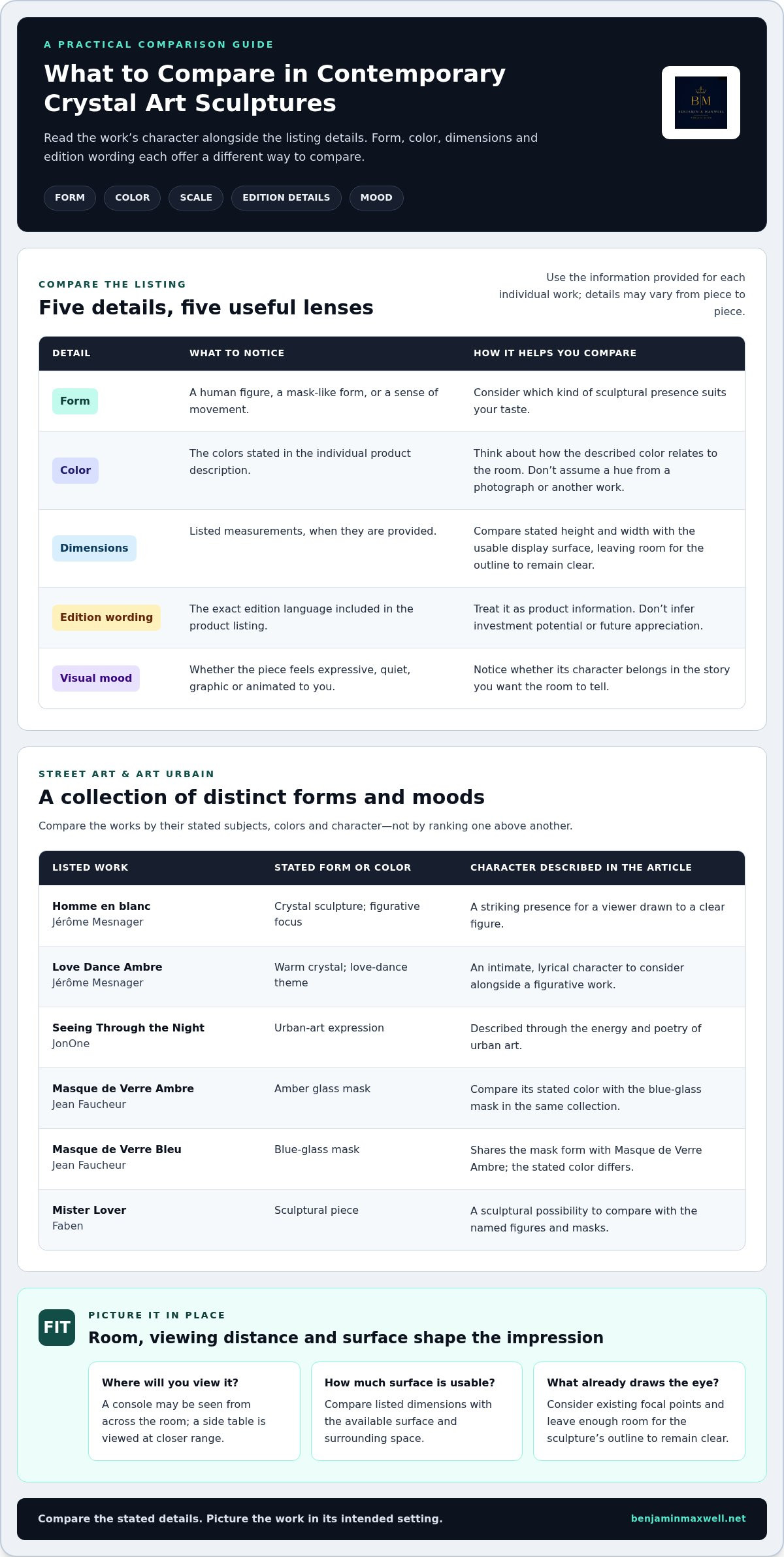
Think about where you’ll view the sculpture from, how much surface is available and whether another focal point already draws the eye. A piece on a console may be seen from across the room; one on a side table is viewed at closer range. Compare the listed dimensions with the usable surface and surrounding space. Leave enough room around the sculpture for its outline to remain clear.
Daum’s artistic heritage draws on École de Nancy, Art Nouveau and Art Deco, alongside collaborations with artists. Its handcrafted glass shows how a glassmaking tradition can inform contemporary artistic expression. For broader context, explore the history and evolution of glass art.
Let the sculpture’s presence matter more than perfect coordination. A considered contrast in shape or color can bring character to a room, while an appropriate surface and clear sightline help the work hold its own. As you compare contemporary crystal art sculptures, picture each one in place and ask whether its mood belongs in the story you want the room to tell.
What to Compare in Contemporary Crystal Art Sculptures
Separate your visual response from the facts provided in each listing. A sculpture can feel distinctive and still sit naturally in a room when you consider its scale and placement alongside its shape and mood. Compare like with like, using the details available for each work. Treat edition wording as product information, not a promise of future value.
| Detail | What to compare |
|---|---|
| Form | Notice whether the work presents a human figure, a mask-like form or a sense of movement. |
| Color | Compare the colors stated in each product description and consider how they relate to the room. |
| Stated dimensions | Use listed measurements to judge the work’s footprint and height against the display surface. |
| Edition wording | Read the exact wording as a product detail. Don’t infer investment potential or future appreciation. |
| Visual mood | Ask whether the piece feels expressive, quiet, graphic or animated to you. |
Read form and color as part of the work’s character
A human figure, as suggested by the title Homme en blanc, offers a different point of focus from a mask or a form led by movement. Consider which kind of presence suits your taste rather than treating one form as inherently more suitable. Color can sharpen that distinction. Use the individual listing’s description instead of assuming a hue from a photograph or from another work in the collection.
Use listing details to judge scale
Dimensions are supplied for some listed works, but not necessarily every item in the collection. Where measurements are provided, compare the stated height and width with the usable surface. Allow room around the sculpture so its outline remains visible. A distinctive piece can feel integrated when its scale and position work with the surrounding objects.
For a closer look at the range of forms and moods, browse the Street Art & Art Urbain selection and compare the individual listing details.
Standout Contemporary Crystal Art Sculptures in Street Art & Art Urbain
The Street Art & Art Urbain collection brings together a curated selection of urban art with an expressive, contemporary character. The listed works offer different ways to bring that sensibility into a home, from figurative forms to masks and pieces described through movement, energy or poetry. Compare their stated subjects and colors to find a mood that feels personal, rather than ranking one work above another.
Compare figurative, movement-led and graphic expression
Homme en blanc de Jérôme Mesnager is a crystal sculpture with a striking presence, suited to a viewer drawn to a clear figurative focus. Another work by the artist, Love Dance Ambre de Jérôme Mesnager, evokes a love dance in warm crystal. Its stated theme gives it a more intimate, lyrical character to consider alongside the first piece.
Seeing Through the Night de JonOne is described through the energy and poetry of urban art. That offers a different point of comparison: instead of centering on a figure or a dance, consider whether its urban mood speaks to you.
Consider color and sculptural character
Masque de Verre Ambre de Jean Faucheur is an amber glass mask sculpture. Its counterpart, Masque de Verre Bleu de Jean Faucheur, is described as a blue-glass mask. Compare the stated colors to consider how each might relate to the tones already present in your room. Their shared mask form also gives you a clear point of visual connection.
Mister Lover de Faben adds another sculptural possibility. Its listing identifies it as a sculptural piece, offering a useful contrast with the named figures and masks without requiring assumptions about its material or dimensions. Together, these examples show how contemporary crystal art sculptures can express distinct subjects and moods within one curated selection.
Explore the Street Art & Art Urbain collection to compare the listed works and discover which artistic character draws you in.
Choose and Display Your Contemporary Crystal Art Sculpture with Confidence
A short, deliberate review can help turn a shortlist into a confident choice. Consider the room and sculpture together, then rely on each product listing for exact details. Don’t assume that works share the same materials, dimensions or edition format. A thoughtful position can give a well-chosen piece a clear presence without requiring it to match every object around it.
- Identify the room. Decide where the sculpture will live and how people will encounter it, whether from across a living room or close to a console.
- Choose a visual mood. Consider whether you’re drawn to a figurative, graphic or movement-led expression, and how that character suits the space.
- Compare scale. Measure the usable display surface and compare it with the sculpture’s listed dimensions. Consider how much room its form needs around it.
- Review listing details. Read the stated material, dimensions and edition wording for each shortlisted work before making a final comparison.
Avoid common selection mistakes
Color can make an immediate impression, but it shouldn’t be the only deciding factor. Consider how form and surroundings shape the overall effect. A color that appeals on its own may feel different beside existing furnishings or artwork. Don’t assume that all contemporary crystal art sculptures share the same dimensions, materials or edition format. Let each individual listing guide your understanding of the work.
Move from shortlist to selection
Take a small shortlist back to the intended display location. Picture each piece on its planned surface, with a clear sightline and enough visual space for its shape to register. If measurements are listed, compare them with the available surface and the space around it. This helps you judge whether the sculpture feels at ease in the room, rather than crowded by nearby objects or lost among competing focal points.
When one work continues to hold your attention, let its character and the listing details support your decision. Browse the Street Art & Art Urbain collection and select the piece that speaks to you and your space.
Let the Right Piece Become Part of Your Home
Choosing art is the beginning of a relationship with the space around it. As you consider contemporary crystal art sculptures, notice which work continues to hold your attention, not simply which makes the strongest first impression. Benjamin & Maxwell curates art, décor and luxury furnishings for considered interiors, while Daum brings handcrafted glass together with artistic design.
Imagine the piece becoming part of your home’s daily rhythm: a distinct presence you encounter in passing, then return to with fresh appreciation. Let your response guide the choice, supported by the practical details in each listing. When you’re ready to discover the work that feels most resonant, explore the Street Art & Art Urbain collection. Choose the sculpture that feels right for your space.
Frequently Asked Questions
What makes a crystal art sculpture contemporary?
A contemporary crystal art sculpture pairs crystal glass with an artistic approach that feels of its time, expressed through form, subject or visual treatment. The material alone doesn’t make a work contemporary; its artistic language matters, too. A figurative piece and an abstract, movement-led work can both feel contemporary while creating different impressions. Look for the artist’s stated concept and the visual choices that distinguish the sculpture.
Can contemporary crystal art sculptures work in a minimalist room?
Yes. In a minimalist room, a sculpture can serve as a considered focal point without creating a crowded display. Try picturing a single expressive work on a clear console or shelf, with enough surrounding space to keep the room visually calm. If the room has a restrained palette, decide whether you want the sculpture to echo those tones or create a deliberate contrast through its stated color or form.
How do I compare limited-edition sculpture listings?
Compare the exact edition wording shown in each listing instead of assuming that limited editions are described or numbered in the same way. Note the artist and work title alongside any stated material and dimensions, so you can distinguish pieces accurately while browsing. Edition language is a product detail, not evidence of future value. Focus on the work’s artistic character and how it suits your collection.
How do I choose the right size crystal sculpture for a room?
Start by measuring the display area, then use the sculpture’s listed dimensions to judge how it may sit within that space. A simple paper outline marked to the listed footprint can help you assess the available surface before placing an order. Consider height as well as the base area, especially if the sculpture will sit beneath a shelf or near other objects.
Are crystal art sculptures mainly decorative or functional?
Crystal art sculptures are generally chosen for display, rather than assumed to be serving pieces. A sculpture’s artistic form may make it suitable for a console, shelf or display cabinet, but don’t infer that it can hold or serve anything from its appearance alone. If a work has a functional purpose, rely on its product description for that detail and intended use.

Article by
Spencer Kay
Spencer is the founder and CEO of Benjamin & Maxwell and has created the most advanced technology-based website in the furniture industry. He has extensive experience in both technology and business operations having started a number of technology companies. Spencer holds a BA Degree in Economics and an MBA in International Business
Disclaimer
Benjamin & Maxwell does not intend for any of our products to be used for any specific purpose.


