


The best care for a leather sofa begins before the first spill. For Italian leather sofas handcrafted with care, keep maintenance simple: dust with a soft cloth, blot spills promptly, and use a leather conditioner suited to the finish 1 to 2 times per year. The leather’s grain and surface treatment matter, so one cleaning method won’t suit every hide.
Choosing the sofa is just as personal. Custom orders can offer 100+ leather color options, while stitching and finish details shape the character of the piece. Italian origin alone doesn’t tell you how a leather couch will age; the hide, tanning method, and protective finish all play a part.
This guide explains how to care for an Italian leather couch, what common leather grains and tanning methods mean, and how to consider color and stitching choices. You’ll learn which qualities may suit your home and how thoughtful care can help maintain a sofa’s appearance over time.
Key Takeaways
- Match cleaning and conditioning to the leather’s finish to care for the sofa without relying on a one-size-fits-all routine.
- Consider how leather grade, color, stitching, and configuration work together before choosing a custom look.
- Learn how grain and tanning shape leather’s surface, character, and aging.
- Recognize the details of handcraftsmanship that can help you assess a sofa beyond its Italian origin.
1. Can I custom order a leather sofa in specific colors and stitching?
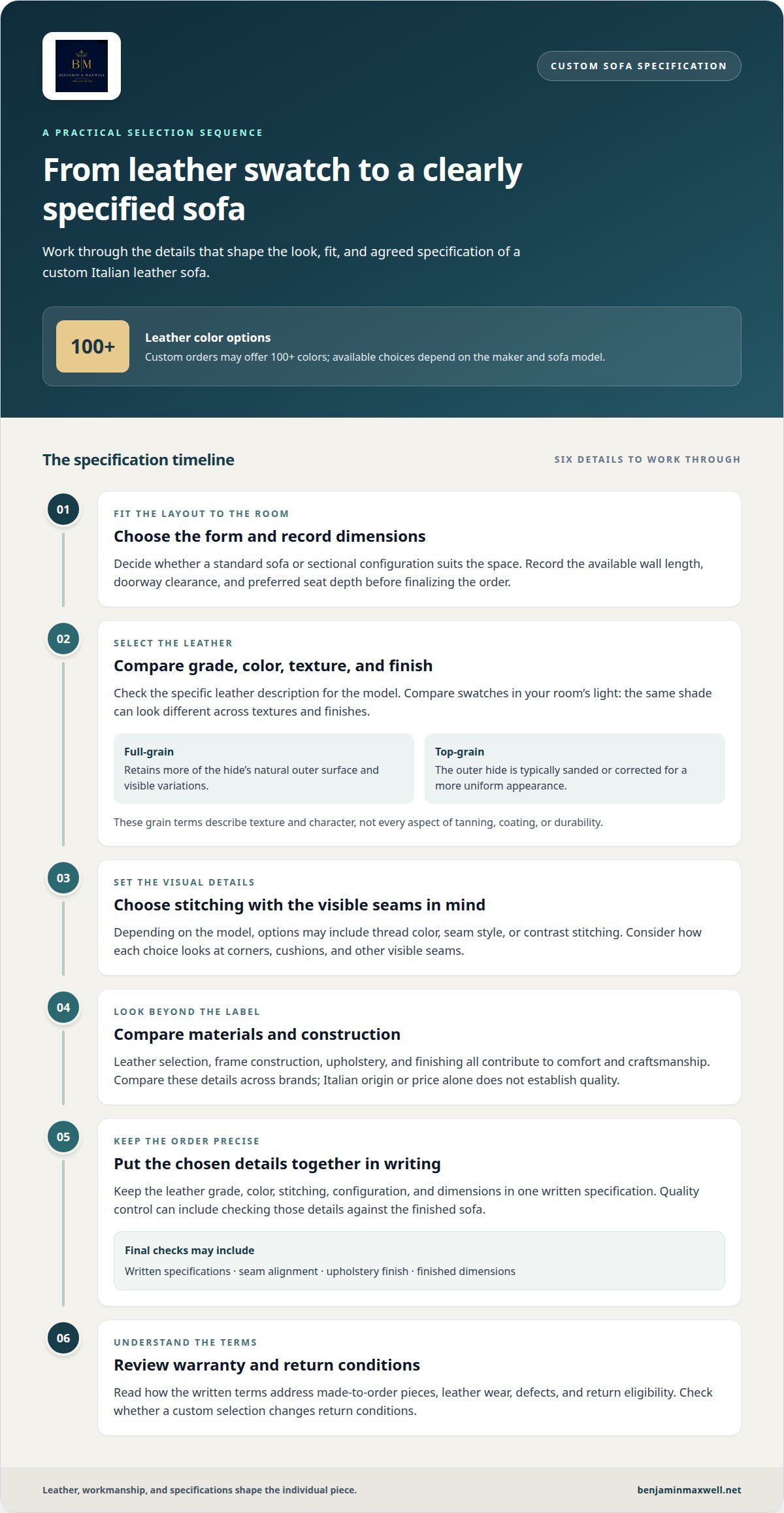
Yes. Custom orders can offer 100+ leather color options, with choices depending on the maker and sofa model. A custom specification may include leather grade, color, stitching, configuration, and dimensions. Compare swatches in your room’s light, since the same shade can appear different across textures and finishes. This helps narrow the palette before settling on a piece of luxury furniture.
Leather affects a sofa’s appearance and feel, while stitching adds a distinct finish. Depending on the model, options may include thread color, seam style, or contrast stitching. Consider how each choice looks at corners, cushions, and visible seams. A written specification of the leather, color, stitching, and configuration helps keep the chosen design clear.
Quality depends on more than Italian origin or price. Leather selection, frame construction, upholstery, and finishing all contribute to comfort and craftsmanship, so compare those details across brands rather than relying on a label alone. A higher price may reflect the chosen leather or customization, but price by itself doesn’t establish quality. For authentic Italian leather furniture, examine the material and construction information provided for the specific model.
Made-to-order furniture can be built around a chosen layout, such as a standard sofa or sectional configuration. Dimensions matter: record the available wall length, doorway clearance, and preferred seat depth before finalizing the order. Manufacturers can then assess whether the selected form and measurements work together. Quality control can include checking the written specifications, seam alignment, upholstery finish, and finished dimensions against the order.
Before buying, read the written warranty and return terms, especially how they address made-to-order pieces, leather wear, defects, and return eligibility. These details define what protection applies and whether a custom selection changes return conditions. Keep the order’s color, grade, stitching, and dimensions together in writing; that record makes the final sofa easier to assess against the agreed design.
2. What is the difference between top-grain and full-grain Italian leather?
Full-grain leather retains more of the hide’s natural outer surface, including visible markings and variations. Top-grain leather also comes from the outer hide, but its surface is typically sanded or corrected for a more uniform appearance. The difference is in texture and character, not simply quality. Choose based on the look and feel you prefer.
Top-grain leather can have a smoother, more consistent finish across cushions and separate sofa pieces. Full-grain leather shows more of the hide’s natural pattern, so markings can vary across the surface. These terms describe grain categories, but not every aspect of tanning, coating, or durability. Look for the specific leather description for the model, not just the word “premium.”
Corrected-grain leather has a surface altered to reduce visible imperfections, while split leather comes from a lower layer of the hide. “Genuine leather” is a broad description, not a precise grade. Compare texture, consistency, and finish across the sofa’s arms, cushions, and seat.
How much do handcrafted Italian leather sofas cost in the United States? Prices vary by model, leather, configuration, and upholstery choices, so there is no single price for every Italian sofa. A brand name alone does not explain the cost.
Which Italian brands make handcrafted leather sofas? Natuzzi, Cattelan Italia, and Bonaldo are Italian furniture names, but a brand alone doesn’t establish the leather grade or handwork of a particular sofa. Compare the construction and upholstery details of each model; Italian furniture brands provide a useful starting point for exploring available names.
Where can I buy authentic Italian leather sofas in the US? Choose a US retailer that identifies the sofa’s maker and describes its materials and construction, so you can assess the specific piece rather than relying on an “Italian” label alone.
How long does delivery take for Italian leather sofas shipped to the US? A sofa shipped from Italy may take 6 to 9 months to arrive in North America, including the United States. Made-to-order production and overseas shipping both shape the wait.
3. Italian leather quality and tanning
Italian leather quality reflects the hide, tanning method, and finish, rather than origin alone. Traditional tanning methods for Italian sofas take months rather than days. That extended process gives makers time to develop the leather’s intended character. The resulting surface may feel supple, structured, or visibly natural, depending on its treatment. These qualities influence how a sofa presents in a contemporary interior and responds to everyday use.
Vegetable tanning can take up to 60 days. Plant-derived tannins transform the hide and give the finished leather its own surface character. With use, its appearance can develop in ways that differ from leather finished for a more uniform look. Compare samples by touch and appearance, then consider which qualities suit your household. The word “Italian” describes origin, while the tanning method explains one part of the material’s story.
Finishes affect both appearance and practical care. A surface that preserves natural markings differs from one treated for a more even color. Examine a sample under the light used in your room, then compare it with the sofa’s visible sides and cushions. On a sectional, related panels meet across connected modules, making shifts in shade or texture more apparent. This close look helps clarify the visual character you prefer.
Assess quality by tracing the material from hide to finished upholstery. First, identify the leather description; next, learn the tanning approach; then compare the finish across exposed panels. Check whether the stated material applies to the entire sofa or only selected areas. Italian leather sofas handcrafted by skilled makers can still differ in these choices, so the details of the specific piece matter more than a broad label.
When choosing an Italian leather sofa for an interior, consider how its material and shape work together. A modular design may highlight the joins between upholstered panels, while a simpler silhouette can draw attention to the leather’s texture. Compare leather and fabric versions if both are available, and consider how each relates to the room’s palette and everyday use. The right choice is the one whose form and finish suit your space.
4. What defines a handcrafted Italian leather sofa?
Handcraftsmanship describes the work involved in making a sofa, not simply its country of origin. Skilled makers may cut hide panels, align patterns, sew seams, and upholster the frame. Each stage affects the sofa’s appearance and feel. Methods vary by maker and model, so “handcrafted” alone does not explain every construction detail.
Look closely at the upholstery. Even seam lines and neatly finished cushion edges can indicate careful assembly; well-aligned panels around an arm or corner create a clean silhouette. Natural hide markings may vary, and cutting determines where they appear. These visible details help you assess finishing, but no single surface feature proves overall quality.
Construction matters, too. A sofa brings together a frame, padding, suspension, upholstery, and finishing. Examine how the cushions sit against the frame, whether seams meet cleanly, and how the back and sides are finished. With a sectional, check the connections between modules, where upholstery and alignment are especially noticeable.
To assess a handcrafted claim, review the model’s material and construction information alongside its visible finish. Look for details about the frame, upholstery, stitching, and cushions instead of relying on a label alone. View the sofa from the front, side, and back to assess its finish and decide which details matter most in your interior.
Explore sofas and furnishings to see how upholstery details contribute to a room’s character.
Benjamin & Maxwell: Sofas, chairs, pouf, dining room tables, consoles, TV stands, wall units, cocktail tables
Benjamin & Maxwell offers a considered range of furnishings for shaping a comfortable, cohesive interior. If you’re weighing sofa styles alongside the room’s other pieces, explore sofas, chairs, poufs, and tables, as well as Cattelan Italia Furniture. The In Home Visualizer helps you see how specific pieces may fit within your living space.
Use the material and construction details above to guide your selection, then consider how a sofa’s shape relates to the rest of the room. Benjamin & Maxwell’s range also includes consoles, TV stands, wall units, and cocktail tables, making it easy to consider furnishings together.
Contact Benjamin & Maxwell to discuss your furniture selection.
Choose a Sofa That Belongs in Your Home
The right sofa should feel at home in your space well beyond the day it arrives. Let the qualities that matter to you guide your choice: the leather’s character, the design’s lines, and how the piece fits the room. Italian leather sofas handcrafted by skilled makers can bring an artistic presence to an interior, but the right fit depends on your own needs and surroundings.
Benjamin & Maxwell brings together furnishings and home accents for a thoughtfully composed interior, including Daum Crystal. Take the next step when you’re ready to explore pieces for your home or discuss your selection. Contact Benjamin & Maxwell today, and move toward a space that feels distinctly your own.
Benjamin & Maxwell and Italian Leather Sofas
Benjamin & Maxwell offers sofas as part of its range of luxury furniture and home decor. After learning what to look for in handcrafted Italian leather sofas, turn to the collection to explore seating alongside chairs, poufs, and other furnishings.
For a broader room plan, use the In Home Visualizer to see furniture and décor in your space. Benjamin & Maxwell also offers Italia Lounge furniture and pieces for dining and living areas, including tables, consoles, TV stands, wall units, and cocktail tables.
Frequently Asked Questions
How do I clean and maintain an Italian leather couch?
For leather care, follow the maker’s instructions and dust with a soft cloth. Blot spills rather than rubbing them into the surface. Avoid using products intended for other materials, since leather finishes can respond differently. If using a leather conditioner, choose one suited to the sofa’s finish and test it on an inconspicuous area first.
What is the difference between top-grain and full-grain Italian leather?
Full-grain leather retains more of the hide’s natural surface, while top-grain leather is typically sanded or corrected for a more even appearance. The difference can be noticeable across broad seat cushions and arms. Full-grain shows natural variation; top-grain often looks more consistent. Neither term alone describes the tanning, coating, or construction of a particular Italian leather sofa.
Are Italian leather sofas suitable for homes with children or pets?
They can suit busy homes when the sofa’s finish and placement match everyday use. Choose a surface whose texture and color work with your household, and consider placing a sofa away from pet claws, food, and frequent spill zones. Keep a soft cloth nearby for prompt spill care. Leather still requires attentive upkeep, so household habits matter as much as the sofa’s appearance.
Can I custom order a leather sofa in specific colors and stitching?
Custom orders may offer choices such as leather color, grade, stitching, and sofa configuration. Compare the proposed thread color with the leather and consider how seams will look on cushions, arms, and corners. Record selections, dimensions, and configuration in the order details to keep a clear reference for the intended design.
How can I verify a sofa is made in Italy?
Look for the specific sofa’s country-of-origin statement in its product information and documentation. Distinguish a maker’s Italian identity or design heritage from where that sofa was manufactured. A brand name or “Italian design” description alone does not establish manufacturing origin. Product details should identify the sofa itself, not rely on general claims about a brand’s range.
What types and grades of leather are used in Italian sofas?
Italian sofas may use full-grain, top-grain, corrected-grain, or split leather, with finishes that affect appearance and feel. Full-grain retains more natural surface character; corrected surfaces are treated for greater visual uniformity. “Genuine leather” is a broad label, not a precise grade. Compare the stated leather type, finish, and upholstery coverage, including whether leather is used on every panel or only selected areas.

Article by
Spencer Kay
Spencer is the founder and CEO of Benjamin & Maxwell and has created the most advanced technology-based website in the furniture industry. He has extensive experience in both technology and business operations having started a number of technology companies. Spencer holds a BA Degree in Economics and an MBA in International Business
Disclaimer
Benjamin & Maxwell does not intend for any of our products to be used for any specific purpose.


