


A glass piece can serve as both a functional object and a lasting focal point. Luxury glass gallery pieces range from art glass and vessels to bowls, platters, and sculptural forms, each bringing a distinct presence to a room or table. Handcrafted designs, such as the stained-glass pieces from Tiffany Light House, demonstrate how colored glass can illuminate an interior while serving as an artistic centerpiece. The right choice depends on whether you want to use it, display it, or add it to a considered collection.
Beyond appearance, form, finish, and intended use all shape how a glass piece works in your home. This guide explores art glass and the differences between vessels, bowls, and platters, then explains how to assess product listings and sale information. Use it to compare expressive display pieces with elegant objects suited to everyday settings, keeping craftsmanship and enduring style in view.
Key Takeaways
- Recognize how artistic technique and form shape the character of a glass artwork.
- Choose a vessel by considering its visual presence and the role it will play in your space.
- Compare bowls and platters by their design, scale, and intended use before selecting a piece.
- Read product and sale listings carefully to understand how current prices and reductions are presented.
Art glass
Luxury glass gallery pieces range from sculptural artworks to vessels, bowls, and paperweights. Their forms and techniques reflect a long tradition, from Venetian glassmaking to contemporary studio work.
Available Glass Artwork Types
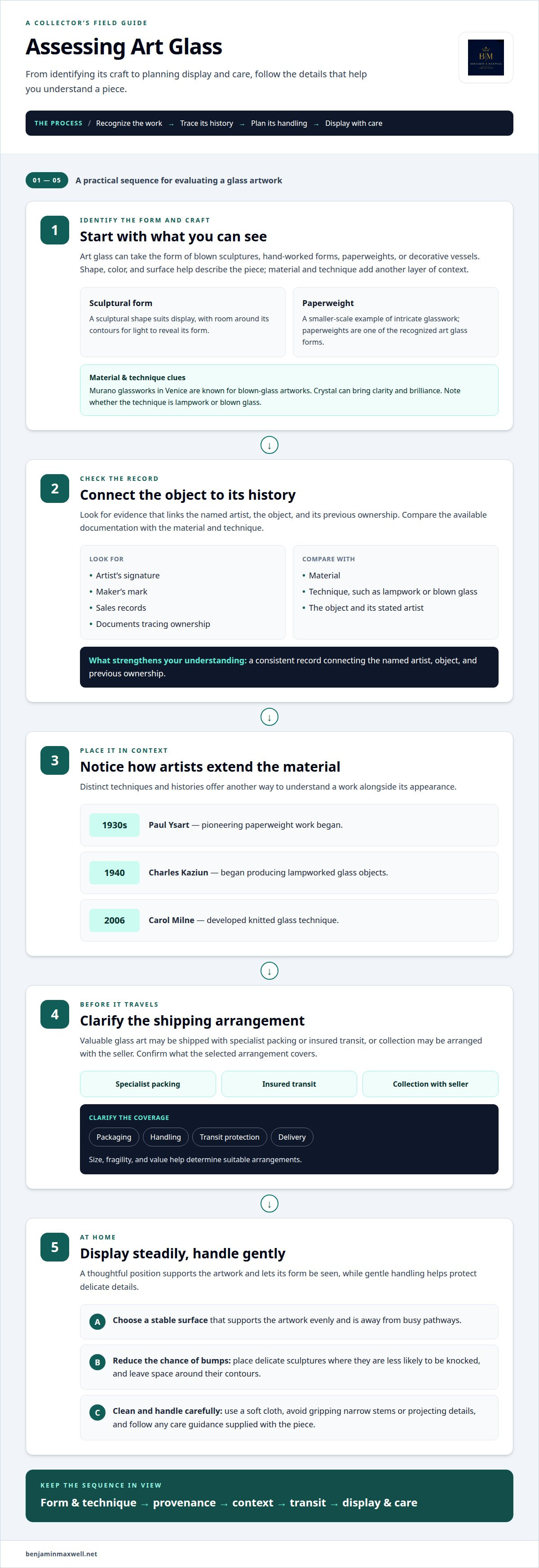
Art glass includes blown sculptures, hand-worked forms, paperweights, and decorative vessels. Murano glassworks in Venice are known for blown-glass artworks, while crystal can bring clarity and brilliance to a piece. Consider its shape, color, and surface: a sculptural form suits display, while a paperweight offers a smaller-scale example of intricate glasswork.
To assess authenticity and provenance, look for an artist’s signature, maker’s mark, sales records, and documents tracing ownership. Compare those details with the artwork’s material and technique, such as lampwork or blown glass. A consistent record connecting the named artist, object, and previous ownership gives you a stronger basis for understanding its history.
Shipping arrangements for valuable glass art may include specialist packing, insured transit, or collection arranged with the seller. Clarify what each option covers, including packaging, handling, transit protection, and delivery. The artwork’s size, fragility, and value help determine suitable arrangements, so review those details before purchase.
Display and Care
Choose a stable display surface that supports the artwork evenly, away from busy pathways. Position delicate sculptures where they are less likely to be bumped, and leave space around their contours so light can reveal their form. Clean with a soft cloth and handle gently; avoid gripping narrow stems or projecting details. Follow any care guidance supplied with the piece.
Technique also helps distinguish one work from another. Paul Ysart’s pioneering paperweight work began in the 1930s, while Charles Kaziun began producing lampworked glass objects in 1940. Carol Milne developed knitted glass technique in 2006. These examples show how artists have extended the material’s possibilities, giving collectors distinct methods and histories to consider alongside appearance.
Art glass vessels
Glass vessels bring sculptural form into a room while retaining a recognizable purpose. Vases can emphasize height, silhouette, color, or surface, even without flowers. Examples range from blue Murano and turquoise Italian glass to brown designer and yellow Murano vases. These variations show how color and shape define a vessel’s character.
Venetian glassmaking placed increasing emphasis on aesthetics by the 13th century. During the Renaissance, dated from 1300 to 1700, luxury glassmaking flourished in Europe, especially Venice. That heritage still informs how people view hand-blown vessels: each curve, proportion, and color becomes part of the overall composition. Look closely at the neck, body, and base, since their relationship shapes the piece’s visual balance.
When building a collection, establish a point of connection without making every vessel identical. A group might share a color family, such as blue and turquoise, while varying in height and outline. Alternatively, a single gold-toned hand-blown vase can serve as a focal point among quieter decor. Decide whether each piece should stand alone or contribute to a deliberate arrangement.
Placement changes how a vessel reads. On a console, a tall form draws the eye upward; on a dining table, a lower silhouette can preserve an open view across the surface. Leave each piece room to be seen and consider its background: a pale vase may stand out against a darker wall, while clear glass can catch light near a window. Keep delicate forms away from objects that are frequently handled.
Before choosing, compare the vessel’s proportions with its intended display location. Measure the available surface and nearby objects, then consider how the glass looks from different viewpoints. A narrow-necked vase, a broad-bodied form, and a sculptural vessel each create a different impression. For lasting appeal, choose a shape and palette suited to the room rather than relying on color alone.
Bowls and platters
Glass bowls and platters combine practical form with decorative presence. A shallow platter can frame a table setting, while a deeper bowl adds volume to a display. Consider the shape, rim, surface, and motif together. These details affect how a piece relates to other objects and the wider interior, whether it stands alone or joins a considered arrangement.
Named examples show the breadth of design. A vintage Lalique Stresa dish features a four-leaf clover form, while the Lalique Honfleur bowl has frosted crystal, a geranium leaf motif, and a scalloped rim. Their details create distinct visual effects: one emphasizes a recognizable outline; the other combines surface treatment with botanical ornament. Features like these can guide a choice more meaningfully than color alone.
Scale matters in both display and use. The Honfleur bowl measures 8.5 inches, while a Kosta Boda Cancan art glass bowl by Kjell Engman measures 9 inches. Compare a piece’s dimensions with the surface where it will sit, leaving room to appreciate its rim and silhouette. A larger platter can become a central accent; a smaller bowl may suit a side table or a more intimate grouping.
When displaying several glass objects, vary their heights and shapes instead of lining up matching forms. A patterned bowl can provide a focal point beside simpler vessels, while a platter introduces a broad horizontal shape. Murano glass offers another point of comparison through its Venetian heritage, but a successful grouping depends on balance among color, proportion, and ornament.
First decide whether the piece will serve, display, or do both. Then consider its motif, finish, and scale in the intended setting. The Stresa clover design, Honfleur’s scalloped edge, and Cancan’s art glass form offer three distinct starting points. Let one defining feature lead, and keep surrounding objects restrained enough for the bowl or platter to remain distinct.
Product prices and sale items
Luxury art glass does not have a dependable investment value based on category alone. Resale prospects depend on factors such as the artist, rarity, condition, provenance, and collector demand. A striking form or ancient-looking finish may appeal aesthetically, but appearance alone does not establish future value.
Look at a listing as a record of a particular object, not a promise of what it may later sell for. For example, works by Harvey Littleton and Lino Tagliapietra appeared in recorded sales in April 2014 and January 2023. Those dates identify individual transactions, but a past sale does not establish a standard value for another work by the same artist.
Compare like with like. Start with the maker and artwork title, then consider materials, technique, dimensions, condition, and provenance documents. A signed work with a clear ownership history differs from an unsigned piece, even if their colors or shapes seem similar. For a vintage vase or paperweight, note whether the listing describes chips, repairs, or other condition details.
A sale reduction shows a change from a previously listed price; by itself, it is not evidence of investment potential. Read the listing for the item’s identity, condition, and stated reduction, and distinguish those details from an independent appraisal or auction result. A sale price reflects a transaction at a particular time, while future resale depends on the object and market at that point.
For a considered purchase, decide whether display value or potential resale matters most. If the artwork is primarily for your interior, prioritize its form, palette, and relationship to the room. If collecting is central, give more weight to attribution, provenance, condition, and comparable works. Explore decorative glass pieces in forms suited to your home.
Treat each listing as specific to the item. Compare its stated condition and details before deciding whether the price suits your purpose.
Benjamin & Maxwell: Kosta Boda Glassware
Benjamin & Maxwell offers Kosta Boda glassware for those drawn to expressive glass with a considered place in the home. Explore glass bowls, vases, statues, and figurines as display pieces or accents, and consider how their forms relate to your furnishings. Daum Crystal offers another direction for those seeking distinctive crystal, while luxury furniture and home decor can help create a cohesive setting around a chosen glass piece.
Turn to these offerings when you’re ready to move from understanding glass styles to choosing pieces for your own rooms. Consider whether you want a single focal object, a decorative grouping, or glassware that complements the wider interior. Contact Benjamin & Maxwell to discuss your interests.
Choose a Piece That Feels at Home
A glass artwork earns its place through more than its material or maker. Consider how its shape, color, and presence will work in your room, and let personal meaning guide your choice. The luxury glass gallery pieces that remain compelling are those you’ll be glad to see each day, whether chosen as a singular accent or as part of a considered interior.
Benjamin & Maxwell also offers Daum Crystal and Cattelan Italia furniture, with an In Home Visualizer to help you picture furnishings in your space. These options can help shape the setting around a glass piece while keeping the artwork at the heart of your decision.
Contact Benjamin & Maxwell about glass to continue exploring pieces suited to your home. Let your next choice become a distinctive part of the room’s story.
Explore Luxury Glass Gallery Pieces at Benjamin & Maxwell
Benjamin & Maxwell brings together glass bowls, vases, statues, and figurines, including Daum Crystal and Kosta Boda glassware. Explore the collection to find pieces suited to your home.
You can also browse Kosta Boda home decor and gifts alongside luxury furniture and home decor, from sofas and tables to consoles and outdoor furniture. Use the In Home Visualizer to consider how a piece may fit your space.
Frequently Asked Questions
Which artists and brands are known for luxury art glass?
Artists associated with luxury art glass include René Lalique, Dale Chihuly, and William Morris. Recognized makers and brands include Daum, Kosta Boda, and Lalique. Their work encompasses sculptural glass, decorative vessels, and collectible objects. For an individual piece, connect its artist or maker attribution with its form and documented history; a brand name alone does not establish that every object shares the same authorship or value.
How much do luxury glass art pieces cost?
There is no single price for luxury glass art; each listing describes a particular object. A current asking price differs from a recorded auction result, and neither alone establishes what another piece should cost. For a useful comparison, match the artist or maker and object type, then review the listing’s price and whether it identifies the piece as a sale item.

Article by
Spencer Kay
Spencer is the founder and CEO of Benjamin & Maxwell and has created the most advanced technology-based website in the furniture industry. He has extensive experience in both technology and business operations having started a number of technology companies. Spencer holds a BA Degree in Economics and an MBA in International Business
Disclaimer
Benjamin & Maxwell does not intend for any of our products to be used for any specific purpose.


