

A well-placed wood bench gives gallery visitors a place to pause without pulling focus from the art. Per/Use wood benches for art gallery seating can suit different exhibition spaces, depending on their dimensions, placement, and how visitors move through the room.
Choosing seating involves more than adding a place to rest. A bench should sit comfortably alongside the artworks, support the intended visitor experience, and keep displays accessible.
This guide explains how wood benches can meet gallery seating needs and what to consider when choosing one, from scale and circulation to material and visual presence. It also looks at how Per/Use furniture can fit into a thoughtfully composed interior.
Key Takeaways
- Plan bench placement around sightlines and visitor movement so seating supports the exhibition without interrupting it.
- Consider a bench’s scale, material and visual presence in relation to the artworks and the gallery’s overall character.
- Historical gallery examples show how seating can become part of an exhibition’s design, not merely a place to rest.
- Explore Benjamin & Maxwell’s furnishings and home décor when considering how considered design can shape the experience of a space.
Per/Use wood benches for art gallery seating
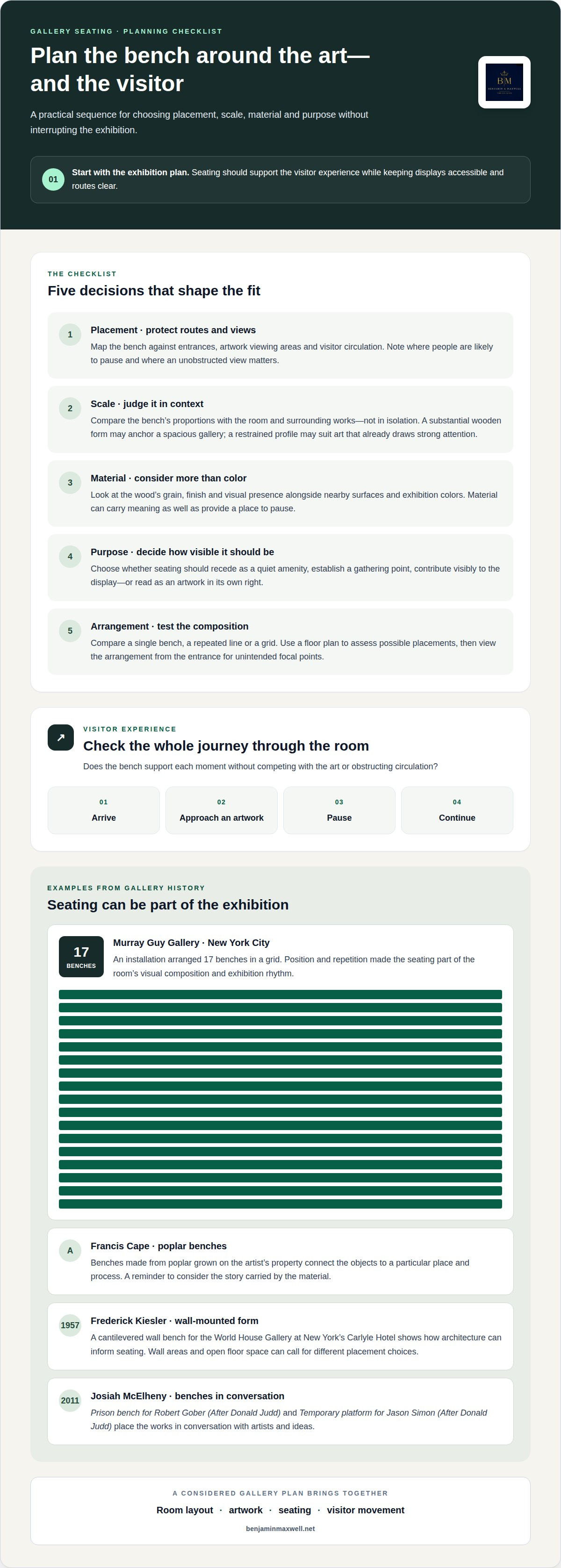
A gallery bench can shape how visitors encounter an exhibition. At Murray Guy Gallery in New York City, an installation arranged 17 benches in a grid, making seating part of the room’s visual composition. The example shows that a bench need not disappear into the background. Its position, repetition and relationship to the artwork can contribute to the exhibition’s rhythm.
Material can carry meaning as well as offer a place to pause. Artist Francis Cape made exhibition benches from poplar grown on his property, connecting the objects to a particular place and process. For galleries considering wood seating, the takeaway is to look beyond color: grain, finish, and the wood’s visual presence all affect how a bench relates to the art and architecture.
Seating can become part of the exhibition
Gallery history offers examples of benches treated as designed objects. Frederick Kiesler created a cantilevered wall bench for the World House Gallery at New York’s Carlyle Hotel in 1957. Its wall-mounted form differs from a freestanding bench, illustrating how the room’s architecture can inform seating. A gallery with open floor space may approach placement differently from one whose exhibition plan relies on clear wall areas.
Josiah McElheny’s Prison bench for Robert Gober (After Donald Judd) and Temporary platform for Jason Simon (After Donald Judd) both date to 2011. Their titles place the works in conversation with artists and ideas. These examples show why galleries should consider whether a bench is meant to read as a quiet amenity, an element within the exhibition, or an artwork in its own right.
Choose for the room and its visitors
Start with the exhibition plan, not the bench. Mark where visitors are likely to pause, where an unobstructed view matters, and which routes need to stay clear. Then assess the bench’s visual weight in each spot. A substantial wooden form may anchor a spacious gallery, while a more restrained profile may work better where the artworks already draw strong attention.
Compare each option with the gallery’s practical needs and curatorial intent:
- Placement: Map the bench against entrances, artwork viewing areas and visitor circulation.
- Scale: Compare its proportions with the room and surrounding works, rather than judging it alone.
- Material: Consider how the wood’s grain and finish complement nearby surfaces and exhibition colors.
- Purpose: Decide whether seating should recede, establish a gathering point, or contribute visibly to the display.
- Arrangement: Test a single bench, a repeated line or a grid, as illustrated by Murray Guy Gallery.
Consider the visitor’s full experience: arriving, approaching an artwork, pausing, and continuing through the room. Does the bench support that sequence without competing with the art or obstructing circulation? Use a floor plan to compare possible placements, then view the arrangement from the entrance to see whether it creates an unintended focal point.
Wood benches can suit an exhibition precisely because they occupy a middle ground: functional seating, yet visually present. The 17-bench grid at Murray Guy Gallery demonstrates how repetition creates a deliberate arrangement; Cape’s poplar benches show how material can carry a story. Use those distinct examples as prompts, then select a form and placement suited to the gallery’s own architecture, artworks and visitor flow.
Benjamin & Maxwell: Daum Crystal
Benjamin & Maxwell offers Daum Crystal for those considering how selected objects can complement a thoughtfully furnished space. Bench choices depend on the gallery’s layout and exhibition, while crystal may suit a surrounding setting that brings decorative pieces together with furniture.
The selection also includes Cattelan Italia Furniture and Kosta Boda Glassware. For home interiors, the In Home Visualizer lets customers see how specific pieces fit into their living spaces. These offerings are distinct from gallery seating, but may be relevant when a project extends beyond the exhibition room.
Contact Benjamin & Maxwell to discuss its furnishings and decorative offerings.
Shape a More Considered Gallery Experience
Seating can shape how visitors pause, observe, and move through a gallery. Start with the character of the room and the role each piece should play. As you refine the plan, consider whether Per/Use wood benches for art gallery seating suit the setting, keeping the artworks and visitor experience at the center.
Benjamin & Maxwell’s furnishings and decorative offerings include Daum Crystal and Cattelan Italia Furniture. The In Home Visualizer helps customers see how specific pieces fit into their living spaces, offering a way to consider furnishings in context. Each serves a different purpose, but all reflect the thoughtful selection of objects for distinctive environments.
For a next step, explore the possibility of Per/Use furniture as part of your gallery plans and discuss your considerations directly. Contact Benjamin & Maxwell about gallery seating, and continue shaping a space that welcomes visitors while honoring the art.
Benjamin & Maxwell: Explore Per/Use Furniture for Gallery Seating
Benjamin & Maxwell offers Per/Use furniture, where you can explore Per/Use wood benches while planning seating for an art gallery.
When you’re ready to consider how gallery seating relates to a wider interior, explore Benjamin & Maxwell’s luxury furniture and home decor, including sofas, chairs, consoles, and cocktail tables.

Article by
Spencer Kay
Spencer is the founder and CEO of Benjamin & Maxwell and has created the most advanced technology-based website in the furniture industry. He has extensive experience in both technology and business operations having started a number of technology companies. Spencer holds a BA Degree in Economics and an MBA in International Business
Disclaimer
Benjamin & Maxwell does not intend for any of our products to be used for any specific purpose.


