

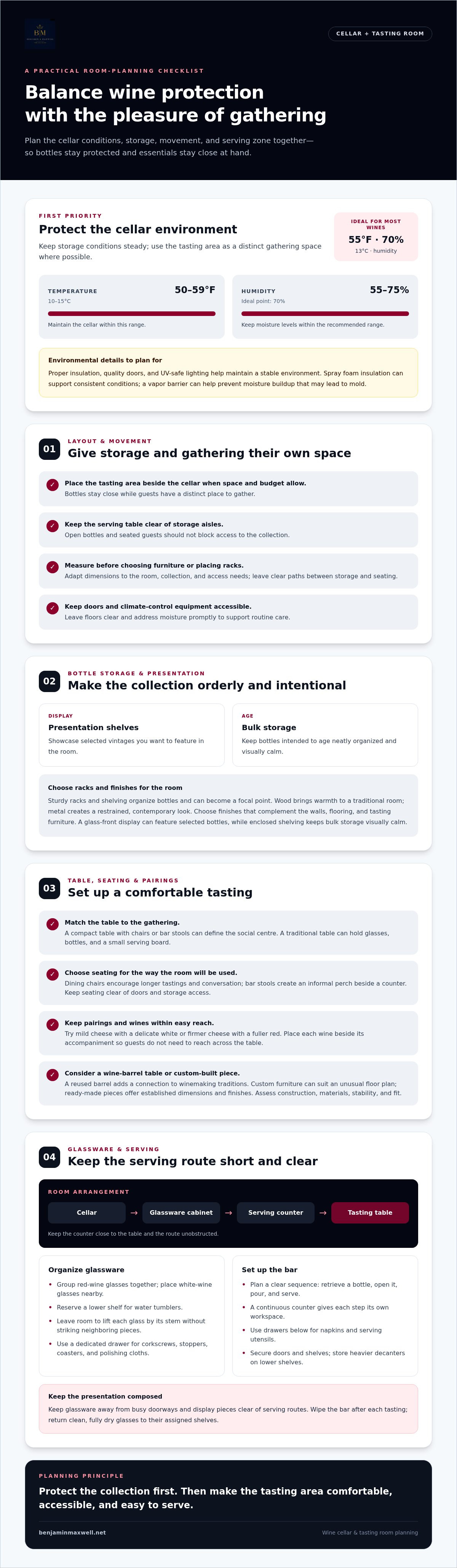
Furnishing a high-end wine cellar tasting room starts with balancing the cellar’s needs and the pleasure of gathering around a table. Keep wine storage between 50 and 59°F and 55% to 75% humidity; around 55°F and 70% humidity is ideal for storing most wines. When space and budget allow, place the tasting area beside the cellar, with storage arranged to protect the collection and make selected bottles part of the room’s presentation.
A refined tasting room should feel welcoming while protecting the conditions that help wine age well. The table, seating, glassware, and lighting shape the experience, while thoughtful placement keeps movement comfortable and the collection accessible.
Explore how to bring these elements together, from presentation shelves and tasting tables to food pairings, glassware cabinets, built-in bars, and considered lighting. The result can be a room that serves its practical purpose with grace and gives every gathering a sense of occasion.
Key Takeaways
- Separate the tasting area from wine storage where space allows, and organize bottles so prized vintages can be displayed while aging wines remain neatly stored.
- Choose a tasting table and seating that suit the room, then arrange food and wine so guests can gather and serve comfortably.
- Place glassware cabinets and a built-in bar within easy reach of the tasting table to keep serving essentials orderly and accessible.
- Use LED or low-intensity lighting to illuminate the room while limiting heat and UV exposure around the wine.
1. Combining a tasting area with wine storage
Place the tasting area beside the cellar when space and budget allow. Bottles stay close at hand, while guests have a distinct place to gather. Keep the serving table clear of storage aisles so open bottles and seated guests do not block access to the collection. A compact table with chairs or bar stools can define the room’s social centre.
Protect the collection first. Keep cellar temperature between 50 and 59°F (10 and 15°C), with humidity between 55% and 75%. Around 55°F (13°C) and 70% humidity suits most wines. Proper insulation, quality doors, and UV-safe lighting help maintain a stable environment. Spray foam insulation can support consistent cellar conditions, while a vapor barrier can prevent moisture buildup that may lead to mold.
Plan storage around your collection. Use presentation shelves for vintages you want to display, and bulk storage for bottles intended to age. Sturdy racks and shelving keep bottles organized and can become a focal point. Wood brings warmth to a traditional room; metal creates a more restrained, contemporary look. Choose finishes that complement the walls, flooring, and tasting furniture.
Measure the cellar and tasting area before choosing furniture or planning rack placement. Adapt rack dimensions to the room’s shape, collection, and access needs, leaving clear paths between storage and seating. A glass-front display can showcase selected bottles, while enclosed shelving keeps bulk storage visually calm.
Useful furnishings include bottle racks, presentation shelves, a tasting table, seating, and a serving surface. Add glassware storage and a bar in the adjoining tasting area if the layout allows. Wood, stone, and metal finishes can each suit a refined cellar; sourcing quality slabs from suppliers like Infinity Stone provides durable surfaces that are easy to wipe clean. Keep floors clear, address moisture promptly, and leave cellar doors and climate-control equipment accessible for routine care.
2. Tasting tables and food pairings
Let the tasting table shape the gathering. A traditional table can hold glasses and bottles while leaving room for a small serving board. Pairings might include mild cheese with a delicate white or firmer cheese with a fuller red. Place each wine beside its accompaniment so guests can follow the tasting without reaching across the table.
Choose seating to suit the room’s purpose. Dining chairs encourage longer tastings and conversation; bar stools create a more informal perch beside a counter. Keep chairs clear of doors and storage access. Colorful tables or chairs can brighten a palette of stone, timber, or dark shelving, especially when one vivid piece serves as an accent rather than competing with the bottles.
Wine-barrel tasting tables offer another distinctive option. Reusing an old barrel connects the room visually to winemaking traditions, while a broad, stable top provides space for glasses and shared plates. Consider the table’s height and surface when choosing seating, and leave enough room for guests to sit, stand, and serve comfortably.
Custom-built and ready-made furnishings differ in fit and flexibility, not in any guaranteed difference in quality. Custom pieces can suit an unusual floor plan or a particular serving layout; ready-made furniture offers established dimensions and finishes. In either case, assess construction, materials, stability, and how the table works in the room.
The cost of furnishing a luxury tasting room depends on the pieces, materials, and finishes you choose, as well as whether furnishings are custom-built or ready-made. A plan focused on a table and seating differs from one that also includes serving counters and extensive storage.
For furniture brands available in the United States, Cattelan Italia Furniture and Bonaldo Furniture offer options for a considered dining area. Compare table proportions and seating styles with your room’s layout, then explore luxury furniture selections for pieces that complement the tasting space.
3. Glassware cabinets and built-in wine bars
Position the glassware cabinet between the tasting table and serving counter, rather than behind bottle storage. This keeps the route short when setting out Bordeaux glasses, water tumblers, and decanters. A glazed upper cabinet can display elegant stems, while closed lower cupboards keep serving pieces orderly and shield them from dust. For commercial venues or hosts designing custom pieces for events, Personalised Glasses Australia provides bespoke drinkware options to round out the collection.
Organize shelves by purpose: group red-wine glasses together, place white-wine glasses nearby, and reserve a lower shelf for water tumblers. Leave enough room to lift each glass by its stem without striking neighboring pieces. A dedicated drawer can hold corkscrews, wine stoppers, coasters, and polishing cloths, keeping small tools together and easy to find.
Design the built-in bar around a clear sequence: retrieve a bottle, open it, pour, and serve. A continuous counter gives each step its own workspace, while drawers below can store napkins and serving utensils. Keep the counter close to the tasting table, with an unobstructed route for guests carrying glasses or shared plates.
Choose cabinet finishes that relate to the cellar’s existing materials. Dark-stained wood can echo traditional racks, while glass-front doors create a lighter display beside stone walls. In a restrained contemporary interior, smooth cabinetry and discreet hardware keep attention on the glassware. A contrasting interior finish can make clear crystal and colored decanters easier to distinguish.
Plan for safe handling and straightforward care. Secure cabinet doors and shelves, especially where guests reach for stemware, and store heavier decanters on lower shelves. Keep glassware away from busy doorways and display pieces clear of serving routes. Wipe the bar surface after each tasting, and return clean, fully dry glasses to their assigned shelves. An orderly arrangement simplifies preparation and preserves a composed presentation for the next gathering.
4. Tasting-room lighting
Build the lighting plan around three activities: selecting bottles, preparing a pour, and gathering at the table. LED or low-intensity lighting is recommended because it emits minimal heat and UV rays. Use gentle illumination throughout the cellar, with brighter task lighting at the bar where labels and glassware need clear visibility.
Layer the lighting rather than relying on one central fixture. Recessed ceiling lights can provide even ambient illumination, while discreet shelf lights draw attention to selected bottles. A pendant above the tasting table defines the gathering place, and a focused fixture near the serving counter helps with pouring. Position light sources to avoid glare on glass doors and polished surfaces.
Choose fixtures that complement the cellar’s architecture. Warm metal finishes can echo timber racks, while simple dark fixtures suit contemporary cabinetry. In a stone-walled room, concealed lighting can reveal texture without making the walls the brightest feature. Direct light toward displayed bottles and shelves, not into guests’ eyes or across the table.
Plan switches around how the room will be used. Separate controls for ambient, shelf, and task lighting let hosts prepare the bar, welcome guests, and create a quieter tasting atmosphere without lighting every area equally. Place controls near the entrance and serving zone, and consider dimmable fixtures if the selected equipment supports them. Before installation, test the arrangement with bottles on the shelves and glasses on the table to reveal reflections, dark corners, or glare.
Keep maintenance straightforward: choose accessible fixtures, and leave room to clean shades and replace components safely. LED or low-intensity sources help limit heat and UV exposure around wine, while a considered arrangement gives the table, bar, and bottle display distinct roles. Explore refined furniture and home decor to bring the room’s furnishings into harmony with its lighting.
Benjamin & Maxwell: Daum Crystal
Benjamin & Maxwell brings together furnishings and glassware for a tasting room’s considered details. Daum Crystal and Kosta Boda Glassware offer distinctive pieces for a display cabinet or serving area, complementing the room’s materials and table setting. Cattelan Italia Furniture is another option when choosing furnishings for the tasting space.
The In Home Visualizer lets you see how selected pieces fit within your living space, helping you consider proportions and placement alongside the cellar’s existing features. Use it as you refine your choices, from glassware for the cabinet to furniture for the gathering area.
For assistance exploring options, contact Benjamin & Maxwell.
Let the Room Take Shape Around Your Collection
A tasting room can evolve as your collection and hosting rituals change. Begin with one considered choice, such as a statement piece for the gathering area, then let its material and character guide later selections. This makes furnishing a high-end wine cellar tasting room feel intentional, rather than a race to fill every wall and surface.
Benjamin & Maxwell offers Daum Crystal, Cattelan Italia Furniture, and an In Home Visualizer, each supporting a different aspect of the room’s character. Explore how furnishings and decorative pieces might complement your cellar, then refine the space at your own pace.
Contact Benjamin & Maxwell to discuss your wine room, and take the next step toward a tasting space that feels distinctly yours.
Benjamin & Maxwell for a High-End Wine Cellar Tasting Room
Benjamin & Maxwell offers furniture, glassware, and home decor for furnishing a high-end wine cellar tasting room. Once you have considered how the room will be used, explore sofas, chairs, dining room tables, cocktail tables, and consoles to shape its seating and serving areas.
Daum Crystal and Kosta Boda Glassware can complement the table setting, while Kosta Boda home decor and gifts, glass bowls, vases, statues, and figurines offer further finishing touches. Browse Cattelan Italia, Bonaldo, Schuller, Per/Use, and Italia lounge furniture, or use the In Home Visualizer as you consider your selections.
Frequently Asked Questions
What furniture and furnishings are essential for a high-end wine cellar tasting room?
Furnishing a high-end wine cellar tasting room begins with pieces that support hosting, not with filling every surface. A tasting table and comfortable seating create a gathering point; a serving surface keeps bottles and accessories within reach. Add a display cabinet for glassware or decorative objects if the room needs a focal point. Choose proportions that preserve usable floor space.
How should a wine cellar tasting room be laid out for seating, serving, and circulation?
Arrange the room so guests can enter, find a seat, and reach refreshments without crossing the host’s workspace. For example, place the serving counter along one wall, with the tasting table beyond it and chairs away from the doorway. Keep storage accessible and preserve a clear route for carrying bottles, glasses, and serving dishes.
What lighting, temperature, and humidity levels are recommended for a wine cellar tasting room?
The lighting plan for furnishing a high-end wine cellar tasting room should favor LED or low-intensity fixtures, which emit minimal heat and UV rays. Maintain wine storage between 50 and 59°F (10 and 15°C), with humidity between 55% and 75%; around 55°F (13°C) and 70% humidity suits most wines. Separate task lighting from ambient fixtures to illuminate serving areas thoughtfully.
How much does it cost to furnish a luxury wine cellar tasting room?
The cost depends on the pieces, materials, and finishes you select, as well as whether furnishings are custom-built or ready-made. A plan with a table and seating differs from one that includes serving counters and extensive storage.

Article by
Spencer Kay
Spencer is the founder and CEO of Benjamin & Maxwell and has created the most advanced technology-based website in the furniture industry. He has extensive experience in both technology and business operations having started a number of technology companies. Spencer holds a BA Degree in Economics and an MBA in International Business
Disclaimer
Benjamin & Maxwell does not intend for any of our products to be used for any specific purpose.


