

A masterfully crafted sofa from Arketipo or Cattelan Italia is not merely a seat; it is a legacy piece that commands respect and meticulous care. You likely feel a profound sense of responsibility to protect this investment, yet the fear of inadvertently scarring a delicate aniline surface often leads to hesitation. The digital world offers a chaotic tapestry of conflicting DIY advice that leaves many collectors feeling paralyzed. Learning how to clean leather furniture properly requires moving beyond simple maintenance and embracing a ritual of preservation that honors the material's artistry.
This guide serves as your authoritative companion, distilling decades of expertise into a clear, sophisticated methodology. We will demystify the nuances between pigmented and natural hides while introducing the latest EN ISO 26082-1:2026 standards for assessing aesthetic longevity. You will gain the confidence to maintain a pristine, supple finish that matures beautifully over time. By following these refined steps, you ensure your upholstery remains a centerpiece of elegance for generations, reflecting a commitment to quality that never fades. It's a journey toward perfecting the soul of your home.
Key Takeaways
- Identify the specific characteristics of full-aniline and pigmented leathers to tailor your care routine to the heritage of Arketipo or Cattelan Italia pieces.
- Understand the critical role of pH-neutral cleaners and distilled water in preventing the structural breakdown of high-end upholstery fibers.
- Adopt a methodical four-step ritual that demonstrates how to clean leather furniture properly through dry dusting and controlled moisture application.
- Leverage professional resources such as the In Home Visualizer to integrate your preserved leather investments into a wider vision of domestic elegance.
Understanding the Heritage: Identifying Your Luxury Leather Type
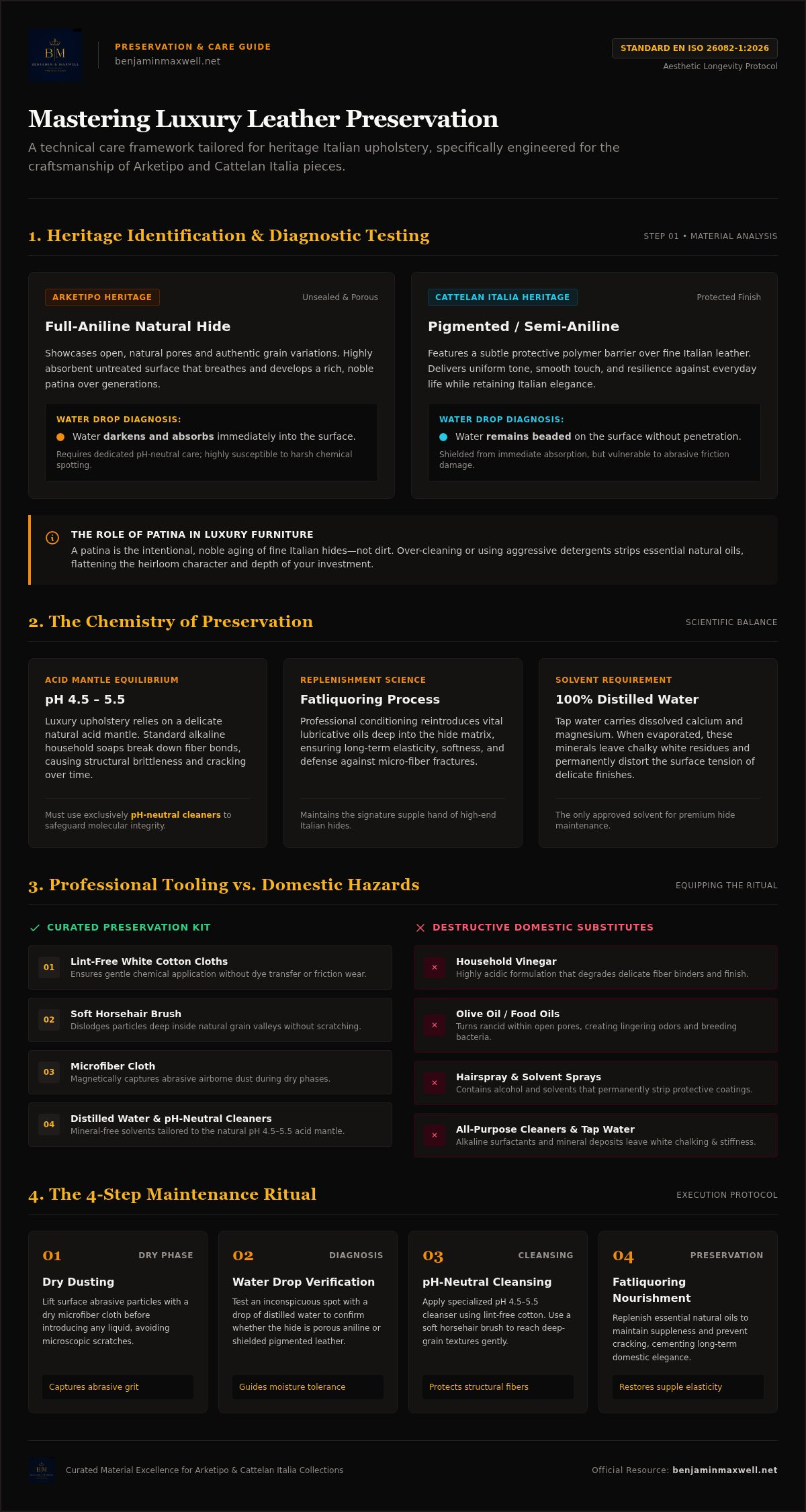
Heritage pieces demand more than a cursory wipe. Before you can master how to clean leather furniture properly, you must identify the soul of the hide. High-end brands like Arketipo prioritize material integrity, often utilizing full-aniline leathers that showcase natural pores and unique markings. This untreated surface is highly absorbent; it breathes and lives alongside you. Conversely, Cattelan Italia furniture often features semi-aniline or pigmented finishes. These pieces maintain their Italian elegance while offering a subtle protective shield against daily life.
A foundational understanding of leather reveals that porousness dictates your entire approach. To determine your piece's nature, perform the professional water drop test. Place a single drop of distilled water on an inconspicuous area. If it stays beaded, the leather is protected. If it darkens and absorbs, you're handling a delicate aniline hide that requires a specialized touch. Arketipo's path to perfection relies on these raw textures, which offer a sensory depth that corrected grains cannot replicate.
Aniline vs. Protected Leather: A Technical Comparison
Visual cues define high-end aniline. You'll notice a profound depth of color and visible grain variations that tell a story of craftsmanship. Protected leathers feel more uniform and cool to the touch. This distinction is vital because cleaning agents designed for pigmented surfaces can cause permanent spotting on aniline hides. Knowing your leather type is the first step in learning how to clean leather furniture properly without risking the material's structural grace.
The Role of Patina in Luxury Furniture
True luxury ages with intention. A patina isn't dirt; it's the noble aging of fine Italian hides. It creates a narrative of permanence within your home. Over-cleaning can strip these natural oils and flatten the character of your heritage investment. Distinguish between surface debris and the developing luster that signifies a well-loved heirloom. Respect the material's lineage by avoiding aggressive chemicals that interrupt this natural evolution.
The Essential Tools for Proper Leather Preservation
Maintaining the splendor of Cattelan Italia or Arketipo upholstery requires a curated kit of specialized implements. You can't rely on standard household supplies; instead, you must select tools that respect the organic nature of the hide. Distilled water stands as the only acceptable solvent for luxury leather. Tap water contains harsh minerals like calcium and magnesium that leave unsightly white residues and can permanently alter the surface tension of fine finishes. Understanding the chemistry of these tools is essential for anyone seeking to master how to clean leather furniture properly.
Selecting the right applicator is equally vital. While microfiber is excellent for capturing abrasive dust, lint-free white cotton cloths are preferred for the gentle application of cleaners. For pieces with deep-grain textures, a soft horsehair brush is indispensable. It reaches into the natural valleys of the hide to dislodge particles without scratching the delicate surface. Using the wrong cloth can lead to friction damage, which undermines your efforts to clean leather furniture properly.
The Chemistry of Leather Care
Leather possesses a delicate acid mantle, typically resting at a pH of 4.5 to 5.5. Most household soaps are highly alkaline. It's a chemical reaction that causes the fibers to become brittle and eventually crack. Professional grade, pH-neutral cleaners are designed to preserve this specific balance. High-quality conditioners also utilize the science of fatliquoring to replenish the essential oils that provide that signature supple feel.
Avoiding Common Domestic Substitutes
Common DIY advice often suggests vinegar, olive oil, or even hairspray for stain removal. These substances are the enemies of Italian craftsmanship. Vinegar is far too acidic, while olive oil can turn rancid within the leather's pores, creating odors and attracting bacteria. All-purpose cleaners often contain harsh solvents that strip away the protective layers of your furniture. For designers managing extensive collections, our Trade Program offers guidance on maintaining material perfection across large-scale projects.
The 4-Step Ritual: How to Clean Leather Furniture Properly
Precision is the hallmark of luxury. To maintain the material perfection of Arketipo or Cattelan Italia, you must adopt a methodical ceremony of care. This isn't a chore; it's a commitment to your home's legacy. Begin with the Dry Dusting Phase. Use a clean microfiber cloth to lift abrasive particles. If left alone, these microscopic grains act like sandpaper, slowly dulling the finish over time.
Transition next to Controlled Moisture. Dampen a lint-free cotton cloth with distilled water until it feels cool, never wet. Gently wipe the surface to remove atmospheric soils. This is the secret to how to clean leather furniture properly without saturating the delicate fibers. Follow this with a pH-neutral conditioner. Massage it in circular motions to restore the hide's natural suppleness and prevent the heartbreak of cracking. Conclude with Buffing for Brilliance. Use a dry cloth to reveal a soft, natural luster, ensuring no residue remains to attract future dust.
Addressing Spills and Stains Immediately
Accidents require composure, not aggression. Blot spills immediately with a dry, white cloth to lift the liquid. Never scrub. Scrubbing pushes the substance deeper into the grain, which is particularly dangerous for porous aniline surfaces. For persistent oil-based spots, the material's integrity is your priority; avoid the urge to use harsh domestic solvents that cause permanent discoloration.
Frequency of Care: A Seasonal Approach
Dust your upholstery weekly to maintain its clarity. Deep conditioning should occur bi-annually, though low humidity or direct sunlight may necessitate more frequent attention. Environmental factors dictate the hide's thirst. If you're planning a room update around your beautifully preserved pieces, explore our In Home Visualizer to see how they harmonize with new acquisitions from our curated collections.
Long-Term Preservation and Professional Curation
Stewardship of fine leather is a silent dialogue between the owner and the artisan. When you understand how to clean leather furniture properly, you transform a utilitarian object into a legacy item that gains character through the decades. Proper maintenance isn't just about cleanliness; it's about preserving the narrative of an Arketipo sofa or a Cattelan Italia chair. While routine home care is sufficient for daily life, heritage pieces may eventually require professional intervention. Distinguish between the gentle rituals of conditioning and the intensive restoration needed for deep structural repairs to ensure your investment remains a centerpiece of elegance.
Designing for Longevity
Strategic placement is the first line of defense for your upholstery. Position your furniture away from direct sunlight and heat sources to minimize UV damage and the drying of natural oils. Utilizing our In Home Visualizer allows you to assess how a pristine leather piece anchors a room's aesthetic while planning for optimal environmental conditions. It's a visionary approach to interior curation that prioritizes long-term material health.
Expert Support for Design Professionals
For those managing expansive luxury interiors, the Trade Program provides essential support in both sourcing and maintenance. We assist design professionals in selecting custom configurations where the leather choice aligns with a client's specific maintenance capacity. This ensures that every piece from the Benjamin & Maxwell collection is chosen with a deep respect for its future. By mastering how to clean leather furniture properly within a professional context, designers can offer their clients a path to material perfection that lasts for generations.
Cultivating a Legacy of Material Perfection
Preserving the artistry of high-end upholstery is an act of stewardship that honors the craftsman's original vision. By identifying your specific hide type and utilizing pH-neutral solutions with distilled water, you protect the delicate fibers from structural fatigue. Mastering how to clean leather furniture properly ensures that your Arketipo or Cattelan Italia pieces don't just endure; they evolve, developing a noble patina that tells your unique story. This ritual of care transforms a house into a gallery of lived-in elegance.
As you refine your preservation ritual, consider how new acquisitions might harmonize with your existing collection. We invite you to explore our curated collection of luxury Italian furniture, where you can utilize our advanced 3-D and AR visualization tools to plan your space. Our Trade Program remains a dedicated resource for professionals seeking to maintain material perfection across bespoke interiors. With the right knowledge and tools, your home remains a sanctuary of enduring beauty.
Frequently Asked Questions
Can I use baby wipes to clean my leather sofa?
You should avoid using baby wipes on high-end upholstery. While they seem gentle, the pH level of these wipes is often unsuitable for the delicate acid mantle of fine hides. Over time, the chemicals and fragrances can strip away protective coatings or cause the surface to become brittle. For those seeking how to clean leather furniture properly, a pH-neutral cleaner specifically formulated for luxury materials is the only safe choice.
How often should I condition my high-end Italian leather furniture?
Conditioning should typically occur every six months to maintain the hide's natural suppleness. However, environmental factors play a significant role in this schedule. If your Cattelan Italia pieces are situated in low-humidity rooms or near direct sunlight, you may need to apply a pH-neutral conditioner every three to four months. Regular dusting should still be performed weekly to prevent abrasive particles from settling into the grain of your investment.
What is the best way to remove a scratch from luxury leather?
Minor surface scratches can often be diminished by gently buffing the area with a clean, dry microfiber cloth or the warmth of a clean fingertip. This process redistributes the natural oils within the hide to mask the mark. For deeper abrasions that penetrate the surface of your Arketipo seating, we recommend seeking professional restoration rather than attempting aggressive DIY repairs that might permanently mar the material's structural grace and heritage.
Is it safe to use a vacuum cleaner on my leather couch?
It's safe to use a vacuum provided you utilize a soft brush attachment to prevent scratching the surface. This is a critical step in learning how to clean leather furniture properly, as it removes abrasive debris from seams and crevices. Always ensure the attachment is clean and free of sharp plastic edges. For deep-grain textures, a specialized horsehair brush remains the most refined tool for dislodging settled dust safely.
How do I tell the difference between aniline and semi-aniline leather?
The most reliable method is the professional water drop test. Place a single drop of distilled water on an inconspicuous area; aniline leather will absorb the moisture and darken, while semi-aniline will remain beaded due to its thin protective layer. Visually, aniline displays natural markings and a profound depth of color. Semi-aniline offers a more uniform appearance while still retaining the authentic texture and soul of the Italian hide.

Article by
Spencer Kay
Spencer is the founder and CEO of Benjamin & Maxwell and has created the most advanced technology-based website in the furniture industry. He has extensive experience in both technology and business operations having started a number of technology companies. Spencer holds a BA Degree in Economics and an MBA in International Business
Disclaimer
Benjamin & Maxwell does not intend for any of our products to be used for any specific purpose.


