


A true masterpiece doesn't merely occupy space; it transforms the very atmosphere of a room through a centuries-old alchemy of light and color. While many enthusiasts admire the brilliance of traditional glass, the most discerning collectors understand that daum crystal exists in a category of its own. It's understandable to feel a sense of hesitation when distinguishing between standard lead crystal and the ethereal, painterly quality of Pâte de Verre. You seek more than just a decorative object; you desire a piece of history that carries the weight of a legendary French heritage.
This guide serves as your definitive resource for understanding the meticulous craftsmanship and historical significance that define the Daum legacy. You'll gain the confidence to identify authentic works and appreciate the complex "glass paste" technique that has captivated the art world since 1898. We'll examine the enduring value of these sculptural treasures and provide practical insights on styling them within contemporary interiors. From the furnace of the artisan to the digital precision of an In-Home Visualizer, you'll learn how to curate a collection that bridges the gap between European tradition and modern luxury.
Key Takeaways
- Master the nuances of the Pâte de Verre technique to appreciate the profound depth of color and sculptural detail inherent in every piece.
- Distinguish the signature "velvety" finish of daum crystal from traditional lead crystal to ensure the authenticity of your collection.
- Learn to integrate these masterpieces into contemporary interiors by considering how natural and artificial light transform the appearance of art glass.
- Secure the value of your investment by understanding the critical necessity of purchasing through an authorized dealer with a proven lineage.
- Discover how to leverage modern digital visualization to curate a legacy collection that complements your home’s unique aesthetic.
Defining the Daum Heritage: More Than French Crystal
To understand the allure of daum crystal, one must look back to the late 19th century in Nancy, France. Founded in 1878 by Jean Daum, the studio didn't start as a bastion of high art. It initially focused on utilitarian glass. However, the vision soon shifted. Under the leadership of Jean's sons, Auguste and Antonin, the workshop earned the prestigious title of "Cristallier d’Art." This wasn't just a change in name; it was a complete reimagining of the medium. They moved away from the mundane to embrace the extraordinary, ensuring that each piece became a vessel for light and emotion. The transition from utilitarian glassware to world-renowned art objects was a calculated response to a changing world, where the brothers realized that the future of glass lay in its ability to capture the imagination.
The Nancy School and Artistic Evolution
The studio's rise is inextricably linked to the École de Nancy. This movement celebrated naturalism, drawing deep inspiration from the organic forms of the French countryside. Dragonflies, orchids, and forest floors found their way into the glass. It was during this fertile period that the brand became a central figure in the Art Nouveau movement, where every curve was a rebellion against the starkness of the industrial age. Later, they adapted with grace to the geometric rigors of Art Deco, proving their aesthetic versatility. A pivotal moment occurred in 1900 when the studio rediscovered the ancient Pâte de Verre technique. This "paste of glass" allowed for a level of detail and color gradation that traditional lead crystal couldn't match. By collaborating with renowned artists, the brand ensured its aesthetic remained fresh and relevant. You can explore more about Daum's history and heritage to see how these artistic partnerships shaped the studio's global reputation.
A Legacy of Excellence Since 1878
For over a century, the Daum family maintained a strict guardianship over their proprietary methods. These secrets weren't just technical specifications; they were the soul of the studio. This dedication to excellence has placed their work in the permanent collections of major museums worldwide, from the Musée d'Orsay to the Corning Museum of Glass. At Benjamin & Maxwell, our own heritage dates back to 1898, placing our origins in the same era when the Daum brothers were revolutionizing the art of glass. Today, the sophisticated collector looks toward 2026 with an appreciation for this shared continuity. Owning daum crystal means participating in a lineage that spans generations. It's a bridge between the industrial grit of the 19th century and the refined luxury of the modern home. The enduring status of the brand as a symbol of French cultural heritage remains unchallenged, reflecting a studio that never stopped innovating while staying true to its roots.
The Alchemy of Pâte de Verre: Sculpting with Light and Color
While most luxury glassware is formed through the rapid movement of air and heat, the creation of daum crystal is a deliberate, patient art. In 1900, the studio rediscovered Pâte de Verre, an ancient technique that had been largely lost to time. This "paste of glass" method allows for a depth of color and a level of sculptural detail that's physically impossible to achieve with traditional blown glass. Instead of being hollow and uniform, these pieces possess a substantial weight and a translucent, matte finish that captures light rather than merely reflecting it. The result is a painterly effect, where colors bleed into one another with an ethereal grace.
Every creation is a unique work of art. Because the refractory mold must be broken to reveal the crystal within, no two pieces can ever be identical. This "lost wax" method ensures that each object carries its own soul and subtle variations in texture. To see the historical breadth of this technique, one might look to The Daum Collection at Musée des Beaux-arts de Nancy, where hundreds of pieces showcase the evolution of this alchemy. If you're ready to bring this level of artistry into your home, you can explore our curated selection of Daum masterpieces.
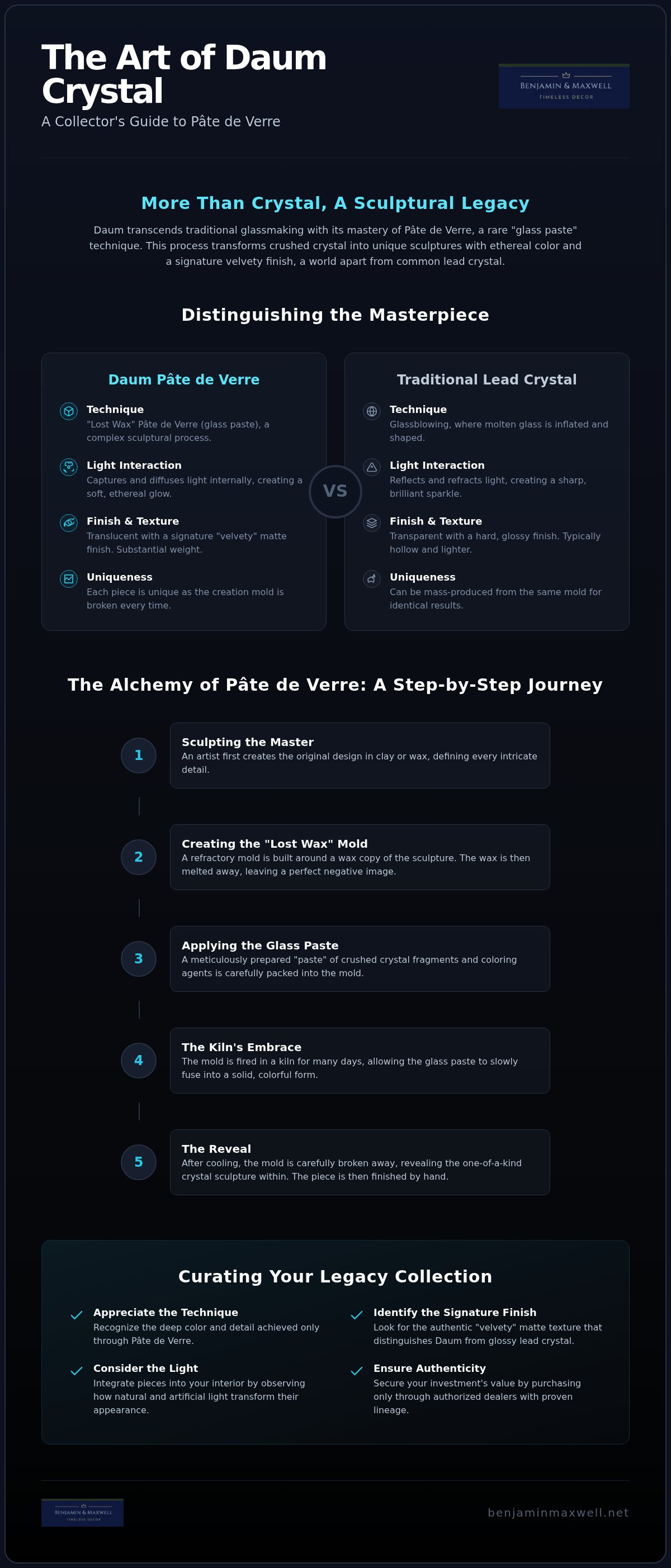
The Lost Wax Process Step-by-Step
The journey from raw material to finished sculpture is arduous and requires extreme precision. It's a process that demands respect for the materials and a mastery of the kiln. Each step must be executed with a steady hand to ensure the final piece meets the studio's rigorous standards.
- Step 1: The artisan creates the original sculpture in wax and encases it in a plaster like refractory material. The wax is then melted away, leaving a perfect negative cavity.
- Step 2: The mold is meticulously filled with "groisil," which consists of crushed crystal fragments mixed with specific metallic pigments.
- Step 3: The mold enters the kiln for a slow, precise firing. Over several days, the crystal fragments fuse together, becoming a solid, vibrant form.
Mastering the Color Palette
The true mastery of the studio is found in its "nuancier," a proprietary color chart containing thousands of distinct shades. Unlike liquid glass, where colors mix unpredictably, Pâte de Verre allows artisans to strategically place dry pigments within the mold. They can control exactly where a deep "Amber" transition begins or where a vibrant "Zeste" highlight ends. This level of control creates the nature inspired gradients that have become the brand's signature. It allows the daum crystal to mimic the soft petals of a flower or the iridescent wing of an insect with startling realism, ensuring that each piece remains a vivid tribute to the natural world.
Distinguishing Daum: Why Pâte de Verre Transcends Traditional Crystal
When you hold a piece of daum crystal, the first sensation isn't a sharp flash of light, but a soft, inviting warmth. Traditional lead crystal relies on a high gloss brilliance and faceted surfaces to catch the eye. It's designed to refract light like a diamond. In contrast, the Pâte de Verre technique produces a velvety, matte texture that feels almost organic to the touch. This material doesn't just reflect light; it absorbs and diffuses it, creating an inner glow that seems to emanate from within the glass itself. The density is also markedly different. Because the material is solid rather than blown, a Daum sculpture possesses a surprising, grounding weight that commands presence on any surface.
This difference in material properties grants the artisan a level of creative freedom that's impossible with blown glass. Traditional glassblowing is often restricted to shapes that can be manipulated while molten, usually resulting in radial symmetry. Pâte de Verre is a sculptural process. It allows for intricate undercuts, sharp details, and complex asymmetrical forms that mimic the delicate textures of nature. There's a common misconception that crystal must be transparent to be valuable. In the world of fine art, the opacity and painterly color gradients of Daum are far more difficult to achieve, making them highly coveted by those who value artistic complexity over simple clarity.
Art Glass vs. Tableware
It's vital to distinguish between functional tableware and true art glass. While many brands focus on stemware and plates, Daum has positioned itself as a creator of fine art. These aren't merely home decor items; they're sculptural statements. The brand's commitment to limited edition artist collaborations further elevates its status. When a piece is produced in a restricted run, it moves from the category of luxury goods into the realm of investment art. Collectors often seek out these collaborations because they represent a unique intersection of legendary craftsmanship and modern artistic vision.
Identifying Authentic Daum France Marks
Ensuring the authenticity of your acquisition is paramount for any serious collector. On contemporary pieces, you should look for the "Daum France" signature, which is typically engraved directly into the base or the side of the sculpture. Historical or archival items might bear the "Nancy" mark, reflecting the studio's deep roots in its home city. However, signatures can be imitated. The most reliable way to guarantee authenticity is by obtaining a certificate from an authorized dealer. At Benjamin & Maxwell, we've served as a bridge between European heritage and American collectors since 1898. As an authorized dealer, we provide the certainty that every piece of daum crystal in your collection is a genuine product of the Nancy studio.
Curating Your Collection: Integrating Daum into Modern Interiors
Integrating a masterpiece into a contemporary residence requires more than just shelf space; it demands an understanding of how art interacts with its environment. When you select a centerpiece, consider the narrative you wish to convey. A grand vase with flowing floral motifs can serve as a vertical anchor for a room, providing a sense of organic warmth. Conversely, animalier sculptures offer a more intimate presence, bringing a sense of life and character to a desk or a side table. Each piece of daum crystal is a conversation between the artisan's vision and your personal aesthetic.
Lighting is perhaps the most transformative element in high-end curation. Because of its unique composition, Pâte de Verre reacts differently to light than any other material. During the day, natural sunlight reveals the hidden depths of the color gradients, making the glass appear almost fluid. In the evening, soft, diffused artificial light can be used to emphasize the velvety texture and internal glow of the piece. To create a cohesive look, try grouping pieces by theme. You might pair several nature-inspired works to create a curated "glass garden," or select pieces with stronger, geometric lines to complement a more minimalist interior.
The In-Home Visualizer: A Modern Curation Tool
One of the primary challenges for any collector is visualizing how a specific work will sit within their unique space. Scale and color harmony are difficult to judge through a screen alone. To resolve this, the Benjamin & Maxwell In-Home Visualizer allows you to bridge the gap between our gallery and your home. By simply using your smartphone, you can digitally place a Daum vase or sculpture on your own mantle or sideboard. This interactive experience lets you experiment with different placements and color palettes, ensuring the piece you choose feels inevitable within your decor. Discover your next legacy piece with our visualizer tool.
Pairing Crystal with Luxury Furniture
The most successful interiors often rely on a contrast of materials and forms. There is a remarkable aesthetic synergy between the fluid artistry of Daum and the structural precision of Cattelan Italia furniture. Placing a sculptural glass piece on an architectural table creates a sophisticated balance. The organic curves of the crystal soften the sharp, clean lines of modern Italian design, creating a space that feels both curated and lived-in. When displaying these heavy, dense objects on glass or marble surfaces, always ensure they are placed on a stable, level area. Using subtle, protective bases can help preserve both the integrity of your furniture and the base of your crystal sculpture.
The Benjamin & Maxwell Experience: Sourcing Authentic Excellence
Acquiring a masterpiece is more than a simple transaction; it's an act of stewardship over a piece of cultural history. When you decide to invest in daum crystal, you're looking for more than an object. You're seeking a legacy that will endure for generations. Since 1898, Benjamin & Maxwell has served as a dedicated guardian of this tradition. We understand that the journey of a collector is deeply personal. It requires a partner who respects the weight of heritage while embracing the possibilities of the future. Expect excellence.
The security of your investment depends entirely on the provenance of the piece. As an authorized Daum dealer, we provide the absolute certainty that every sculpture and vase in our collection is authentic. This status isn't just a label. It's a commitment to the standards of the Nancy studio. When you work with a heritage retailer, you can expect white-glove service that matches the caliber of the crystal itself. From the initial consultation to the careful delivery of your work, every step is handled with the reverence that fine art deserves.
A Tradition of Trusted Curation
Our commitment to authentic, designer-label products has remained unchanged for over a century. In a market that often feels fleeting, our longevity provides a stable foundation for collectors. Our staff brings a level of expertise that only decades of immersion in the world of luxury can provide. We don't just sell items; we help you select "legacy pieces" that resonate with your personal story. Whether you're a seasoned connoisseur or just beginning your collection, our team acts as a knowledgeable guide. We ensure that your choice reflects both artistic excellence and enduring value.
Your Journey with Daum Starts Here
We believe that the process of discovery should be as beautiful as the crystal itself. By combining European artistry with modern technology, we've created a shopping experience that feels both traditional and innovative. We invite you to browse our current collection of Daum vases and sculptures, each one a unique testament to the Pâte de Verre technique. Use our interactive tools to see how these works interact with your environment. Experience the artistry of Daum with our In-Home Visualizer and take the first step toward owning a piece of French history.
Embracing a Legacy of Light and Color
The journey through the history and technique of the Nancy studio reveals that daum crystal is far more than a decorative accessory; it's a profound testament to artistic perseverance and technical mastery. By embracing the ancient Pâte de Verre method, the studio has created a medium that captures light with a soulfulness that traditional lead crystal simply cannot replicate. You've discovered how these sculptural works bridge the gap between 19th-century innovation and the refined requirements of the modern home.
Selecting a piece for your collection is a significant decision that deserves the support of a true heritage partner. As an Authorized Daum Dealer since 1898, Benjamin & Maxwell provides the provenance and expertise necessary to curate with confidence. Whether you're exploring our curated gallery or utilizing our complimentary In-Home Visualizer tool to see a work in your own space, we're here to guide your discovery. Your pursuit of enduring beauty finds its home here.
Discover the Daum Collection at Benjamin & Maxwell and begin your own chapter in this continuing story of elegance. We look forward to helping you find a masterpiece that resonates for a lifetime.
Frequently Asked Questions
What is the difference between Daum and traditional crystal?
Traditional crystal relies on transparency and faceted cuts to refract light like a diamond. Daum crystal utilizes the Pâte de Verre technique to achieve a velvety, matte finish and painterly color gradients. While standard crystal is often blown or pressed into symmetrical shapes, Daum pieces are sculptural works of art. They possess a substantial density and an internal glow that creates a more organic, atmospheric presence in a room.
Is Daum crystal made of lead?
Yes, modern Daum crystal generally contains a high percentage of lead oxide, often around 30%. This composition provides the material with its characteristic weight, brilliance, and exceptional clarity. In the Pâte de Verre process, this lead crystal is crushed into "groisil" before being fused with pigments. This specific chemical makeup ensures that the final sculpture maintains the prestigious quality and durability expected from a world class French manufacturer.
How should I clean and maintain my Daum Pâte de Verre pieces?
Maintaining the velvety finish of your collection requires a gentle touch. You should use a soft, dry microfiber cloth to remove dust from the intricate surfaces. Avoid using harsh chemicals, abrasive sponges, or glass cleaners, as these can damage the delicate matte texture. Never place these sculptures in a dishwasher. For deeper cleaning, a soft brush can reach into the sculpted details without scratching the material's unique surface.
Why is Daum crystal so expensive compared to other glass?
The cost reflects the immense labor and risk involved in the Pâte de Verre technique. Unlike mass produced glass, each Daum piece requires a unique refractory mold that's broken to reveal the final sculpture. This means every creation is a singular work of art. The process involves days of kiln firing and the strategic placement of pigments by master artisans. You're investing in hundreds of hours of specialized craftsmanship and a legendary heritage.
Does Daum crystal hold its value over time?
High quality art glass from prestigious studios typically maintains or increases in value, especially limited edition collaborations. The scarcity created by the mold breaking process ensures that each piece remains rare. Collectors value the brand's long standing reputation and its presence in global museum collections. While market fluctuations occur, the enduring appeal of the Pâte de Verre technique makes these sculptures a stable addition to any legacy focused art collection.
How can I tell if my Daum piece is authentic?
Authentic pieces feature a "Daum France" signature engraved directly into the crystal. On historical items, you might find a "Nancy" mark instead. However, signatures can be faked, so the most reliable way to verify authenticity is by purchasing through an authorized dealer. At Benjamin & Maxwell, we provide certificates of authenticity with every acquisition. This documentation serves as a permanent record of the piece's provenance and ensures its long term value as a genuine work.
Where is Daum crystal currently manufactured?
Every piece of daum crystal is still manufactured in Nancy, France. This city has been the heart of the studio's operations since 1878. The artisans continue to work in the same region where the École de Nancy movement first inspired the brand's naturalistic designs. By keeping production local, the studio preserves the secret techniques and high standards that have defined French luxury for over a century. It remains a true product of its heritage.
Can I use the In-Home Visualizer for Daum sculptures?
Yes, our proprietary In-Home Visualizer tool is specifically designed to help you place daum crystal sculptures and vases within your own interior. By using your smartphone camera, you can see exactly how a piece's scale and color palette interact with your existing furniture. This technology removes the uncertainty of high end curation. It allows you to experiment with different placements on mantles or tables before making a final commitment to your collection.
Disclaimer
Benjamin & Maxwell does not intend for any of our products to be used for any specific purpose.


