


A daum masterpiece isn't simply a piece of glassware; it's a living sculpture that captures the very essence of light through the revived mystery of pâte de verre. You likely recognize that true luxury isn't found in mass production, but in the unique variations of a hand-finished work where no two items are ever identical. This shared appreciation for heritage and meticulous craft forms the foundation of any significant collection.
This guide provides the essential framework to evaluate and curate these treasures with absolute confidence. You'll learn how to distinguish between various artistic series, verify authentic artist signatures, and acquire limited edition works that serve as definitive focal points in a modern home. We'll also demonstrate how to use digital visualization to ensure your chosen masterpiece harmonizes perfectly with your specific architectural setting, allowing you to invest in a piece of French history that feels entirely at home in your space.
Key Takeaways
- Master the art of identifying authentic Daum pieces by verifying the hand-engraved signature and observing the characteristic depth of color unique to the pâte de verre process.
- Understand the historical significance of the "glass paste" technique, ensuring you appreciate why no two hand-crafted crystal masterpieces are ever truly identical.
- Select your next acquisition based on emotional resonance, whether you are drawn to the botanical elegance of the Ginkgo series or more powerful, sculptural statements.
- Ensure a seamless aesthetic integration by using professional visualization tools and strategic lighting to capture the natural glow of your crystal within your specific interior.
The Legacy of Daum Nancy: Understanding the Pâte de Verre Distinction
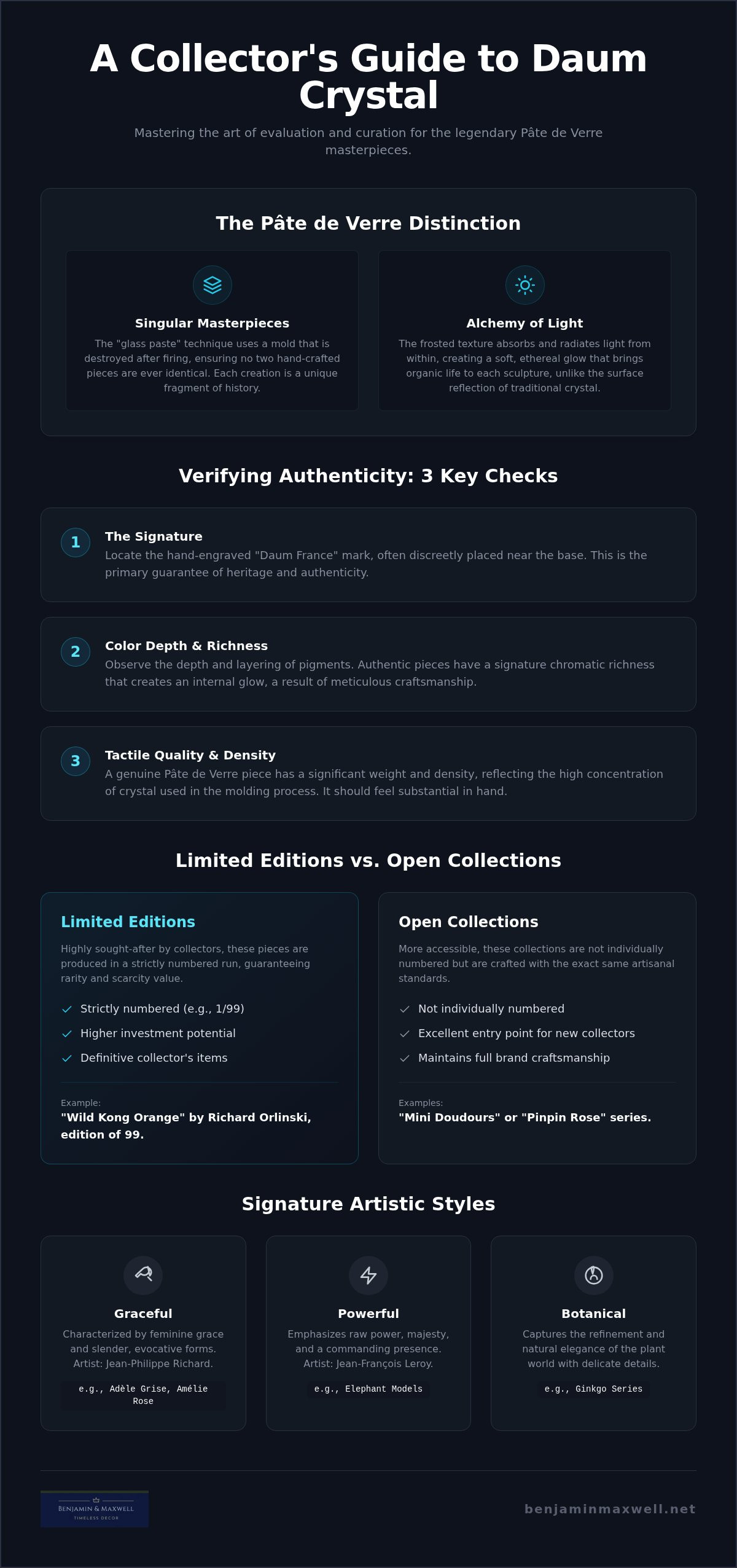
The story of daum is a testament to permanence and the enduring power of French artistry. Founded in the late 19th century, the house became a central pillar of the École de Nancy, driving the Art Nouveau movement forward with its revolutionary approach to glass. At the heart of this legacy is the mastery of pâte de verre, or "glass paste." This intricate technique involves placing crushed crystal into a refractory mold before firing it in a kiln. Because the mold is destroyed to reveal the piece inside, every creation is a singular masterpiece. You aren't just acquiring a decorative object; you're securing a unique fragment of history where no two iterations are ever identical. For a deeper look at the historical timeline of the house, the Daum (studio) Wikipedia page offers an extensive overview of their journey from Nancy to the global stage.
The Alchemy of Light and Texture
Daum is often described as a "House of light and color" where creativity knows no bounds. The pâte de verre process creates a signature frosted texture that behaves quite differently than traditional lead crystal. While cut glass reflects light off its surface, this material seems to swallow and then radiate light from within. This creates a soft, ethereal glow that brings a sense of organic life to every sculpture. It's a true alchemy where earth-derived minerals are transformed by fire into fluid, poetic art. To see how these textures integrate into a refined home, you can browse the current Daum collections to appreciate the variety of finishes available.
A Century of Artistic Collaborations
The brand's identity has been shaped by over 350 collaborations with world-renowned visionaries. From the surrealist dreams of Salvador Dalí to the bold, geometric strength of Richard Orlinski, these partnerships have allowed the house to reinvent itself across generations. These collaborations ensure that the ancient technique of pâte de verre remains relevant, translating contemporary sculptural trends into the medium of crystal. By merging historical craftsmanship with modern perspectives, the house continues to produce works that serve as sophisticated focal points in any architectural setting.
Evaluating Artistry: Key Features to Compare in Your Selection
Choosing the right piece requires a discerning eye for detail. Authenticity begins with the signature. Every genuine daum creation features the hand-engraved "Daum France" mark, often nestled discreetly near the base. This mark isn't just a label; it's a guarantee of the heritage described in the previous section. Beyond the signature, observe the color depth. The house achieves its signature glow through a meticulous layering of pigments that creates a chromatic richness. You can see the evolution of these techniques by exploring the Daum collection at the Musée des Beaux-arts de Nancy, which showcases the manufacturer's vast production history.
Quality is also tactile. A hallmark of true pâte de verre is its density. These pieces possess a significant weight that reflects the concentration of crystal used in the molding process. If you feel ready to find a piece that speaks to your style, you may explore our curated selection of Daum crystal to compare these artistic nuances firsthand.
Limited Editions vs. Open Collections
Edition size dictates both rarity and accessibility. Limited runs, such as the vibrant "Wild Kong Orange" by Richard Orlinski, are strictly numbered to 99 pieces. These acquisitions often hold their value due to their scarcity. In contrast, open collections like the "Mini Doudours" or "Pinpin Rose" provide a charming entry point for those beginning their journey. While open editions are not individually numbered, they still benefit from the same hand-crafted standards as the most exclusive sculptures.
Identifying Artist-Specific Styles
Distinct artistic voices define various series. Jean-Philippe Richard is celebrated for feminine grace, captured in the slender, evocative forms of "Adèle Grise" and "Amélie Rose." Conversely, the work of Jean-François Leroy emphasizes raw power and majesty. His elephant models are particularly renowned for their commanding presence. Recognizing these specific daum artist styles helps you choose a work that doesn't just fill a space but actively enhances your interior's narrative.
Selecting Your Masterpiece: Standout Daum Collections for the Modern Home
Curating a collection of daum crystal is an exercise in matching artistic intent with the emotional resonance of your living space. The house organizes its creations into distinct sensory categories: Graceful, Powerful, and Botanical. For those seeking botanical refinement, the "Ginkgo Coupe Magnum Verte" ($4,300) serves as a definitive example, capturing the delicate, translucent veins of a leaf in vibrant green crystal. Conversely, collectors desiring a magnetic, high-presence centerpiece may gravitate toward "L’envol du Faucon" ($55,000), a work of immense scale and detail. For those beginning their journey, intimate accents like the "Roses Mini Coupelle" ($275) provide a sophisticated entry point for table decor.
Feminine Grace and Poetic Forms
Sculptures such as "Adèle Grise et violette" and "Eugénie Ambre et verte" (both $2,890) represent a poetic echo in living crystal. They're not merely decorative objects; they are expressions of fluid elegance and quiet contemplation. The soft gradients of color within the pâte de verre allow these female forms to act as a gentle counterpoint to the sharp architectural lines often found in modern interiors. They invite the viewer to linger, offering a sense of permanence that transcends fleeting design trends.
Contemporary Power and Wildlife Subjects
For a bolder statement, the wildlife subjects created in collaboration with Richard Orlinski provide a striking contrast. Pieces like "Wild Kong Orange" and "Wild Bear Ambre" ($26,300 each) utilize the brand's signature technique to render wildlife with a vibrant, magnetic appeal. These works reinvent sculptural traditions for contemporary tastes, offering a powerful expression of strength. The faceted surfaces and intense pigments of these modern masterpieces ensure they command attention as definitive focal points. To view these exceptional works in detail, you may browse the full daum crystal collection to find the piece that resonates with your vision.
Curating Your Interior: Placement, Lighting, and Professional Tools
The final stage of acquisition is the thoughtful integration of your daum masterpiece into its architectural setting. Proper placement is essential because the soul of pâte de verre is its interaction with light. To reveal the hidden depths of color, position your piece where it can capture natural daylight or focused directional spotlighting. This illumination transforms the frosted crystal into a radiant focal point. Maintaining this brilliance is straightforward; a gentle dusting with a soft cloth is usually sufficient. Avoid harsh chemical cleaners that might compromise the delicate surface texture of the crystal paste.
Visualizing Excellence in Your Space
Selecting a significant work of art requires confidence in how it will harmonize with your existing decor. Our In Home Visualizer tool removes the uncertainty by allowing you to upload a photograph of your room and virtually place a piece, such as a Monstera Wall Leaf, directly onto your wall. For sculptural works like the "Sevilla de Xavier Carnoy," our 3D product model viewer provides a comprehensive perspective. It allows you to rotate the piece and appreciate its intricate form from every angle before it ever arrives at your door.
The Professional Advantage for Designers
We recognize the unique requirements of high-end architectural projects and large-scale luxury procurement. Interior designers and trade professionals are invited to join our Trade Program to access exclusive benefits. The application process features immediate AI-enabled approval, granting quick access to a tiered discount structure ranging from 20% to 30%. This program ensures that professionals can source authentic French heritage pieces with the efficiency and support required for sophisticated design ventures. By combining these digital tools with our white-glove service, we ensure that every daum acquisition is as seamless as the artistry itself.
Securing Your Legacy in Living Crystal
Selecting a daum masterpiece is more than a simple purchase; it's an investment in a century-old tradition of French excellence. By understanding the intricate alchemy of the pâte de verre technique and verifying the hand-engraved signatures of renowned artists, you ensure your collection possesses both aesthetic and historical value. Whether you're drawn to botanical elegance or the contemporary power of wildlife sculptures, these pieces serve as enduring focal points that capture and radiate light unlike any other medium.
As an authorized retailer of Daum Nancy, we invite you to explore our curated selection with complete confidence. You can utilize our complimentary In-Home Visualizer tool to see how these works harmonize with your decor and rely on our White Glove Service for the secure shipment of your acquisition. We look forward to helping you find the perfect piece to elevate your interior narrative and continue the story of French artistry in your home.
Browse the Complete Daum Crystal Collection
Frequently Asked Questions
What is the difference between Daum crystal and regular lead crystal?
Traditional lead crystal is typically blown or cut to create a transparent, light-reflecting surface. In contrast, daum utilizes a specialized molding process that results in a denser, frosted texture. This material doesn't just reflect light; it absorbs and radiates it from within the crystal paste. This unique interaction with light creates a soft glow and a tactile depth that you won't find in standard transparent glassware.
How can I verify that a Daum piece is authentic?
Verification begins with the hand-engraved signature on the base, but the most reliable method is purchasing through an authorized retailer. Benjamin & Maxwell is a premier authorized partner, ensuring every daum acquisition is a genuine work of French heritage. Authentic pieces also exhibit a specific weight and complex color graduation that mass-produced imitations cannot replicate. Always look for the documentation that confirms the piece's origin and edition number.
Does Daum crystal hold its value for collectors?
These pieces often retain or increase in value because the refractory mold is destroyed during the production process. This means that even within an open collection, no two items are perfectly identical, while limited editions are strictly capped at specific numbers. The house's history of collaborating with over 350 world-renowned artists further solidifies its standing in the global art market, making these sculptures highly sought-after by serious collectors.
Can I see how a Daum sculpture looks in my home before buying?
You can use our innovative In Home Visualizer tool to see any piece in your specific environment. Simply upload a photograph of your room, and the augmented reality technology will place the 3D model into your space. This allows you to evaluate the scale, color, and aesthetic harmony of a sculpture before committing to the purchase. You can even save the visualized scene to your personal photo gallery for comparison.
What is the pâte de verre technique used by Daum?
Pâte de verre is a complex "glass paste" method where crushed crystal is mixed with a binding agent and melted inside a kiln. This process allows for precise color placement that is impossible with traditional glass-blowing techniques. The result is a vibrant, multi-tonal masterpiece with a frosted finish. This meticulous craftsmanship is why the brand is recognized globally as a prestigious House of light and color where creativity knows no bounds.

Article by
Spencer Kay
Spencer is the founder and CEO of Benjamin & Maxwell and has created the most advanced technology-based website in the furniture industry. He has extensive experience in both technology and business operations having started a number of technology companies. Spencer holds a BA Degree in Economics and an MBA in International Business
Disclaimer
Benjamin & Maxwell does not intend for any of our products to be used for any specific purpose.


