

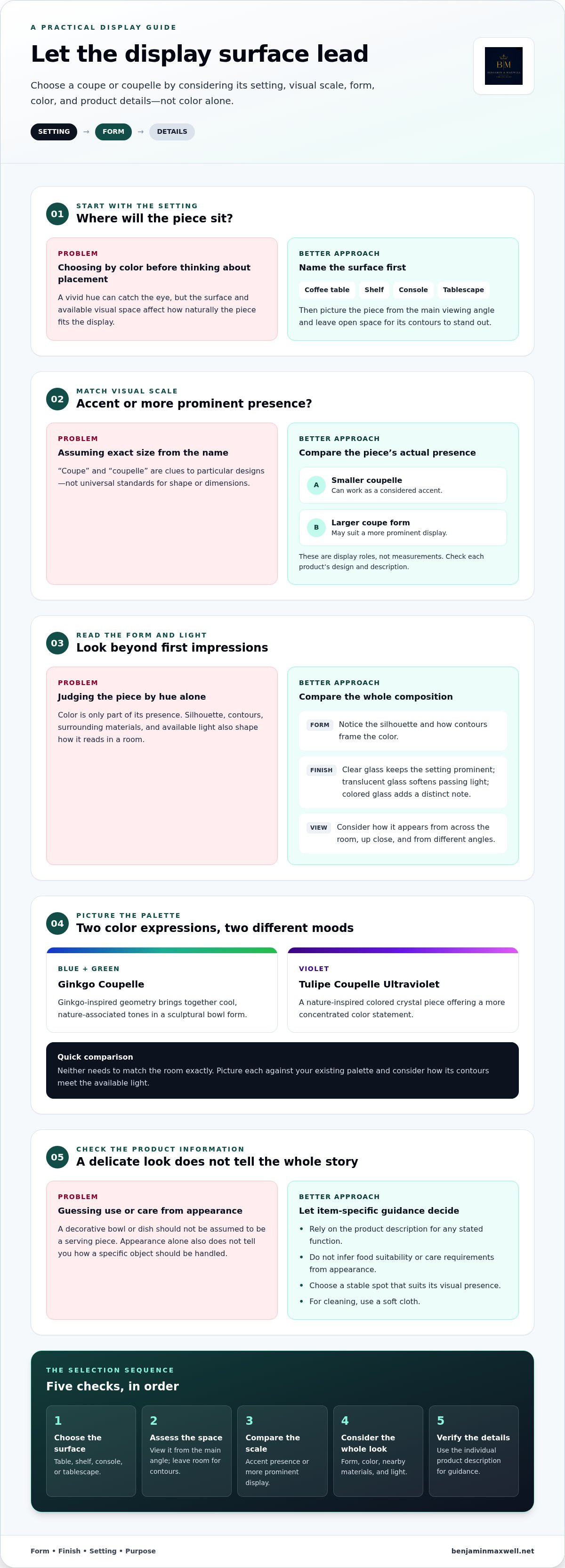
When choosing coupes & coupelles, start with where you plan to place the piece, not just its color. Shape and visual scale affect how naturally it sits on a coffee table, shelf, or tablescape, while colored glass can bring a vivid focal point to the display.
The distinction between a coupe and a coupelle can feel unclear, and a delicate appearance may leave you wondering how a piece is intended to be enjoyed. Look beyond first impressions: consider the form, finish, setting, and purpose you have in mind.
This guide explains how to compare those details, picture colored art glass in your home, and choose a piece suited to a particular surface. You’ll also learn what to look for in product information before selecting. Daum’s handcrafted glass and crystal décor brings sculptural color and light into a room, from coupelles to larger coupe forms.
Key Takeaways
- Use the names and forms of coupes & coupelles as a starting point, rather than assuming they indicate a universal shape or size.
- Consider how sculptural contours and clear, translucent, or colored glass affect the way a piece catches light.
- Compare the intended setting and available visual space to decide whether a smaller coupelle or a more prominent coupe suits the display.
- Explore distinctive examples, including the Ginkgo Coupelle, with blue-and-green color and ginkgo-inspired geometry.
Coupes & Coupelles: Understand the Forms Before You Choose
A coupelle is often understood as a smaller, bowl-like decorative dish, but names in an art-glass collection describe particular designs rather than a universal standard. A coupe may have a broader or more sculptural presence, though the word alone does not establish its precise shape or size. Treat the product’s design and description as the guide: the name offers a clue, while the piece itself defines its character.
The familiar shallow, broad-bowled champagne glass is one historic meaning of “coupe.” For context, explore this overview of the history of the champagne coupe. Decorative art-glass coupe forms need not follow that silhouette.
This glassblowing video offers a glimpse into the making of a coupe glass:
What distinguishes a coupe from a coupelle?
Compare the Ginkgo Coupelle with the Ginkgo Coupe magnum. Their names indicate two interpretations of the ginkgo-inspired form: a coupelle and a larger coupe expression. Rather than guessing exact dimensions from the labels, use each product name and description to understand the piece’s character and presentation.
Decorative glass or serving piece?
These coupes & coupelles are best approached as handcrafted glass and crystal bowls and dishes for home interiors. Their sculptural presence can add color and light to a coffee table, shelf, or tablescape. Don’t assume a decorative form is intended for serving. Rely on the individual product description for any stated function, and don’t infer food suitability or care requirements from appearance alone.
Compare Material, Color, and Craftsmanship in Art Glass
Material, hue, and silhouette work together to shape the presence of art glass. A clear appearance can leave the surrounding light and setting prominent; a translucent finish can soften the way light passes through; colored glass adds a more distinct note. Treat these as ways to assess appearance, not assumptions about an individual piece. Its product description is the guide to its specific details.
Material gives a piece its substance, color sets its mood, and form guides the way light plays across it. In Daum’s handcrafted glass and crystal, sculptural contours contribute to the impression alongside the shade. Consider the whole composition rather than judging the piece by color alone.
How color and light shape the impression
The blue-and-green Ginkgo Coupelle offers a different mood from the violet Tulipe Coupelle Ultraviolet. One brings together cool, nature-associated tones; the other makes a more concentrated color statement. Neither needs to match a room exactly. Picture each against your existing palette, then consider how the available light and the piece’s contours may affect its presence throughout the day.
Why handcrafted character matters
Daum describes its handmade glass as a transformation of earth-derived minerals through fire, bringing material and artistry together in a finished object. Its history also includes more than 350 collaborations with artists and designers. For further context on Daum’s artistic heritage, explore the Daum brand overview. A wider decorative-arts perspective is available at madparis.fr.
As you compare coupes & coupelles, look at how each form frames its color and interacts with the light in your home. For a closer look, browse glass figurines and coupes.
Choose the Right Coupe or Coupelle for Your Space
Let the setting lead. Choose the surface where the glass will sit, assess the visual space around it, then compare silhouettes and colors. This sequence helps you select for the room instead of choosing by hue alone.
Match the piece to its display setting
A coffee table, shelf, console, or tablescape each offers a different way to display art glass. A smaller coupelle can work as a considered accent, while a larger coupe form may suit a more prominent display. These roles depend on the piece’s appearance and the surrounding arrangement, not assumed measurements. Before choosing, look at the display area from the main viewing angle and leave enough open space for the glass’s contours to stand out. For another perspective on art and display, explore christies.com.
Want to picture a selected décor piece at home? The In-Home Visualizer lets you use an uploaded photo to see how décor may look in your room.
A delicate look needn’t mean hiding it away
An elegant, fine-looking form can be displayed where it can be appreciated. Appearance alone doesn’t tell you how a specific piece should be handled or used. Choose a stable spot that suits its visual presence, and consult the product information for item-specific guidance.
Look beyond color
Compare the coupe or coupelle’s silhouette and visual scale with nearby materials, such as a console finish or the texture of a table setting. Consider how the piece will be seen, whether from across the room, at close range, or from several angles. Notice how the available light meets its form. To maintain its appearance, clean with a soft cloth.
With those details in mind, explore glass figurines and coupes and find a piece that feels at home in your chosen setting.
Explore Standout Coupes & Coupelles and Select Your Favorite
With the setting and display purpose in mind, compare distinctive coupes & coupelles by form, color, and character. These examples show different ways to bring handcrafted glass and crystal into a room, from a smaller accent to a more prominent decorative presence.
Three distinct expressions of decorative glass
- Ginkgo Coupelle: Blue-and-green color meets ginkgo-inspired geometry in a sculptural bowl form. Its botanical reference and defined shape make it an expressive accent to consider for a shelf or tabletop.
- Tulipe Coupelle Ultraviolet: This colored crystal piece draws inspiration from nature, with violet providing a distinct alternative to the Ginkgo Coupelle’s blue and green. Consider how its color and bowl-like form relate to your display setting.
- Tressage Coupe grand modèle: A larger coupe form in Daum crystal, described in yellow and green. Its broader presentation offers a different visual emphasis from the coupelles, without requiring assumptions about exact dimensions.
Browse with a clear preference
As you compare, keep four questions in view: Where will the piece be displayed? Which form suits that setting? What color feels at ease with the room? Do you want a decorative accent or a more prominent display? These questions shift the choice beyond first impressions and help you picture a specific place for the piece.
To learn more about the artistic heritage behind Daum, visit the Daum brand overview. Then explore the glass and home décor collections, comparing forms and colors until one feels right for your home.
Choose a Piece That Belongs in Your Home
Start with the setting, then consider the piece’s form, color, and visual scale. A coupelle can offer a considered accent, while a larger coupe may create a more prominent display. Let the product description guide your understanding of each form instead of relying on assumptions about size or use.
As you compare coupes & coupelles, picture how each sculptural shape and color will meet the light and relate to the objects around it. Daum’s handmade glass brings artistic design and craftsmanship together, reflecting a creative heritage shaped by more than 350 collaborations with artists and designers.
Choose the piece that feels at home on your shelf, coffee table, or tablescape. Explore the Coupes & Coupelles collection to compare distinctive glass and crystal forms and find an artistic accent for your home.
Frequently Asked Questions
What is the difference between a coupe and a coupelle?
A coupe and a coupelle are related vessel forms, but their names don’t establish a universal size distinction across every collection. Compare each piece’s shape and product description rather than relying on the label alone. A coupelle may suit a smaller decorative accent, while a coupe can offer a more prominent sculptural presence. Assess the individual design to decide what best suits your space.
Are coupes and coupelles decorative or functional?
The collection is presented primarily as decorative bowls and dishes for home décor. An individual product description may mention a serving use, but don’t assume that purpose applies to every piece. Read the description for the item you’re considering and follow its stated use. If the intended purpose isn’t clear, treat the piece as decorative rather than assuming it’s suitable for serving.
How do I choose a coupe or coupelle for my coffee table?
Begin with the coffee table and decide whether you want a quiet accent or a distinct focal point. Compare the piece’s shape and visual scale with nearby objects, then consider how its color relates to the surrounding décor. Notice the light that reaches the table and the angle from which the glass will be viewed. Let the overall composition, not color alone, guide your choice.
How should I care for a handcrafted glass coupelle?
Clean a handcrafted glass coupelle with a soft cloth. Handle the piece thoughtfully, and follow any care directions provided for that specific item. Don’t assume household cleaners, polishing products, or other methods are suitable unless the item’s description says so. For display, a calm, uncluttered setting helps the glass remain visually prominent without requiring extra styling around it.
Can I preview a glass décor piece in my room before choosing?
Yes. The In-Home Visualizer lets you upload a room photo and view selected décor in that setting. Use the preview to consider the overall impression, then review the item’s description before choosing.

Article by
Spencer Kay
Spencer is the founder and CEO of Benjamin & Maxwell and has created the most advanced technology-based website in the furniture industry. He has extensive experience in both technology and business operations having started a number of technology companies. Spencer holds a BA Degree in Economics and an MBA in International Business
Disclaimer
Benjamin & Maxwell does not intend for any of our products to be used for any specific purpose.


