

What if a room could feel more connected to nature without adding another plant? Greenery has its place, but a biophilic interior can also draw on organic contours, mineral-like color, and the shifting qualities of light. Nature-inspired crystal art offers a considered way to bring these natural references indoors while keeping the room composed rather than crowded.
The distinction matters: biophilic design is more than decorating with leaves. A sculptural glass piece can suggest forms found in nature through its shape, color, and relationship with daylight. Choosing well means considering not only what catches your eye, but also how a piece relates to the room’s scale, palette, and purpose.
In this guide, you’ll learn how to recognize these natural references and place crystal art with intention, from selecting a focal point to considering light and proportion in different rooms. We’ll also look at Daum as an example of how artistic heritage and craftsmanship can inform a decorative object, including a history of more than 350 collaborations with artists and designers.
Key Takeaways
- Recognize how nature-inspired crystal art can echo the natural world without relying on literal botanical motifs.
- Consider silhouette, surface, transparency, and color to understand how a glass object will read in your space.
- Choose a room’s visual role first, then assess scale and placement to give a sculptural piece room to stand out.
- Explore how Daum’s artistic heritage and hand-crafted approach can bring character to a considered crystal décor choice.
What Is Nature-Inspired Crystal Art in Biophilic Interior Design?
Biophilic design brings visual and material connections to nature into built spaces. Biophilic design can include direct elements such as plants, as well as indirect references expressed through form, pattern, and material.
Nature-inspired crystal art is sculptural glass whose shape, color, transparency, or interaction with light evokes qualities found in the natural world, rather than simply depicting plants or flowers. A piece can contribute to a nature-aware interior, but one object alone doesn’t make an entire room biophilic. It is one visual reference among the room’s other materials, furnishings, and sources of light.
How crystal art can echo the natural world
Look closely at the object’s visible qualities: a flowing silhouette, an irregular contour, a translucent surface, or a color reminiscent of water, foliage, stone, or sky. These features can suggest natural forms without reproducing them literally. The distinction matters: contours and color are observable, while the association with a landscape or natural element is a personal interpretation. Both can help you decide how the piece will feel in your room.
Biophilic design is broader than adding plants
Greenery creates a direct connection to nature, while visual references offer another route. Crystal can catch and transmit daylight, making changes in illumination part of how it is experienced through the day. A decorative object is one element in a considered whole, not a replacement for every other connection to nature.
Think of the room as a composition: natural materials, patterns, views, light, and decorative forms may all contribute. A sculptural glass bowl or figurine might echo an organic shape, while nearby greenery or wood provides a more direct natural note. Rather than relying on a single theme, choose objects whose form and presence feel at home within the wider design.
From Natural Forms to Crafted Glass: What Gives Crystal Art Its Character?
A glass object’s character emerges from the meeting of material, crafted form, and the way the eye interprets it. In nature-inspired crystal art, natural references are a design lens: a contour may recall a curling leaf or flowing water without claiming to depict a particular subject or belong to a nature-themed collection.
Form, color, and light as design language
Begin with the outline. A fluid silhouette may feel different from a compact, angular one, while a broad base or tall profile changes an object’s visual weight. Notice the surface, too: texture shapes how light appears across the glass. Transparency lets the surrounding room remain visible through the piece, while colored glass adds another element to the composition. Its effect depends on the hue, nearby furnishings, and available light, not on a fixed symbolic meaning.
Placement also affects interpretation. Daylight can reveal a glass object’s depth and color; a dimmer setting may emphasize its outline. A functional bowl is often read through what it holds and how it serves the room. A sculptural object invites attention to its form as well as its use, giving the arrangement a more expressive presence. Before choosing a spot, consider whether you want the piece to be noticed as a focal point or encountered as part of a larger display.
Craftsmanship and artistic heritage
Daum offers a considered example of the relationship between hand-crafted crystal glass and artistic heritage. Its story connects with École de Nancy, Arts Décoratifs, Art Nouveau, and Art Deco, and includes more than 350 collaborations with artists and designers. Daum’s hand-crafted crystal objects draw on a tradition that brings material and artistic expression together. This context can enrich how you approach a piece, while leaving room to appreciate each object on its own terms. Daum’s heritage doesn’t mean every work depicts nature; it shows how craft and artistic vision can give glass a distinct presence.
To compare options, consider the object’s silhouette, color, and scale alongside the space where you plan to display it. Explore Benjamin & Maxwell’s curated selection of Daum crystal objects, including figurines, bowls, vases, and other décor.
How to Choose and Place Nature-Inspired Crystal Art at Home
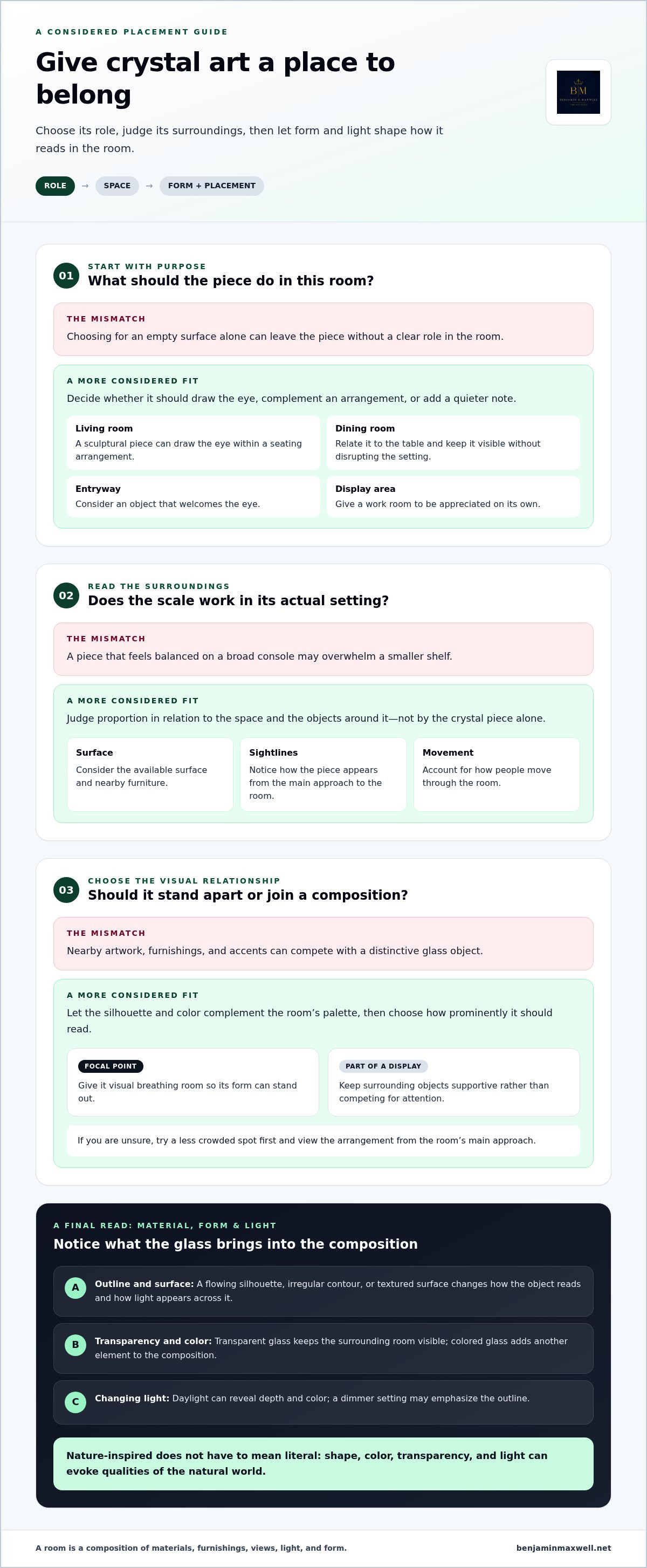
Choose with the room in mind, not simply the empty surface. A considered piece of nature-inspired crystal art can serve as a focal point, complement a furniture arrangement, or bring a quieter note to a display. Use this sequence to guide your decision:
- Identify the room’s visual role. In a living room, a sculptural piece might draw the eye within a seating arrangement. In a dining room, consider how it relates to the table and remains visible without disrupting the setting. An entryway may call for an object that welcomes the eye, while a display area can give a work room to be appreciated on its own.
- Assess available space. Consider the surface, nearby furniture, sightlines, and how people move through the room. A piece that feels balanced on a broad console may overwhelm a smaller shelf. Judge proportion in relation to the objects around it, not by the crystal piece alone.
- Choose form and placement. Let the object’s silhouette and color complement the room’s palette. Decide whether it should stand apart as a focal point or contribute to a larger composition. If you are unsure, first try it in a less crowded spot and view it from the main approach to the room.
Compose a considered display
Give a distinctive glass object visual breathing room. Nearby artwork, furnishings, and decorative accents should support its presence rather than compete for attention. You might simplify surrounding objects or leave part of the surface clear. Then view the arrangement from the room’s main vantage points. A composition that looks balanced up close may feel crowded across the room.
Light changes the impression. Observe how daylight and evening illumination affect the glass’s transparency, color, and outline. The In-Home Visualizer can help you picture décor in your room as you consider placement. Return to the arrangement at different times of day, and adjust until the piece feels integrated rather than imposed.
Daum Crystal Art: A Meeting of Artistic Heritage and Nature-Led Interiors
Choosing a sculptural glass object for a nature-led interior is not simply a matter of matching a motif. Consider how its form sits within the room, how its material responds to light, and whether its presence complements the details already there. Nature-inspired crystal art can suggest an affinity with the natural world while remaining an independent work of decorative art.
What Daum’s artistic story adds to the conversation
Daum is a house of hand-crafted crystal glass objects and artistic décor. Its heritage connects with École de Nancy, Arts Décoratifs, Art Nouveau, and Art Deco, and includes more than 350 collaborations with artists and designers. Daum describes itself as “a House of light and color where creativity knows no bounds and know-how is unique.” Its artistic background places each object within a wider conversation between artistic vision, material, and interior space.
That context can guide a considered choice without assuming every Daum object depicts nature. A piece may suit a nature-led room through its sculptural presence, its relationship to surrounding colors, or the way it draws the eye. The room’s existing character remains central: the object should feel in dialogue with its setting, not simply added to meet a theme.
Explore crystal art with intention
As you browse, consider three questions: What form draws your attention? Where might the object sit, and from which viewpoints will it be seen? How will it relate to nearby furniture, artwork, and decorative accents? These questions help distinguish a considered focal point from an impulse purchase and make the choice more personal.
For further context, explore our article on Daum’s artistic heritage, then browse the curated crystal and décor selection with your room’s scale, palette, and light in mind. A well-chosen piece can bring artistry to an interior while allowing its natural references to remain subtle and individual.
Bring a Considered Natural Note Home
Nature-inspired crystal art can connect an interior with the natural world through sculptural form, color, transparency, and light, without relying on literal botanical decoration. Its success depends on thoughtful selection: consider the room’s purpose, the object’s scale, and how it relates to nearby furnishings and changing light. Give a distinctive piece space to be appreciated rather than letting it compete with a crowded display.
Artistic heritage can add another layer of meaning. Daum’s story connects with École de Nancy, Arts Décoratifs, Art Nouveau, and Art Deco, and includes more than 350 collaborations with artists and designers. This offers context for considering crystal as both crafted material and expressive décor, while each object retains its own character.
Choose a piece that feels at home in your space and invites you to look again. Explore Benjamin & Maxwell’s curated Daum crystal and home décor selection to find an object for your interior.
Frequently Asked Questions
Is nature-inspired crystal art considered biophilic design?
Yes, it can contribute to biophilic design as an indirect visual reference to nature. A crystal sculpture with organic contours, natural-looking color, or a play of transparency and light may bring that connection into a room. One object alone doesn’t make an entire interior biophilic, however. Consider it alongside other elements, such as greenery, natural materials, views, and daylight.
How can I use crystal art in a biophilic interior?
Use crystal art as one considered element in the room’s wider composition. Choose a piece whose form or color complements the space, then give it a position where its silhouette and relationship to light are visible. For example, a sculpture on a console can add an expressive note beside natural materials or plants. Keep nearby décor restrained so the glass remains distinct rather than crowded.
What makes crystal art feel inspired by nature?
Its visual qualities can suggest natural forms without literally depicting them. Look for flowing or irregular outlines, translucent surfaces, and colors that bring to mind water, foliage, stone, or sky. Light also shapes the impression, revealing the glass’s depth and changing the way it reads from different viewpoints. These are design cues; the association each viewer makes remains personal.
Where should I place a nature-inspired crystal sculpture?
Place a sculpture where it has visual space and can be appreciated from the room’s main viewing positions. A console in an entryway, a display shelf, or a living-room surface may suit a piece, depending on its scale and how it relates to nearby furniture and artwork. Check the arrangement in daylight and evening light, and adjust if other accents compete for attention.

Article by
Spencer Kay
Spencer is the founder and CEO of Benjamin & Maxwell and has created the most advanced technology-based website in the furniture industry. He has extensive experience in both technology and business operations having started a number of technology companies. Spencer holds a BA Degree in Economics and an MBA in International Business
Disclaimer
Benjamin & Maxwell does not intend for any of our products to be used for any specific purpose.


