

What if the right sculpture isn’t the most dramatic one, but the piece that feels unmistakably at home? Choosing handmade crystal sculptures is personal: artistic style and form matter, but a product listing can’t always show how a piece will catch the light or sit within a room. You’re looking for more than a beautiful object; you want one that reflects your taste.
This guide will help you choose with greater confidence by considering a sculpture’s artistic character, visual presence, and place in your home. You’ll learn how to compare the details a product description provides and how to picture the setting before deciding. Benjamin & Maxwell offers Daum’s handcrafted crystal glass figurines, sculptures, bowls, vases, and other decorative objects. Its In Home Visualizer lets you use a room photo to picture selected décor in your space. Take a thoughtful look at what draws you in, and find a piece with meaning beyond its display.
Key Takeaways
- Choose handmade crystal sculptures by considering their artistic character, visual presence, and the personal meaning they bring to your home.
- Compare each piece’s product description and visible form, color, and design before deciding how it may suit your space.
- Daum’s artistic heritage draws on movements including Art Nouveau and Art Deco, and its crystal pieces range from figurines and sculptures to bowls and vases.
- Use the In Home Visualizer to picture selected décor in your room, then consider its focal role and how it feels alongside your surroundings.
What Makes Handmade Crystal Sculptures Distinctive?
A handmade crystal sculpture is a glass object shaped to express a form, an artistic idea, or a maker’s craft. Its purpose is often to invite attention and interpretation rather than serve an everyday function. The word “crystal” is often used broadly for decorative glass; when choosing, focus on the specific material and craftsmanship details in the product description rather than assuming a particular composition.
Handmade glass makes the material itself a medium for artistic expression. Daum’s decorative crystal reflects an artistic heritage influenced by the École de Nancy, Arts Décoratifs, Art Nouveau, and Art Deco, while its sculptural pieces continue to be reinvented. The Studio Glass Movement offers useful context for understanding how glassmaking developed as an individual artistic practice rather than solely factory production.
For a closer look at the making of crystal sculptures, watch this video:
A sculpture’s character is shaped not only by its outline but by its relationship with light. Transparency can make a form feel delicate or open; color can lend it warmth or visual weight. Reflections and changing light bring movement to the surface, while the silhouette determines how clearly the piece reads from across a room. When comparing handmade crystal sculptures, look at these qualities together: a finely detailed form may reward close viewing, while a stronger silhouette can make its presence felt from farther away.
Sculptural art or functional glass: what are you choosing?
Consider whether you’re drawn to an object for display, practical use, or both. A figurine or sculptural object is chosen primarily for its artistic presence, while a bowl or vase may also have a practical role. Daum’s range includes figurines, sculptures, bowls, and vases, so start by deciding what you want the piece to do in your home. Neither role is inherently better; each brings a different kind of pleasure. Choose the purpose that feels right, then notice how the form and finish support it.
That distinction offers a useful starting point: look beyond the word “crystal” and consider what the glass is meant to do, and how its presence makes you feel.
How to Compare Handmade Crystal Sculptures Before You Choose
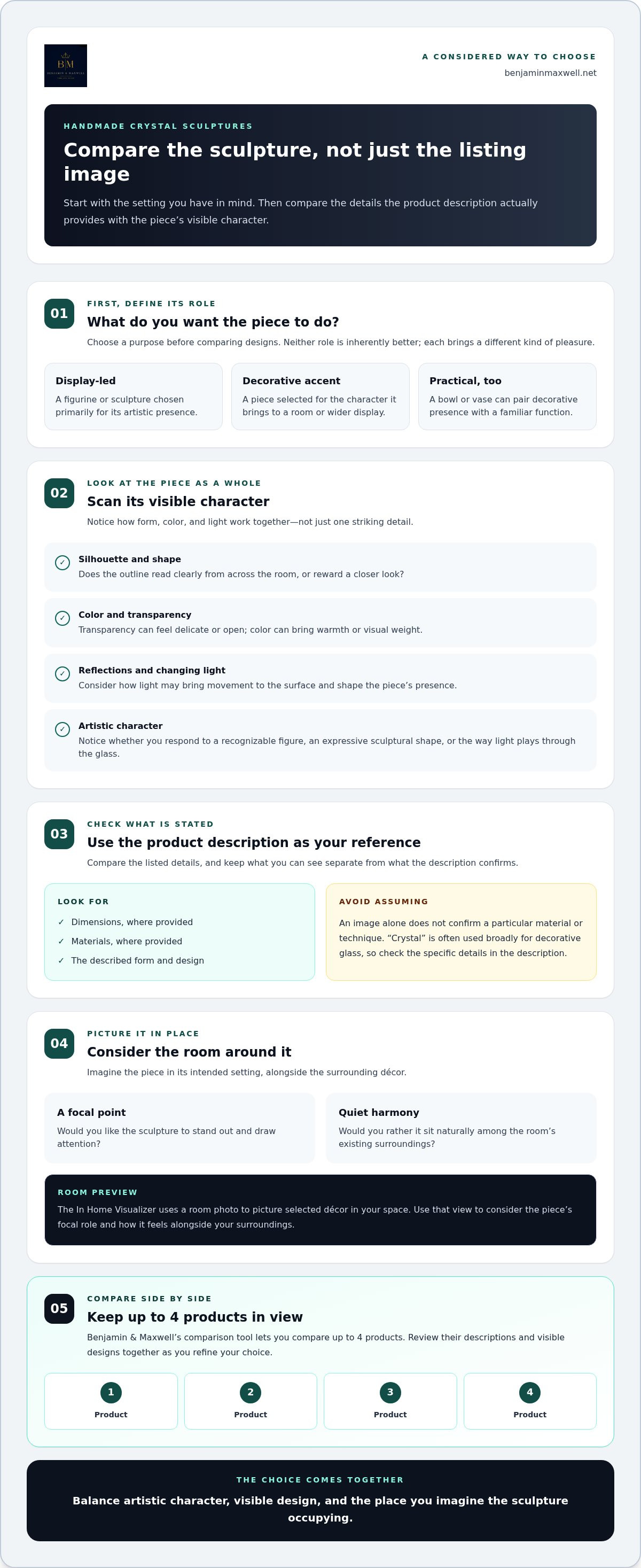
A striking piece can catch your eye and still feel out of place at home. Begin with the setting you have in mind, then compare the sculpture’s visible character and the details actually stated in its product description. Check the listed dimensions and materials where provided, and don’t infer a particular material or technique from an image alone. For broader context on how glass is made, explore the Corning Museum of Glass resource on glassmaking techniques.
- Identify its purpose. Decide whether you want a display-led art object, a decorative accent, or glass that also serves a practical function.
- Assess form and color. Notice the silhouette, overall shape, and colors shown. Ask whether the design feels figurative, symbolic, or led by its color.
- Consider placement. Picture the piece in its intended setting. Think about the surrounding décor and whether you want it to stand out or sit in quiet harmony with the room.
The strongest choice balances artistic character, visible design, and the place you imagine it occupying. This keeps a captivating image in perspective: a sculpture needn’t suit every interior to be right for yours.
Which artistic character fits your taste?
Daum’s pieces bring together glassmaking and artistic design, with a heritage shaped by movements including Art Nouveau and Art Deco. As you compare sculptures, look at their form, color, and surface, then read how each piece is described. Ask yourself whether you respond most to a recognizable figure, an expressive sculptural shape, or the way light plays through the glass. These observations help you identify what appeals without assuming a particular meaning or technique that the description does not state.
For a side-by-side review, Benjamin & Maxwell’s comparison tool lets you compare up to 4 products. It can help you keep descriptions and visible designs in view as you refine your choice. You can also explore handmade glass figures as you consider which artistic character feels most at home in your space.
Handmade Glass Figures and Sculptures: Collection Pieces to Consider
Individual pieces reveal how varied handmade crystal sculptures can be in form, color, and visual character. Daum’s range includes figurines, sculptures, bowls, vases, and other interior décor objects. Consider each product description as a starting point: it helps you compare what is actually presented without assuming dimensions, materials, or meaning beyond the details provided.
- Figurines give a collection a recognizable subject and a defined silhouette. Consider how the figure reads from different angles and whether you want it to be a focal point or part of a wider display.
- Sculptures can draw attention through their overall shape and artistic character. Look closely at the form shown and the description provided, rather than assigning a meaning that is not stated.
- Bowls and vases combine decorative presence with a familiar function. Consider whether you want the object to be displayed on its own or used as part of an arrangement.
Match the piece to the impression you want to create
Start with the image and language that resonate most. Daum’s sculptural pieces reflect an artistic heritage connected with Art Nouveau and Art Deco, while its range includes both figurative forms and objects such as bowls and vases. Consider whether you’re drawn to a recognizable figure, a more abstract sculptural presence, or an object that can also serve a practical role. Let the product’s actual form and description guide your response.
Rather than choosing by description alone, notice which piece you return to and imagine how its color and form might sit among the objects around it. That personal response is part of collecting: the right sculpture is not simply striking, but meaningful to you.
Explore the handmade glass figures and sculptures to compare these artistic characters and discover which one draws your eye.
Choose and Picture a Handmade Crystal Sculpture in Your Home
A sculpture’s presence depends on more than its appearance on a screen. Consider the setting you have in mind, the surrounding décor, and whether you want the piece to draw the eye or complement what is already there. Most importantly, notice your own response: a meaningful choice should feel compelling to you, not simply impressive in a listing.
Before deciding, use this checklist:
- Intended room: Where are you imagining the sculpture?
- Visual focus: Should it serve as a focal object or contribute to a quieter arrangement?
- Surrounding décor: How might its form and color relate to the objects and palette nearby?
- Personal response: Do you enjoy looking at it, and does it feel like a natural choice for your home?
Use room visualization to make a considered choice
Benjamin & Maxwell’s room visualization tool lets you use a photo of your room to picture selected décor in place. Upload a room photo, select a piece, and view it through augmented reality or interact with its 3D presentation. Save visualized scenes to revisit and consider how different selections feel in your space. This offers a useful point of reference as you weigh a sculpture’s presence against the room around it.
Use the visualized view as one part of your decision, alongside the product description and your own sense of what suits the setting. Handmade crystal sculptures can command attention, but the right one need not dominate; its significance may come from the way its form, color, and character resonate with you.
Ready to explore? Browse the handmade glass figures and sculptures and consider which piece feels right for your home.
Choose a Sculpture That Feels at Home
The right piece is more than a striking form. It reflects your taste, suits the setting you have in mind, and earns its place through the way you respond to it. As you compare handmade crystal sculptures, focus on the visible design and product description, then picture how its color and silhouette might relate to your surroundings.
Daum’s handcrafted crystal glass collection includes figurines, sculptures, bowls, vases, and other decorative pieces, with artistic influences drawn from movements such as Art Nouveau and Art Deco. Benjamin & Maxwell’s photo-based room visualization, with AR and 3D interaction, can help you picture selected décor in your space as you weigh your options.
Let your choice be guided by both thoughtful comparison and personal connection. Browse handmade glass figures and sculptural décor to explore the possibilities, and enjoy finding a piece that feels distinctly yours.
Frequently Asked Questions
What should I look for when buying a handmade crystal sculpture?
Consider its artistic character, visible form and color, intended purpose, and the place you imagine it occupying. Read the product description closely, and base your comparison on details it actually provides rather than assumptions about materials or technique. With handmade crystal sculptures, a thoughtful choice balances what draws your eye with how the piece may relate to your home and personal taste.
Are handmade glass sculptures decorative or functional?
They can be decorative, functional, or primarily one or the other, depending on the piece. A figurine or sculptural object is generally chosen for its visual presence, while a bowl or vase may also have a practical role. Daum’s collection includes both sculptural and decorative glass objects. Neither purpose is inherently superior; decide whether you want an artwork to enjoy visually, an item for everyday use, or both.
How can I tell whether a glass sculpture will suit my room?
Consider the setting, surrounding décor, and whether you want the sculpture to become a focal point or complement the room. Benjamin & Maxwell’s In Home Visualizer lets you upload a room photo and view selected décor in the space with augmented reality and 3D interaction. You can adjust and save visualized scenes, giving you a helpful reference as you consider the piece’s presence at home.
What makes handmade glass figures different from mass-produced décor?
Handmade glass figures are presented through their craftsmanship, sculptural form, and artistic character. That gives you specific qualities to consider, such as a piece’s described shape, color, or surface. Production methods and details vary across decorative glass, so for an individual piece, rely on its product description and visible design rather than assuming features that aren’t stated.
Can I compare handmade crystal sculptures before choosing one?
Yes. Compare the purpose, product descriptions, visible forms, and colors, then consider how each option might sit in your intended setting. Benjamin & Maxwell’s product comparison tool lets you compare up to 4 products at one time, so you can review their details side by side. Pair that comparison with your personal response to each piece to make a more considered choice.

Article by
Spencer Kay
Spencer is the founder and CEO of Benjamin & Maxwell and has created the most advanced technology-based website in the furniture industry. He has extensive experience in both technology and business operations having started a number of technology companies. Spencer holds a BA Degree in Economics and an MBA in International Business
Disclaimer
Benjamin & Maxwell does not intend for any of our products to be used for any specific purpose.


