

What if the right designer piece isn’t the one that first catches your eye, but the one that feels right in the room and proves useful day after day? A catalogue can offer inspiration, yet choosing Per/Use designer furniture calls for more than admiring its appearance. The piece should answer a real need, suit its setting, and bring the right measure of visual presence.
Before you browse, consider how the furniture will be used, where it will sit, and what you want its design to contribute. Start with the task, check the space it needs, and then compare the options for function and visual fit. This guide walks through those steps, along with ways to use product listings and room visualization to make a more considered choice for your home or project.
Key Takeaways
- Write down the purpose and intended room before browsing, so you can compare pieces against a clear need.
- Check placement, room circulation, and nearby furnishings before weighing a piece’s visual impact.
- Use product listings for item-specific information, and avoid assuming a catalogue image describes every available option.
- Shortlist relevant Per/Use designer furniture, compare it against your priorities, and use the In Home Visualizer to consider how most products may look in your room.
What Makes Per/Use Designer Furniture Functional by Design?
Functional design furniture brings practical purpose and considered form together. It serves a clear role in everyday life while contributing to the character of a room, rather than relying on appearance alone. That distinction is a useful starting point when assessing Per/Use designer furniture. A brand name may catch your attention, but a suitable choice also needs to work for your needs and setting.
Consider four connected questions: What will the piece be used for? Where will it sit? How will it relate to the room around it? Does its presence suit the way you live or work? Looking through these lenses helps you judge a piece as part of a lived-in space, not simply as an attractive image in a catalogue.
How function and visual character work together
A well-considered piece can fulfil a practical role and help shape a room’s composition. Its scale, placement, and visual presence affect how the surrounding space feels, even when its primary purpose is straightforward. First define what you need the furniture to do. Then consider whether its appearance and proportions work with the room and its other furnishings. A design should make sense for the routines it will support, not just look appealing in a product image.
What the PER/USE brand pages emphasize
When browsing Per/Use designer furniture, treat the product listing as the place to review details about a specific piece. General ideas about functional or sustainable furniture can help frame your search, but they do not establish the characteristics of any particular item. For a broader understanding of sustainable furniture design, consider how design discussions address a product’s life cycle and material choices. Benjamin & Maxwell offers Per/Use furniture as part of its curated luxury furnishings assortment. Use your own requirements as a guide, then assess each listed option for its intended use, room context, and visual role.
Which Per/Use Designer Furniture Criteria Should You Compare?
Begin with the task the furniture must perform. Is it needed for seating, setting something down, or another purpose? Once that practical requirement is clear, consider how the piece can fit into the room. This order helps separate essentials, such as supporting an everyday activity, from preferences, such as whether its visual character should blend in or draw the eye.
Start with the room and the furniture’s purpose
Describe how the room functions now, then identify what the new piece should contribute. Note the furnishings already in place, the paths people use to move through the space, and whether the furniture will support a daily routine or occasional use. If you have a floor plan or can measure the intended spot, compare those dimensions with the item details in its listing. These checks can help you rule out options that do not suit the space before appearance becomes the deciding factor.
Compare practical fit with visual impact
Use the framework below to weigh each option. For projects where accessibility is a priority, the U.S. Access Board’s accessibility and ergonomic standards offer official guidance on accessible spaces and elements. Apply relevant guidance to the setting rather than assuming a furniture item meets a particular standard.
| Criterion | What to consider | Priority |
|---|---|---|
| Intended function | What task should the piece support in everyday use? | Essential practical need |
| Placement | Where will it sit, and will it leave room for movement? | Essential for the space |
| Room relationship | How will it relate to nearby furniture and the room’s existing use? | Practical and contextual |
| Visual role | Should it complement the setting or provide a focal point? | Design preference |
Use product listings for item-specific details, and compare only what each listing actually describes. To consider the room context, try the In Home Visualizer. Upload a photo of your room, select furniture or décor from the catalog, and view the product in that setting. The visualizer also lets you adjust items in the room view and save a scene to your photo gallery. It can help you weigh visual fit alongside the practical criteria that guide your choice of Per/Use designer furniture.
How Can You Avoid Common Mistakes When Choosing Per/Use Furniture?
A striking image can make a piece seem like an obvious choice, but appearance alone won’t tell you whether it suits the room or the task it needs to serve. A design shown in a catalogue setting may look different in your home. Check the product listing for details about the specific item, and focus your comparison on the Per/Use furniture presented by Benjamin & Maxwell rather than assuming every example or category shown elsewhere is part of the selection.
Selection checks before settling on a piece
Write one sentence stating the furniture’s purpose and intended room. Then review each shortlisted option against the same priorities: Can it fit where you plan to place it? Will it leave the movement space you need? Does it relate well to nearby furnishings, and will it support how you use the room? Keeping the criteria consistent helps prevent visual preference from overshadowing a practical need. For additional perspective, explore how to choose luxury furniture as you refine your shortlist.
Use visualization to assess the room relationship
A room photo can help you consider furniture in context rather than judging it in isolation. Benjamin & Maxwell’s In Home Visualizer lets you upload a photo of your room, select furniture or décor from the catalog, and view the items in your home environment. Its 3D viewer lets you rotate, move, and place items within the room view, and you can save a visualized scene to your photo gallery. Use the view as one aid alongside product information and the practical criteria that matter to your project.
When reviewing sustainability claims, distinguish broad principles from details about a particular piece. The Friend of the Earth sustainable furniture standards offer another reference point for understanding sustainable furniture criteria. Ready to continue your search? Explore the luxury furniture collection.
How to Explore Per/Use Designer Furniture for Your Project
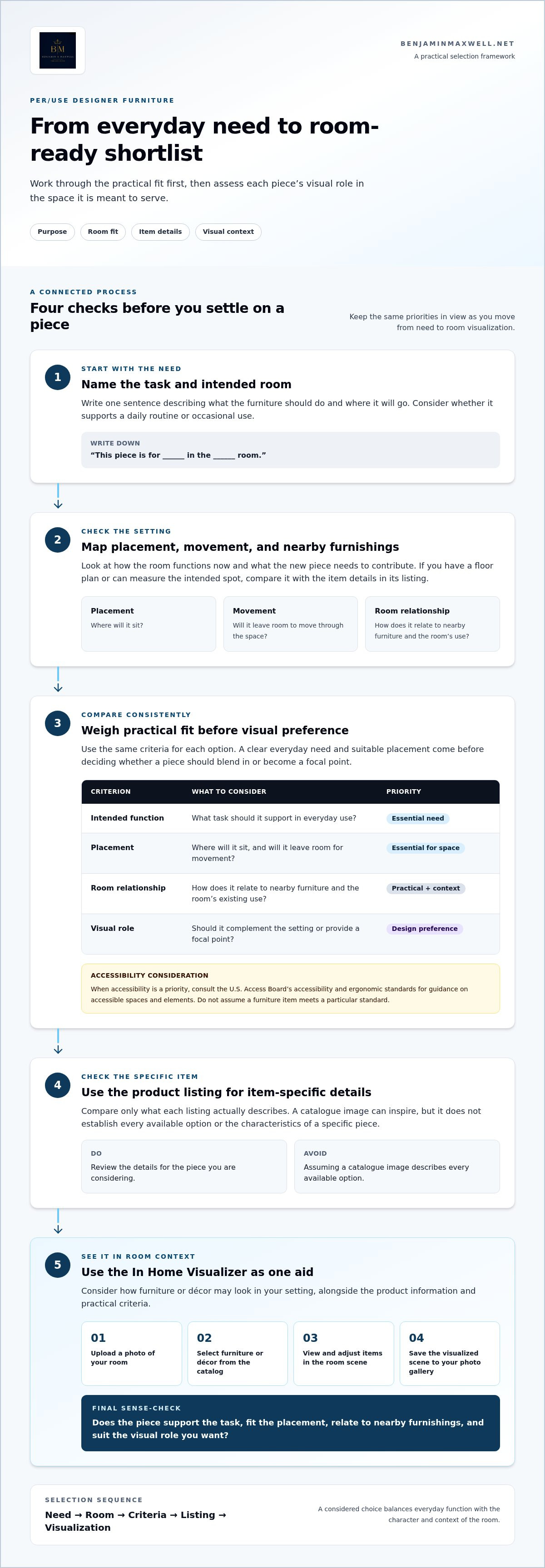
A considered search is easier when you move from need to room, rather than browsing without a clear purpose. Begin by stating what the furniture should do and where it will go. Then shortlist relevant options, compare them against your practical and visual priorities, and review how each might sit within the room as a whole.
Turn your priorities into a focused shortlist
Keep options that serve the intended purpose and feel aligned with the room’s design direction. For each one, revisit the criteria established earlier: function, placement, relationship to nearby furnishings, and visual role. Check the product listing for item-specific details and use the same questions for every option. This makes comparison more consistent and helps distinguish a genuine fit from an appealing image. If you’d like to broaden your search beyond this collection, browse the furniture collections.
Make the next step considered and simple
Before choosing, picture the shortlisted furniture in its intended setting. Benjamin & Maxwell’s In Home Visualizer lets you upload a room photo, view selected products in that environment, adjust their position in the room view, and save the scene. Return to your priorities as you review the options, and let practical suitability guide the decision alongside design.
Purpose, room fit, and design belong in the same decision: a well-chosen piece should answer a need and feel at home in its setting. Explore the high-end furniture collection with these criteria in mind as you consider Per/Use designer furniture for your project.
Choose a Piece That Belongs in Your Space
A considered furniture choice begins with its purpose, then takes shape through the room it will inhabit and the visual character it will bring. Assessing Per/Use designer furniture this way helps you look beyond an appealing image and focus on how a piece may suit your project and everyday routines.
Benjamin & Maxwell includes Per/Use furniture in its curated furnishings assortment. As you explore, compare each option against your practical needs and design priorities. The In Home Visualizer can also help you picture selected products in a photo of your room, bringing the room context into your decision.
Let function guide your shortlist, and let the setting refine it. Explore the high-end furniture collection as a next step in your search. With purpose, room fit, and design considered together, you can move forward with greater clarity.
Frequently Asked Questions
What is Per/Use designer furniture?
Per/Use designer furniture refers to furniture from the Per/Use brand. Benjamin & Maxwell offers Per/Use furniture within its curated furnishings assortment. To assess a particular piece, consider the role it should serve, the room where it will sit, and how its visual character relates to your surroundings. Refer to the product listing for item-specific information.
How do I choose Per/Use furniture for my home?
Choose Per/Use furniture by defining what you need it to do and where it will go. Consider how you use the room, how the piece will relate to nearby furnishings, and whether it will support your everyday routines. Then compare the available options against those priorities. This practical approach helps you balance function and appearance instead of choosing on visual appeal alone.
Can I see how furniture will look in my room before choosing?
Yes. Benjamin & Maxwell’s In Home Visualizer lets you upload a photo of your room and view selected furniture or décor in that setting. You can adjust items in the room view and save the visualized scene to your photo gallery. This gives you another way to consider a piece’s visual relationship to the space as you weigh your options.
What should I compare when buying designer furniture?
Compare intended function, placement, relationship to the room, and visual role. First identify any practical requirement the piece must meet, such as supporting a particular activity. Then consider how it will fit within the space and complement or shape the room’s appearance. Review the product listing for item-specific details, and apply the same criteria to each option for a more considered comparison.

Article by
Spencer Kay
Spencer is the founder and CEO of Benjamin & Maxwell and has created the most advanced technology-based website in the furniture industry. He has extensive experience in both technology and business operations having started a number of technology companies. Spencer holds a BA Degree in Economics and an MBA in International Business
Disclaimer
Benjamin & Maxwell does not intend for any of our products to be used for any specific purpose.


