

A crystal sculpture needs room to breathe, not a crowded stage. To display crystal sculptures with poise, choose a considered position, use light to reveal the facets, and select a surface or pedestal suited to the piece’s scale. Keep nearby objects restrained so the sculpture remains the focal point.
It’s natural to want a treasured piece to catch the eye while still feeling at home in the room. Thoughtful placement creates that balance: a crystal can stand out without dominating its setting, while familiar objects add warmth without competing for attention.
This guide covers where to place and how to light crystal sculptures, how to pair them with natural materials and home accents, and how to present oversized pieces on pedestals. It also explores window light, display cases, and contrasting textures that help reveal a sculpture’s form. With a few deliberate choices, a piece can feel less like an ornament set aside and more like a lasting part of the home.
Key Takeaways
- Choose a position where the sculpture’s shape can be appreciated without crowding the room.
- Use natural materials and considered contrasts to create a setting that complements the crystal.
- Give an oversized piece a pedestal scaled to its presence, with a finish that brings out its color.
- Arrange familiar decorative objects with restraint so they frame the sculpture rather than compete with it.
1. Choosing placement and lighting to suit a room
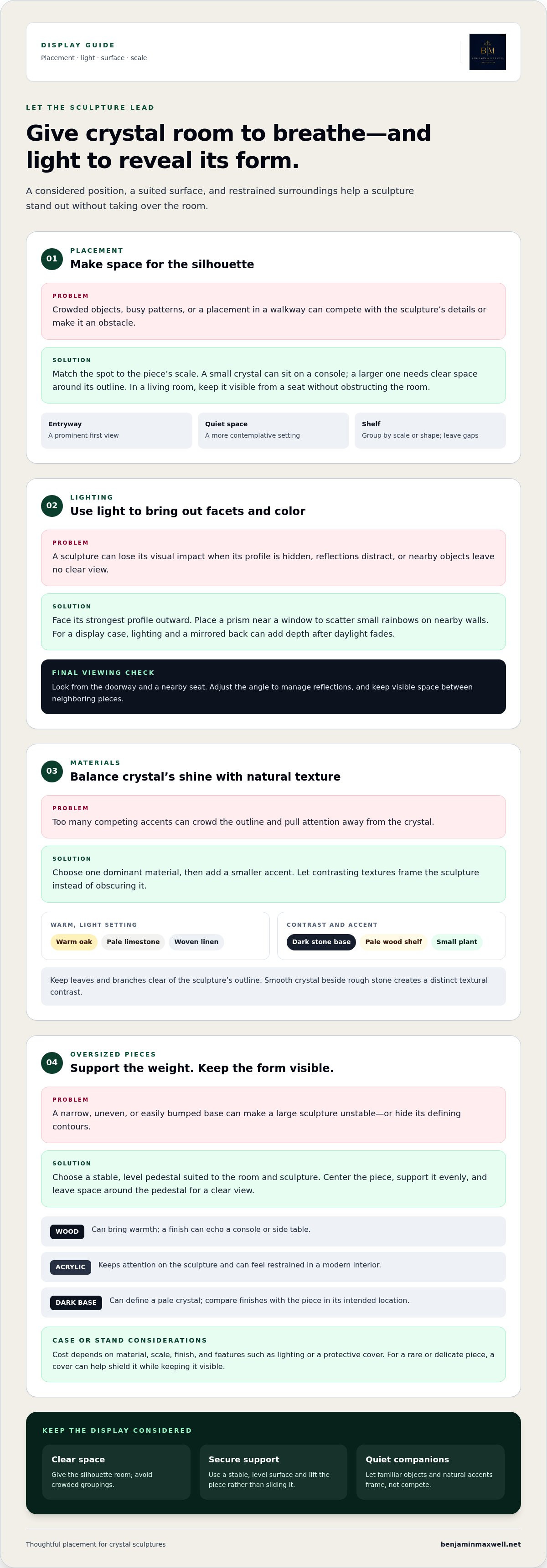
Start by matching the sculpture’s scale to its surroundings. A small crystal can sit on a console; a larger piece needs clear space around its outline. In a living room, place it where seated visitors can appreciate its form without making it an obstacle. An entryway gives a sculpture a prominent first view, while a quieter space can offer a more contemplative setting. Keep busy patterns and crowded objects from competing with its details.
A lighted, floor-standing display case with a mirrored back can show crystals from multiple angles. Its height creates a vertical gallery, separating pieces by form or color instead of crowding one surface. Choose a location with enough room, whether in a living room, entryway, or another suitable space. Face each sculpture’s strongest profile outward and leave visible space between neighboring pieces, giving every silhouette room to stand out.
On shelves, arrange sculptures by scale or shape, giving each a distinct position. Set a larger piece beside smaller objects rather than lining every crystal along one shelf. Keep the most detailed sculpture near eye level, where its facets are easy to appreciate. If you’re considering how to display crystal sculptures on shelves, start with a restrained grouping and clear space around each piece.
Light can transform a crystal’s presence. Place a prism near a window, where natural sunlight can scatter small rainbows across nearby walls. A crystal can also hang in view from a sturdy hook and fishing line, positioned so its colors fall across an uncluttered wall. When deciding how to display crystal sculptures, consider how light reveals their contours. In a case, lighting and a mirrored back add depth after daylight fades. View the piece from the doorway and a nearby seat, then adjust its angle to manage reflections.
2. Combining crystals with natural elements
Natural textures give crystal a composed, welcoming setting. Pair a clear sculpture with warm oak, pale limestone, or woven linen to balance its reflective surface. A dark stone base can contrast with a translucent form, while a pale wood shelf keeps the arrangement light. Choose one dominant material, then add a smaller accent, such as a ceramic dish or a branch in a simple vase.
For a shelf arrangement, set the sculpture beside a natural object with a different texture. Smooth crystal next to rough stone creates clear contrast; a small plant can add softness nearby. Keep leaves and branches from obscuring the sculpture’s outline. Leave open space around its most distinctive contours so natural accents frame, rather than crowd, the piece.
To clean and dust crystal sculptures safely, hold each piece securely and wipe it with a clean, soft, lint-free cloth. Use gentle strokes, taking care around narrow points and delicate edges. Avoid abrasive pads and harsh cleaners, which can mark the surface or leave residue.
To help prevent scratches, display each sculpture on a stable surface with a smooth, clean base. Keep it separate from stone, metal, or other hard objects that could knock against it. When moving a piece, lift it rather than sliding it, and set it down gently. A clear spot on a wood console is safer than a crowded tray where objects may shift.
Build a natural palette around the room’s existing finishes. For example, combine a crystal sculpture, a linen runner, and a single wooden accent on a console. In a room with dark furniture, pale stone can brighten the composition; with light oak, a deeper-toned natural accent can add definition. Consider crystal pieces for your home as you refine the arrangement.
3. Displaying oversized crystals on pedestals
An oversized crystal needs a pedestal that supports its visual weight. Choose a height suited to the room, letting the piece command attention without overwhelming nearby furniture. In a minimalist living room, a simple pedestal keeps the sculpture central. In a more layered interior, a pedestal can echo the finish of a console or side table. Black laminate, acrylic, and wood can each enhance a crystal’s color. Compare the crystal against each surface in its intended location. A darker base may define a pale piece, while clear acrylic keeps attention on the sculpture itself.
How much do crystal display cases and stands cost? The cost depends on the stand’s material, scale, finish, and features, such as lighting or a protective cover. Match the display to the sculpture rather than choosing by appearance alone. A hardwood or mirrored-base display box can suit a large or unusually shaped piece. Mirrored accents also create a fuller view of its form. For a rare or delicate crystal, a built-in protective cover can help shield it while keeping it visible.
To choose a case or stand, start with the sculpture’s footprint and silhouette. The base should support the piece without hiding its defining contours. Then consider the room: a wooden pedestal can bring warmth to a formal space, while acrylic can feel restrained in a modern interior. Select a finish that complements the crystal’s color rather than competing with it. Leave enough space around the pedestal for a clear view from the room’s main approach.
To prevent tipping, place the sculpture near the center of a stable, level pedestal. Keep the display away from busy walkways, doors, and surfaces that are easily bumped. Avoid balancing the crystal on a narrow edge or uneven decorative base. For example, place a broad sculpture on a solid wood pedestal, with its weight evenly supported. A protective cover can add a barrier around a delicate piece. Before settling the arrangement, view it from nearby seating and the entrance, then adjust the sculpture until it stands securely and is clearly visible.
4. Pairing crystals with everyday home items
A crystal sculpture can feel at home beside objects used every day. On a living-room console, pair a small piece with a ceramic catchall for keys or a neatly stacked book. Keep the sculpture distinct by choosing companions with calmer surfaces. A glass vase, wooden tray, or matte candleholder can add texture without drawing attention from its facets. Leave visible surface around each object so the arrangement feels composed rather than crowded.
Open shelving offers a natural setting for a crystal display box. Place the box at eye level, then arrange smaller objects around it, such as a framed photograph, a book, or a modest bowl. Vary the objects’ heights to create a considered rhythm across the shelf. Keep the box’s outline clear, and avoid placing a tall vase directly in front. This keeps the crystal visible while everyday possessions make the display feel personal.
For smaller crystals, try a decorative bowl in a contrasting color. A dark bowl can define pale pieces, while a light bowl can make darker crystals stand out. Choose a shallow shape that keeps the pieces visible instead of hiding them inside. Place the bowl on a coffee table with one book or a small dish nearby. The color contrast becomes the focal point, while familiar objects give the arrangement an easy, lived-in quality.
Before finalizing a grouping, try a simple editing step: remove one object and compare the arrangement. A console with a sculpture, a stack of books, and a vase may feel balanced; adding a clock and several small ornaments can make it look busy. Repeat a finish, such as warm wood, once elsewhere in the grouping to create continuity. Keep practical items within reach, but give the crystal a clear visual role.
Explore crystal accents for the home to find a piece that suits a shelf, table, or console.
Benjamin & Maxwell: Daum Crystal
Benjamin & Maxwell offers Daum Crystal for those seeking a sculptural focal point with enduring presence. Once you’ve considered placement, light, and scale, choose a piece that suits your room and brings the arrangement together. Daum Crystal can sit within a broader home setting alongside furniture such as Cattelan Italia pieces. The In Home Visualizer helps you see how selected pieces may look in your space. Kosta Boda Glassware offers another way to bring glass into everyday rooms, with a different form and function. Consider your existing furnishings and available space as you make your selection. Explore Daum Crystal at Benjamin & Maxwell.
Let Your Display Evolve With Your Home
As you decide how to display crystal sculptures, let the arrangement grow from a considered choice. The piece should feel connected to the home you inhabit, not reserved for a formal occasion. Leave room for the display to evolve as furnishings shift, daylight changes, or another object earns its place nearby. A well-chosen sculpture can become part of daily life, a quiet point of character in a room.
Return to the arrangement after living with it. Notice which views feel most natural and whether surrounding objects still support, rather than distract from, the sculpture. Small adjustments can keep the display in harmony with a changing interior. Let your choices reflect how you use and enjoy your space.
When you’re ready to explore a crystal sculpture for your home, contact Benjamin & Maxwell. Take the next step toward a display that feels distinctly yours.
Display Crystal Sculptures with Benjamin & Maxwell
Benjamin & Maxwell offers Daum Crystal and Kosta Boda glassware, home decor, and gifts, including glass vases, bowls, statues, and figurines. After choosing a stable, visible spot with suitable lighting, explore these collections for pieces that complement your sculpture’s display.
To bring the setting together, Benjamin & Maxwell also offers luxury furniture and home decor, including consoles, cocktail tables, and wall units. Use the In Home Visualizer to see how furniture and crystal pieces work together in your space.
Frequently Asked Questions
What lighting is best for displaying crystal sculptures?
Soft, indirect lighting usually shows crystal clearly without creating harsh glare. Position a lamp so its light falls across the sculpture rather than directly into the viewer’s eyes. A shaded table lamp can provide a gentle evening glow, while a nearby window offers changing daylight. Check the piece from the room’s main seating area, since reflections can look different from each angle.
Where should crystal sculptures be placed to avoid direct sunlight and heat?
Choose a spot away from sunny windows, radiators, fireplaces, and heating vents. A sideboard on an interior wall or a shelf outside the path of direct sun can provide a calmer setting. If sunlight shifts across the room during the day, observe the display at different times and move it out of the sun’s direct reach.
How do you display crystal sculptures in a small space?
Use one sculpture as a deliberate accent instead of filling every available surface. A compact console, cleared bookcase shelf, or recessed niche can make room without interrupting daily movement. Keep nearby décor simple, and consider a vertical position that draws the eye upward. In a studio or narrow entry, choose a location visible from the doorway but clear of passing bags and coats.
Are there special considerations for displaying large or valuable crystal sculptures?
Yes. Place a large or valuable sculpture on a sturdy surface that can support it, away from door swings, busy routes, and active play areas. Keep enough of the surrounding surface clear to handle the piece carefully while dusting. For a particularly delicate sculpture, a display cabinet with a protective cover can limit accidental contact while preserving visibility. Avoid placing it where routine cleaning could knock it over.

Article by
Spencer Kay
Spencer is the founder and CEO of Benjamin & Maxwell and has created the most advanced technology-based website in the furniture industry. He has extensive experience in both technology and business operations having started a number of technology companies. Spencer holds a BA Degree in Economics and an MBA in International Business
Disclaimer
Benjamin & Maxwell does not intend for any of our products to be used for any specific purpose.


