

Luxury crystal glassware for entertaining earns its distinction through both material and making. Its cost reflects the skill involved in shaping and finishing each piece, from hand-blowing to careful cutting and engraving, as well as the clarity and presence it brings to a table or cocktail setting.
When choosing glasses for a gathering or a memorable gift, it’s natural to ask what distinguishes crystal from ordinary glass. The difference is not just visual: craftsmanship gives each piece its character and makes its form part of the occasion.
Explore what influences crystal’s cost, how traditional techniques shape glassware, and which pieces suit serving drinks, welcoming guests, or marking a special moment. Understanding materials, design, and intended use helps you choose a piece that feels right for the occasion and at home.
Key Takeaways
- Look beyond appearance to understand how material and skilled finishing contribute to crystal’s character and value.
- Match cocktail glass shapes to the drinks and atmosphere you want to create when entertaining.
- Choose a crystal gift with the occasion and the recipient’s taste in mind, so it feels personal as well as enduring.
- Understand the distinction between lead crystal and lead-free glassware, including why serving and storage are different considerations.
Craftsmanship and materials used in high-end crystal
In high-end crystal, the material matters, but skilled handwork gives each piece its character. Examine how it is shaped, cut, and finished before considering its place at the table.
Crystal Craftsmanship
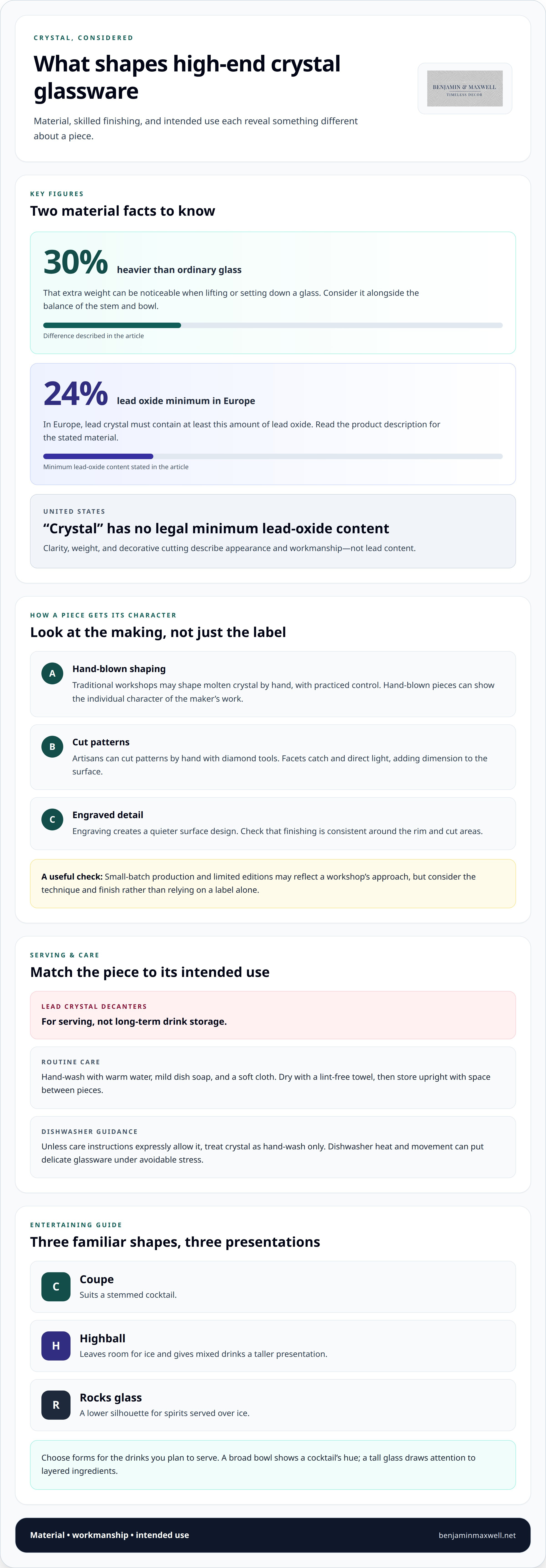
Traditional workshops may shape molten crystal by hand-blowing it with practiced control. Artisans can then cut patterns by hand with diamond tools or add detail through engraving. Facets catch and direct light, while engraved lines create a quieter surface design. Look for consistent finishing around the rim and cut areas. Small-batch production and limited editions may also reflect a workshop’s approach, but consider the technique and finish rather than relying on a label alone.
Material affects the way a glass feels in the hand. Crystal is about 30% heavier than ordinary glass, a difference you may notice when lifting or setting down a glass. Consider that weight alongside the balance of the stem and bowl. Hand-blown pieces can also show the individual character of the maker’s work, while cut details give the surface another dimension. These are useful points to assess when choosing pieces for regular use or a formal table.
Lead and Lead-Free Glassware
Lead crystal and lead-free crystal glassware differ in composition, but the word “crystal” alone does not settle that distinction in the United States. The term has no legal minimum lead-oxide content in the country. In Europe, lead crystal must contain at least 24% lead oxide. Read the product description for its stated material rather than relying on clarity, weight, or decorative cutting as proof of composition. Those visual qualities describe appearance and workmanship, not the glass’s lead content.
Serving and storage also call for different considerations. Lead crystal decanters are intended for serving rather than long-term drink storage. California Proposition 65 is identified as the Safe Drinking Water and Toxic Enforcement Act of 1986 by the California Office of Environmental Health Hazard Assessment. That name provides context for the law; it does not identify the composition of a particular glass. For entertaining, choose glassware by its stated material and intended use, then let its craftsmanship and design guide the presentation.
Crystal cocktail glass design and entertaining
For routine care, wash crystal by hand with warm water, mild dish soap, and a soft cloth. Dry each glass with a lint-free towel, then store it upright with space between pieces to limit contact.
Is luxury crystal glassware dishwasher safe? Unless the care instructions expressly allow it, treat crystal as hand-wash only. A dishwasher’s heat and movement can put delicate glassware under avoidable stress.
Choosing luxury crystal glassware for entertaining starts with the drinks you plan to serve. A coupe suits a stemmed cocktail, while a highball leaves room for ice and gives mixed drinks a taller presentation. A rocks glass offers a lower silhouette for spirits served over ice. These familiar shapes help distinguish drinks and give the table a composed rhythm.
Consider how each glass presents color, layers, and garnishes. A broad bowl shows a cocktail’s hue, while a tall glass draws attention to layered ingredients. If your menu includes a martini and a sparkling cocktail, distinct silhouettes make each pour feel intentional. Choose forms that suit the drinks rather than adding decoration without purpose.
The best luxury crystal glassware for entertaining also complements its setting. Pair a sculptural glass with simple plates, or echo its cut details in a nearby vase. Group matching glasses at each place and leave room for serving pieces. This balance lets the design enrich the table without competing with the meal.
Build a collection around a versatile form you’ll use for different occasions, then add specialized silhouettes as your needs evolve. Consider the bowl, stem, and base alongside the bottles and tableware you already own. Explore crystal glassware and home accents to find pieces suited to your entertaining style.
Crystal gifts for special occasions
A crystal gift can mark a wedding, anniversary, housewarming, or milestone birthday with lasting presence. Begin with the occasion, then consider how the recipient uses and displays meaningful objects. A pair of cocktail glasses suits someone who enjoys hosting; a decorative bowl may feel more fitting for a home with an established table setting.
For a wedding or anniversary, choose a piece that could become part of shared rituals. Glasses may come out for a toast, while a vase can hold flowers on a dining table or console. For a housewarming, consider the rooms and surfaces the recipient already uses. A compact decorative object may suit a smaller space better than a large centerpiece.
Use these questions to narrow the choice:
- Purpose: Will the recipient serve drinks, arrange flowers, or display the piece?
- Setting: Does the home favor clean lines, ornate details, or sculptural forms?
- Occasion: Should the gift feel suited to a wedding toast, a host’s table, or a new home?
- Care: Would the recipient enjoy a piece that calls for careful handling and storage?
For a host gift, choose something that complements an evening without dictating the table’s style. A serving bowl can hold fruit or serve as a focal point; glassware can join the host’s existing bar arrangement. If you’re unsure of the recipient’s preferred colors or patterns, a restrained design may be easier to integrate than a strongly themed piece.
Presentation adds a final personal touch. Include a short card naming the occasion, such as a wedding date or housewarming, and explain why you chose that form. For a milestone birthday, connect the gift to a shared memory or a tradition the recipient enjoys. A thoughtful note can turn a beautiful object into a personal remembrance, ready to use or display.
How do lead crystal and lead-free crystal glassware compare?
The distinction between lead crystal and lead-free crystal glassware begins with composition, not appearance. Lead crystal contains lead oxide; lead-free crystal uses other materials to achieve its clarity and finish. In the United States, “crystal” has no legal minimum lead-oxide content, so the term alone does not identify a glass’s composition. Check the product description for material details, especially when selecting decanters or glasses for serving.
Long-term storage deserves particular care with lead crystal. Lead can migrate into drinks that remain in contact with the glass, and the amount can rise with time. Port wine stored in lead crystal decanters reached 89 µg/L after two days, and 2,000 to 5,000 µg/L after four months. Brandy stored for five years or more reached about 20,000 µg/L. These measurements illustrate why lead crystal decanters are suited to serving, not long-term storage.
For entertaining, consider how you’ll use each piece. A lead-free glass may suit a decanter intended to hold a drink between occasions, while lead crystal can serve as a striking vessel for a short pour. The choice also depends on the recipient’s priorities: material composition, visual character, and whether the piece is for serving or display. A product description that names the material helps clarify the choice.
Clarity, weight, and cut pattern alone cannot reliably identify either category. These qualities relate to appearance and workmanship, not proof of lead content. Keep serving pieces separate from storage vessels in your bar setup, and make the intended use clear to anyone pouring. This simple distinction helps you enjoy crystal thoughtfully while entertaining.
Explore crystal pieces for serving and display, chosen with composition and presentation in mind.
Benjamin & Maxwell: Daum Crystal
Benjamin & Maxwell brings together Daum Crystal and Kosta Boda Glassware for entertaining and gift selections. Explore these collections when choosing distinctive glassware or a crystal object for a special occasion. Glass bowls, vases, statues, and figurines offer decorative alternatives for recipients who prefer objects for display over serving ware.
Let the intended use guide your choice. Glassware can take its place at the table or bar, while a vase or figurine can become an enduring home accent. For a gift, consider the recipient’s taste and whether they’re likely to use or display it. That makes it easier to choose an object that feels personal and elegant.
For a closer look at crystal and glassware, contact Benjamin & Maxwell.
Choose a piece that becomes part of the occasion
Glassware earns its place through use. Picture the moments you want it to accompany: a quiet toast at home, a table set for friends, or a gift that marks a new chapter. Let that image guide your choice, so the piece feels connected to everyday life rather than reserved for display. A thoughtful design can become part of how you welcome people and celebrate milestones.
When considering luxury crystal glassware for entertaining, think beyond the next gathering. Choose with the rituals you hope to keep in mind, and let an elegant object gather meaning with each occasion. A thoughtful selection can make future celebrations feel more personal while adding lasting beauty to the home.
Contact Benjamin & Maxwell to continue your selection with care.
Frequently Asked Questions
What Is Crystal Glass, and Why Is It So Expensive?
Crystal glass is valued for its material qualities and the skill involved in shaping and finishing it. Cost reflects more than raw material: intricate cutting, engraving, hand-finishing, and distinctive design all call for specialist work. A piece with detailed engraved decoration, for example, requires different labor from a plain silhouette. Consider the finish and intended use, not appearance alone.
Is it safe to drink from lead crystal?
Lead crystal is intended for serving drinks, not long-term storage. Pour only what you plan to serve, then transfer any remaining drink to another vessel rather than leaving it in a lead crystal decanter. If you’re choosing a decanter to hold drinks between occasions, look for a product description that identifies its composition.
What Are the Best Crystal Brands in the World?
There isn’t one universally best crystal brand: makers differ in focus and style. Daum makes hand-crafted crystal and glass objects, including sculptural décor. Kosta Boda offers functional glass products for dining and everyday festivities, alongside artist-driven art glass. To choose between them, decide whether you want drinkware for use or an expressive object for display.
What are the best luxury crystal glassware brands for entertaining?
The right fit depends on the gathering and the glassware’s purpose. For functional drinkware, consider a maker whose range includes glass products for dining, such as Kosta Boda. For a statement gift or decorative accent, Daum’s sculptural glass objects offer a different direction. Match the maker’s focus to how you expect to enjoy the piece.
How much does luxury crystal glassware cost per glass and set?
There is no single cost for a glass or set. The total depends on the maker, design, material, finishing, and number of pieces. A simply shaped individual glass and a coordinated set with elaborate decoration involve different design and workmanship. Compare the piece count and finish, then choose what suits your intended use and budget.
How do popular luxury crystal glassware brands compare in design, quality, and price?
Compare brands by design focus, material description, and level of detail. Kosta Boda offers functional glassware and artist-led works, while Daum focuses on sculptural crystal and glass décor. Their different approaches make direct price comparisons less useful unless you’re comparing similar pieces. Compare like with like, such as drinkware against drinkware, and consider the finish and intended use.

Article by
Spencer Kay
Spencer is the founder and CEO of Benjamin & Maxwell and has created the most advanced technology-based website in the furniture industry. He has extensive experience in both technology and business operations having started a number of technology companies. Spencer holds a BA Degree in Economics and an MBA in International Business
Disclaimer
Benjamin & Maxwell does not intend for any of our products to be used for any specific purpose.


