

Avoiding buyer's remorse on expensive home decor starts with understanding the return policy before you commit. Benjamin & Maxwell does not accept returns, so review the product details and order terms carefully, especially for furniture made to order. Make sure the piece suits your room and needs before purchasing.
A beautiful finish or elegant silhouette can make a piece feel right at first glance. A confident purchase also depends on what lies beneath the surface: materials, proportions, practical use, and the terms of the sale.
This guide will help you review custom furniture return policies, assess upholstery and craftsmanship, and measure your room with doors, walkways, and existing furnishings in mind. With those details considered together, you can choose with greater confidence and bring home decor that feels well suited to your space and the way you live.
Key Takeaways
- Read the return terms for made-to-order furniture before purchasing, with particular attention to what applies if the piece doesn’t suit your needs.
- Compare materials, upholstery, and construction with your room’s finishes and the way you’ll use the piece.
- Measure the room, access routes, and existing furnishings so you can judge how a new item will fit in place.
- Set a dedicated decor budget and pause a purchase if emotion is outweighing your needs and spending priorities.
1. Checking return policies for custom furniture
Custom furniture deserves a careful policy review before you place an order. First, identify which details make the piece custom, such as its dimensions, upholstery, finish, or configuration. Then read the written terms for cancellations, changes, returns, and exchanges. A policy may treat a made-to-order sofa differently from a standard table, so don’t assume the same terms apply. Keep the order description and policy together for reference.
To compare prices fairly, look at pieces with similar dimensions, materials, construction, and included services. A lower price may reflect differences in fabric, finish, or delivery rather than better value. Note what each option includes, then weigh those details against the qualities you will use and appreciate every day. When comparing furniture brands, keep each brand’s options distinct and compare like with like.
Choose decor that supports your room’s existing character rather than relying on a product image alone. Identify the dominant colors in your flooring, rugs, walls, and nearby furnishings, then consider whether the new piece should harmonize or provide contrast. For upholstery, compare a sample against those finishes in daylight and evening light. This reveals how the color shifts within your own palette.
Before ordering, find the written terms for delivery, installation, and damage. Clarify whether delivery includes bringing the furniture inside, placing it in the intended room, and assembling it. Review how the seller handles visible damage, missing parts, or an item that differs from the order. Keep packaging and take clear photos if a problem appears, then follow the policy’s stated reporting steps.
Vintage or secondhand decor may suit your home when its condition, dimensions, and character work better than a new piece. Inspect joints, surfaces, upholstery, and signs of repair before committing. Custom furniture can make sense when standard dimensions or finishes do not meet a specific need, provided the order terms work for you. In either case, let everyday use guide the decision, not novelty alone.
2. Evaluating materials, upholstery, and construction
Begin with the material you’ll see and touch every day. Compare upholstery samples with nearby floors, rugs, and finishes in daylight and evening light. A fabric that appears warm beside a rug at noon may read cooler under evening lamps. Turn samples over, feel their texture, and consider whether the finish suits the room’s existing palette and intended use.
If you can see and try the piece, test it as you would at home. For a sofa, consider whether its depth and back support feel comfortable; for a dining chair, check its height against the table. Open and close drawers or doors, and move adjustable elements through their range. These simple actions reveal whether the piece feels natural in daily use.
Inspect the construction closely. Look for even seams, aligned patterns, smooth edges, and stable legs. Gently press cushions to compare their support, then check whether they return to shape. On a cabinet, open each door and drawer to see whether it moves smoothly and sits evenly when closed. Note any looseness, rough finish, or visible inconsistency before deciding.
Ask specific warranty questions: Which parts and types of damage are covered? How long does coverage last, and what remedy applies to a covered issue? Are there exclusions related to everyday use, cleaning, or care? Ask what maintenance the materials require and whether particular products or methods should be avoided. Keep the written warranty and care instructions with the purchase details.
Consider longevity in relation to materials, construction, care, and use. Delicate upholstery may not suit a frequently used family room, while an occasional chair has different demands. Match the material to the room’s routines and compare care information before choosing. Thoughtful inspection helps you look beyond the appearance that first caught your attention.
3. Measuring rooms and furniture before buying
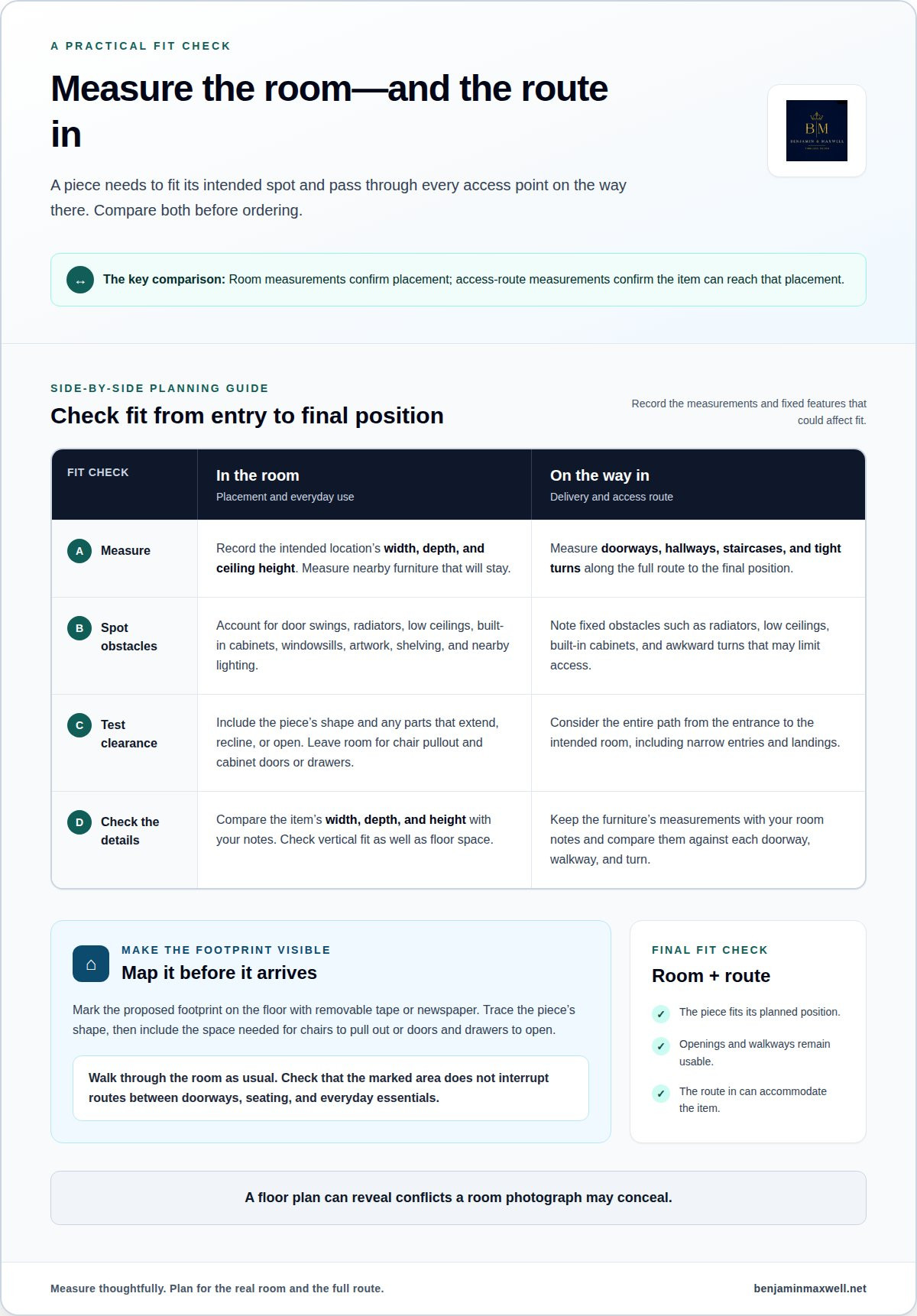
Start with the intended location, then measure its width, depth, and ceiling height. Record the dimensions of the furniture already nearby, including pieces that will remain in place. A console beside a doorway, for example, needs room for both its footprint and the door’s swing. Measurements on a floor plan can reveal conflicts that a room photograph may conceal.
Include the full route from the entrance to the final position. Measure doorways, hallways, staircases, and tight turns along the way. A sofa may suit the living room yet prove difficult to carry through a narrow entry or around a landing. Note fixed obstacles such as radiators, low ceilings, and built-in cabinets, since they can affect access and placement.
Mark the proposed footprint on the floor with removable tape or newspaper. Include the shape of the piece, not just its outer dimensions. For a dining table, mark where chairs sit when pulled out; for a cabinet, leave space for doors or drawers to open. Then walk through the room as usual. Check that the marked area does not interrupt a route between a doorway, seating, and everyday essentials.
Think vertically as well as across the floor. Compare the furniture’s height with windowsills, artwork, shelving, and nearby lighting. A tall bookcase beneath a sloped ceiling, for instance, may not fit even when its floor footprint seems suitable. For wall-mounted decor, note the available wall area and nearby switches, trim, or vents before choosing a placement.
Measure the item itself and keep those dimensions with your room notes. Confirm its width, depth, and height, including any parts that extend, recline, or open. For existing furniture, bring its measurements when assessing a different room. Finally, compare every measurement against doors, walkways, and nearby furnishings. This check helps a carefully chosen piece settle naturally into the space rather than forcing the room to work around it.
4. How to set a budget for expensive home decor purchases
Set a comfortable spending limit after accounting for bills, groceries, and other household priorities. Keep decor spending separate from essential expenses, so a striking armchair does not displace a necessary commitment. Write down the amount you can comfortably reserve, then treat it as a ceiling, not a target you must spend. This makes the decision intentional before you compare pieces.
Next, rank the room’s needs. A sofa for everyday seating may deserve priority over a decorative accent with less practical value. List the qualities that matter most, such as fit, comfort, material, or a particular finish. Separate those priorities from appealing extras, then direct your budget toward the piece that answers the room’s clearest need.
For a purchase that feels urgent, set the money aside for a few weeks before deciding. During that pause, note how often you imagine using the item and whether it still suits your original plan. If a limited-time offer or a social image is driving the decision, step away and reconsider the room, the budget, and the item’s daily purpose.
When emotions are running high, leave the purchase unfinished. Review your written priorities and spending limit after the excitement has passed. For example, if an ornate table attracts you but obstructs the room’s usual movement, its visual appeal may not justify the compromise. A deliberate pause helps distinguish a lasting preference from an impulse shaped by the moment.
Keep a short record of the decision: the intended use, your budget, and why this piece fits better than alternatives. Revisit those notes before ordering. If the item still meets the room’s needs and stays within your limit, you can proceed with clearer intent. Browse Benjamin & Maxwell’s home decor and furnishings to explore considered options for your space.
Keep decor spending separate from essential expenses. When emotions rise, pause and reassess your needs and budget before deciding.
Benjamin & Maxwell
Benjamin & Maxwell brings together considered furnishings and decorative pieces for readers ready to turn careful planning into a purchase. Its In Home Visualizer helps you see how specific pieces fit within your living space, adding a useful visual reference to your room measurements and palette. Explore Cattelan Italia Furniture or Bonaldo Furniture alongside Daum Crystal and Kosta Boda Glassware, considering how each piece will serve the room and your daily routines.
Use the same thoughtful criteria throughout: intended use, materials, dimensions, and the written terms of purchase. A piece should suit both the character of your home and the way you live in it. For questions as you consider your options, contact Benjamin & Maxwell.
Choose a Piece That Belongs in Your Home
A lasting home is shaped gradually, through choices that reflect how you live and what you value. Before your next purchase, picture the piece not only in the room today, but alongside the moments and changes that will give the space meaning over time. That wider perspective can make avoiding buyer's remorse on expensive home decor less about guarding against a mistake and more about choosing with intention.
Let the final decision feel considered rather than hurried. A beautiful object earns its place when it brings pleasure to daily life and feels at home as your rooms evolve. You do not need to furnish everything at once; a single thoughtful addition can begin a more personal story.
Contact Benjamin & Maxwell today to explore a considered next step for your home. Choose with confidence, and let the pieces you bring in become part of a home you’re glad to return to.
Frequently Asked Questions
What measurements should I take before buying large furniture or decor?
Measure the available floor area, ceiling height, and the item’s full dimensions, including any sections that extend or open. Also record the narrowest points on the route from the entrance to the room, such as a hallway turn or stair landing. Keep measurements together, and compare the piece’s orientation with nearby windows, outlets, and fixed features before ordering.
What materials and construction indicate high-quality home decor?
Look for clear material descriptions and construction that feels consistent throughout the piece. For a cabinet, inspect the interior as well as the visible finish; for a table, check that its joints and legs feel stable. A precise description should distinguish solid material from a veneer or surface treatment. Compare the stated care needs with the item’s intended place in your home.
What are typical return, refund, and restocking policies for furniture and home decor in the US?
Policies vary by seller, product, and order type, so don’t assume one return window or refund method applies across US purchases. Read whether custom or made-to-order pieces have different terms, whether a restocking fee applies, and how refunds are issued. For instance, a standard decorative object and a made-to-order sofa may have distinct conditions. Save the policy that applies to your order.

Article by
Spencer Kay
Spencer is the founder and CEO of Benjamin & Maxwell and has created the most advanced technology-based website in the furniture industry. He has extensive experience in both technology and business operations having started a number of technology companies. Spencer holds a BA Degree in Economics and an MBA in International Business
Disclaimer
Benjamin & Maxwell does not intend for any of our products to be used for any specific purpose.


