

Designer furniture is at its most meaningful when it offers more than a symbol of status. The emotional benefits of owning designer furniture can include everyday comfort, a stronger sense of personal expression, and the pleasure of living among pieces that feel distinctly your own. Its value is felt not only in how a room looks, but in how it welcomes you back into it.
It’s natural to notice the beauty, craftsmanship, and distinction of a carefully chosen piece. Yet the deeper satisfaction often comes from daily experience: settling into a favorite chair, recognizing your taste in a room, or making a space feel warmer and more inviting. These benefits aren’t reserved for grand interiors; they can grow from considered choices that suit the way you live.
Thoughtful furniture can support comfort and familiarity, express identity and personal history, and shape a home’s mood through form, texture, color, and arrangement. This offers a clearer way to think about the emotional benefits of owning designer furniture: it is not simply for display, but can become part of the atmosphere and rituals that make a home feel like yours.
Key Takeaways
- Consider how a piece feels in everyday use, not only how it appears in the room.
- Choose furnishings that reflect your taste and give personal memories a place in your home.
- Use color, texture, and thoughtful arrangement to shape a more welcoming atmosphere.
- Explore how a considered piece can bring beauty and personal meaning into your living space.
Comfort, familiarity, and emotional connection
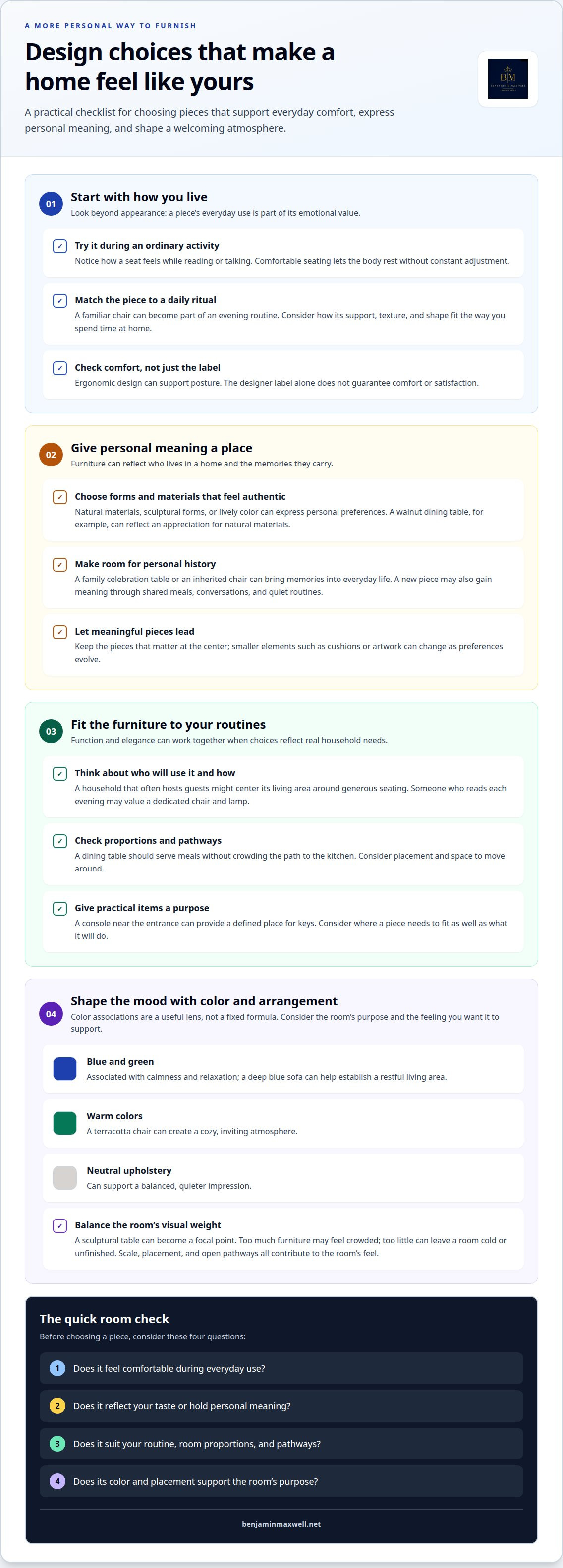
Comfort becomes personal through repeated use. The chair you settle into after work can become part of a familiar evening ritual. That connection depends on how the furniture supports your body and the rhythms of home.
Comfortable Seating and Emotional Well-Being
Comfortable seating lets the body rest without constant adjustment. A soft sofa or supportive reading chair can make a quiet pause feel restorative, helping an interior serve emotional as well as practical needs. Notice how a seat feels during an ordinary activity, such as reading or talking with someone, because that lived experience often shapes satisfaction more than appearance alone.
Ergonomic design can contribute to physical comfort: a chair with proper lumbar support can help improve posture and reduce back pain. Research into interior environments examines links between surroundings, stress, and mental well-being, but that does not mean designer furniture itself treats mental-health conditions. A study published in Psychological Science found that people were drawn to rounded furniture, associating curves with warmth and comfort. A curved chair may therefore feel more welcoming than one with sharp angles.
Craftsmanship and Emotional Value
Craftsmanship can give furniture emotional value when considered details make an object meaningful to live with over time. A well-made piece can become familiar through everyday use, while durable furniture may ease worries about breakage and household annoyances. Sustainability can also matter to personal values, but consider the materials and practices behind a specific piece rather than assuming these qualities come with a designer label.
Are the emotional benefits different for designer and mass-market furniture? They can be, when distinctive design, craftsmanship, or personal meaning creates a stronger connection. The label alone does not guarantee comfort or satisfaction. An ergonomic chair from either category can support posture, while a cherished designer sofa may feel especially significant because it reflects its owner’s taste.
For a practical comparison, consider the seat where you spend time each evening: its support, texture, shape, and fit with your routine. These details help show whether a piece offers lasting comfort and connection, beyond its appearance in the room.
Furniture’s role in creating personal and inviting spaces
A welcoming room can take shape around objects with personal meaning, such as a dining table where family gathers. Choose pieces by connecting daily habits, preferred forms, and practical needs rather than following trends alone.
Furniture and Personal Identity
Furniture choices are visible expressions of identity. They can show whether a home favors quiet elegance, sculptural forms, or lively color. A walnut dining table may suggest an appreciation for natural materials, while a distinctive chair can become a favorite feature of a sitting room. When surroundings reflect considered preferences, owners may feel greater pride and belonging. Self-respect isn’t measured by a furniture label; it can grow from making choices that feel authentic.
Personal stories deepen that connection. A table used for family celebrations or a chair inherited from a relative can bring memories into everyday life. Such pieces make spaces feel particular to the people who inhabit them, rather than arranged around a passing trend. Even a newly chosen object can become meaningful as it accompanies shared meals, conversations, or quiet routines.
Comfort and Lifestyle in Furniture Choices
Furniture that suits a lifestyle supports the activities that give a home its character. A household that often hosts guests might center its living area around generous seating, while someone who reads each evening may value a dedicated chair and lamp. Consider how a piece will be used, who will use it, and where it needs to fit. This practical review helps balance function with elegance.
Personal comfort also depends on the details of daily use: the room’s proportions, furniture placement, and space to move around. A dining table should serve meals without crowding the path to the kitchen; a console can provide a defined place for keys near the entrance. Shaping a room with these needs in mind helps it feel inviting and support daily routines.
Design preferences can evolve, but a room needn’t follow every new trend. Keep meaningful pieces at the center, then introduce change through smaller elements such as cushions or artwork. If you’re considering how a furnishing may sit within your own surroundings, the In Home Visualizer can help you picture it in your space.
How inviting furniture and design can influence mood
Furniture can influence mood by shaping how a room feels and how people use it. A lounge chair in a quiet corner invites a different kind of pause than a crowded arrangement.
Color psychology offers a useful lens, not a fixed formula for every homeowner. Blue and green are associated with calmness and relaxation, so a deep blue sofa can help establish a restful living area. Warm-colored pieces, such as a terracotta chair, can create a cozy, inviting atmosphere. Neutral upholstery can support a balanced, quieter impression. Consider the room’s purpose before choosing: a serene bedroom and an energetic workspace may call for different palettes.
Aesthetics matter because visual harmony can help a room feel composed. A sculptural table, for example, can become a focal point, while open pathways and natural light preserve a sense of ease. Too much furniture may make a living room feel crowded; too little can leave it cold or unfinished. Interior design works through these relationships, balancing scale, placement, and craftsmanship. This can enhance how homeowners experience their surroundings without dictating a single mood.
There are practical downsides to weigh. An expensive designer piece can create financial stress if its purchase competes with household priorities, and delicate finishes can bring maintenance worries. A pale upholstered chair in a busy family room, for instance, may need more care than a darker, hard-surfaced option. Consider emotional value alongside function, upkeep, and budget.
To make a considered choice, picture the piece in its actual setting and routine. Ask whether its color suits the room’s purpose, whether its scale leaves space to move, and whether its care fits everyday life. A green armchair beside a reading lamp may support a restful corner; a glass table in a busy passage may feel less welcoming. Choose pieces that reflect your identity and serve the room, rather than relying on appearance alone.
Furniture as self-expression
A room can communicate personal taste before its owner says a word. A sculptural lounge chair, a restrained console, or a vivid dining table can make a distinct statement. Luxury furniture becomes an expression of identity when its form and presence feel aligned with the people who live alongside it. The aim isn’t to furnish a home according to someone else’s definition of refinement.
Begin with the qualities that consistently appeal to you. You might favor clean lines, expressive curves, natural materials, or richly layered surfaces. Then consider where each piece will sit and what role it will play. A striking cocktail table can anchor a conversation area, while a sculptural chair can bring character to a quiet corner. This approach can elevate a room without making every object compete for attention.
Customization can deepen self-expression when a design offers choices in materials, finishes, or features. A warm wood finish, for example, may suit a home filled with natural textures; a polished surface might complement a more formal interior. These decisions let homeowners shape a room around their preferences. They can also make investing in a considered piece feel personal, rather than driven solely by trends.
Luxury doesn’t require a room filled with dramatic objects. One distinctive piece can make a strong visual impression, especially when its proportions and surroundings let it stand apart. A carefully chosen dining table, for instance, may express a love of gathering, while an unusual lounge chair can signal an appreciation for form. The emotional benefit lies in seeing your values and taste reflected in everyday surroundings, not in proving status.
Let the room develop with intention. Keep the pieces that feel meaningful, and make new choices that complement their character. To explore furniture with varied forms and aesthetics, browse distinctive furniture pieces and consider which ones feel most like your own.
Benjamin & Maxwell
Benjamin & Maxwell offers furnishings and home accents that can bring personal character to everyday spaces. Its selection includes Cattelan Italia Furniture, Bonaldo Furniture, Daum Crystal, and Kosta Boda Glassware, offering different ways to express individual taste in a considered interior.
Use the ideas in this guide to think about the pieces you value, the atmosphere you want, and how each choice fits your home. The In Home Visualizer can help you picture selected furnishings in your own space, making it easier to consider how form and scale may work together.
For a thoughtful next step in finding pieces that feel right for your home, contact Benjamin & Maxwell.
Choose a Piece That Feels Like Home
The emotional benefits of owning designer furniture come from the way a chosen piece belongs in your life, not from its label alone. Let your next decision begin with a feeling you want your home to welcome: calm after a busy day, ease when you gather, or a stronger sense of personal character. Then consider which object could support that feeling in the room you use most.
Give yourself room to choose with intention. A thoughtful addition can shape the atmosphere without requiring you to rethink the entire home. It can also become part of the daily rituals and memories that make a space distinctly yours. When you’re ready to consider a piece for your home, contact Benjamin & Maxwell today. Let the next choice reflect how you want to live, and allow your home to grow into a place that feels more fully your own.
Make Room for the Emotional Benefits of Designer Furniture with Benjamin & Maxwell
Benjamin & Maxwell offers luxury furniture and home decor for readers ready to bring the emotional appeal of designer pieces into their homes. Explore sofas, chairs, poufs, dining room tables, consoles, TV stands, wall units, cocktail tables, and outdoor furniture.
When you’re considering pieces that feel personal and support the way you live, browse Cattelan Italia, Bonaldo, Per/Use, and Italia lounge furniture, along with Daum Crystal and Kosta Boda glassware and home decor. The In Home Visualizer lets you view selected furniture in your space.
Frequently Asked Questions
Status symbols or self-care?
Designer furniture can signify status, but its value at home can also be deeply personal. A piece chosen for daily use, rather than display, may feel worthwhile because it serves a real need and reflects its owner’s preferences. Consider whether you would still appreciate it without visitors’ attention. That question helps distinguish personal satisfaction from the wish to impress others.
What emotional benefits do people report from owning designer furniture?
People describe the emotional benefits of owning designer furniture as pleasure in living with a carefully chosen object, attachment to their surroundings, or satisfaction in completing a room. The meaning varies by person. A distinctive dining chair might remind one homeowner of a favorite restaurant; another may value how it complements a treasured collection. Personal associations often shape the experience.
How can designer furniture improve comfort, mood, and daily well-being?
Some emotional benefits of owning designer furniture come from how a piece supports daily activities and suits its setting. A well-proportioned desk can make a writing corner feel orderly, while a chair suited to its user can make a long conversation more pleasant. Pairing furniture with appropriate lighting also helps a space serve its purpose and makes routines more comfortable.
Does well-designed furniture increase pride, identity, or self-expression?
It can help people express their identity and take pride in a considered home. A collector might display a sculptural object beside books that reflect personal interests, while a host may choose a table suited to shared meals. The result is less about following a prescribed style and more about creating a setting that feels coherent with the owner’s habits, values, and taste.
How does designer furniture affect the look and feel of a home?
Designer furniture can give a room a focal point, establish visual rhythm, or bring contrast to an existing interior. A rounded table, for example, can soften a room dominated by straight lines, while a transparent piece can preserve an open impression. Its effect depends on proportion, placement, surrounding objects, and how the household uses the space.
Does owning designer furniture create a sense of status or social confidence?
It may contribute to social confidence for someone who enjoys sharing a thoughtfully furnished home, but ownership doesn’t guarantee status. A welcoming setting depends on more than labels: comfortable conversation, useful arrangements, and a host’s ease all matter. Choose a piece because it belongs in your life, not because you expect it to determine how others perceive you.

Article by
Spencer Kay
Spencer is the founder and CEO of Benjamin & Maxwell and has created the most advanced technology-based website in the furniture industry. He has extensive experience in both technology and business operations having started a number of technology companies. Spencer holds a BA Degree in Economics and an MBA in International Business
Disclaimer
Benjamin & Maxwell does not intend for any of our products to be used for any specific purpose.


