

A magnificent wildlife sculpture doesn't merely occupy an interior; it commands ambient light and captures the untamed spirit of nature. Within the storied tradition of the univers animalier, master artisans transform raw minerals into breathtaking sculptural forms that transcend everyday decor. Yet choosing between authentic artisan-crafted heirlooms and mass-produced figures can feel daunting, particularly when assessing subtle material textures or visualizing how a three-dimensional form will interact with your room's lighting and architectural finishes.
You shouldn't have to second-guess the pedigree or presence of an art acquisition. In this buying guide, you'll discover how to evaluate fine art glass and crystal animal sculptures to curate an exceptional wildlife collection for your home. We explore the heritage craftsmanship of historic houses like Daum and Kosta Boda, clarify the essential distinctions between pâte de verre and art glass, and provide spatial principles to help you acquire a focal piece of enduring grace.
Key Takeaways
- Understand the nuanced craftsmanship separating lost-wax pâte de verre from mouth-blown art glass to identify genuine heirloom artistry.
- Discover spatial placement guidelines for pairing sculptural scale and directional light with architectural consoles, sideboards, and display niches.
- Navigate the evocative wildlife archetypes across the univers animalier to select a signature subject that reflects your aesthetic vision or personal milestone.
- Appreciate how the storied lineages of historic glassmakers like Daum and Kosta Boda ensure lasting provenance and aesthetic permanence in your home.
The Art of the Univers Animalier: Defining Luxury Animal Sculptures
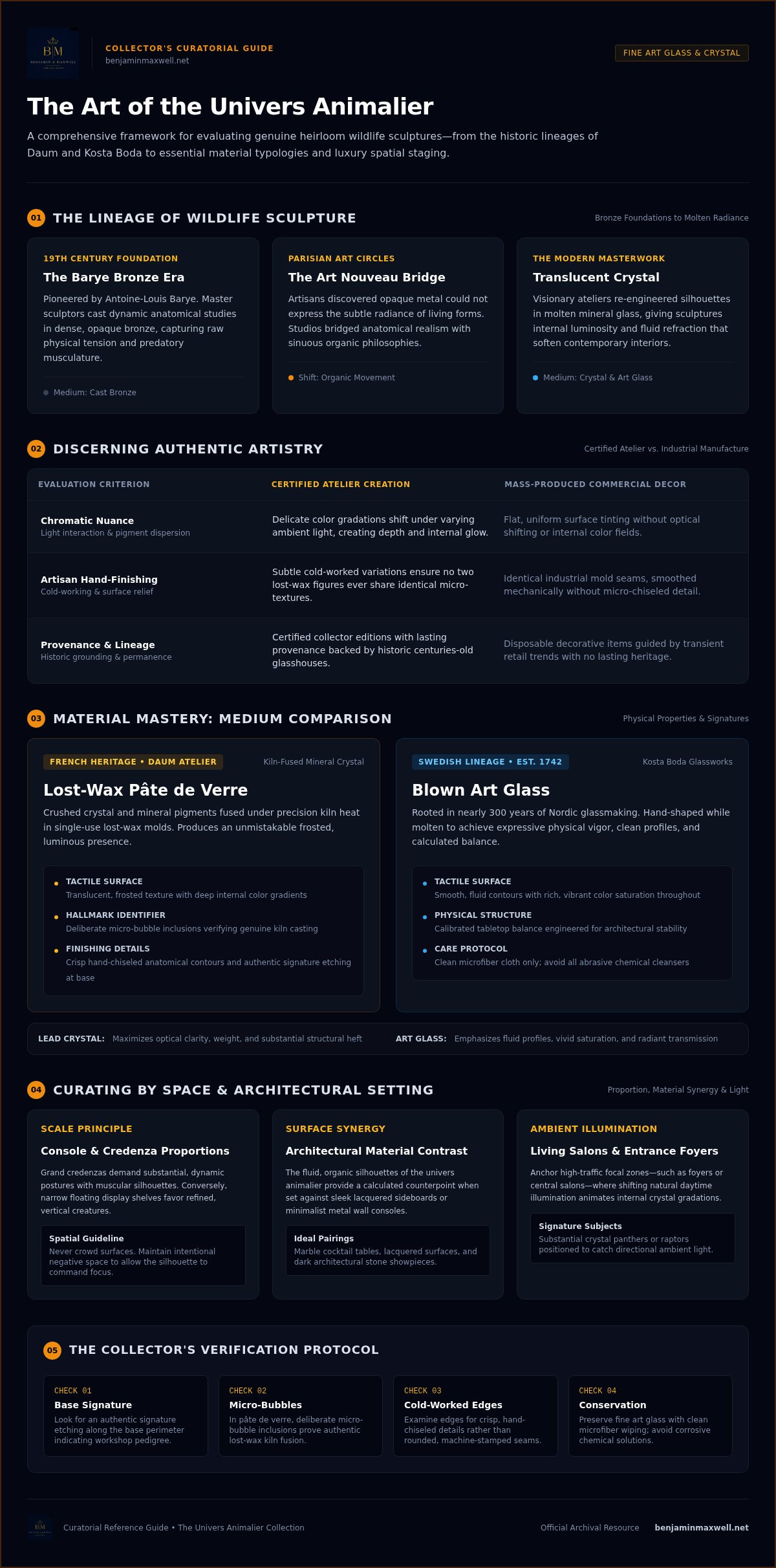
Far from casual pet decor, the authentic univers animalier represents the artistic elevation of wildlife into fine sculpture. Originating with nineteenth-century European masters who cast dynamic anatomical studies in bronze, this tradition captured the raw elegance of wild fauna. Over the past century, master glassmakers embraced these animal forms as the ultimate crucible of their craft. Rendering predatory musculature, unfurling wings, and supple silhouettes in molten mineral glass demands unparalleled control over heat, tension, and light refraction. Positioned on an architectural console or illuminated bookcase, these sculptures introduce an organic warmth that softens the stark lines of contemporary interiors.
The Evolution of Animalier Sculpture into Fine Crystal
The movement advanced dramatically as Parisian art circles bridged the classic Animalier sculpture tradition with the sinuous, organic philosophies of Art Nouveau. Artisans soon discovered that opaque metal could not express the subtle radiance of living creatures. As explored in The Peerless Artistry of Daum: A Legacy of Pâte de Verre, visionary ateliers reimagined animal silhouettes through translucent crystal, yielding pieces that seem to glow from within across evolving residential decors.
Art Glass Figurines Versus Mass-Produced Decor
Discerning collectors distinguish between industrial molded novelties and certified atelier creations through several defining qualities:
- Chromatic Nuance: Hand-cast crystal artworks display delicate color gradations that shift under varying ambient light, whereas factory glass remains flat and uniform.
- Artisan Hand-Finishing: Subtle cold-worked variations ensure that no two lost-wax figures ever share identical micro-textures.
- Heirloom Provenance: Certified collector editions maintain lasting artistic value and emotional resonance, backed by centuries of heritage rather than transient retail trends.
Material Mastery: Comparing Crystal, Art Glass, and Pâte de Verre
Evaluating sculpture requires understanding how different mediums manipulate weight, transparency, and ambient reflection. While Antoine-Louis Barye, the celebrated pioneer of the Animalier school, captured raw physical tension in dense bronze, glassmakers utilize transparency and mass to animate wildlife. Within the modern univers animalier, lead crystal provides optical clarity and substantial heft, whereas blown art glass celebrates fluid contours and radiant color fields.
Understanding Pâte de Verre and Molded French Crystal
Pâte de verre relies on an exacting lost-wax casting method where crushed crystal and mineral pigments fuse under kiln heat. The result is a translucent, frosted texture with deep internal color gradients that bring anatomical contours to life. When examining these sculptures, look for crisp hand-chiseled details and an authentic signature etching along the base. Deliberate micro-bubble inclusions often testify to genuine kiln casting rather than a manufacturing flaw.
Blown Swedish Glass and Sculptural Form
Swedish artisans at Kosta Boda, building on a lineage spanning almost 300 years since 1742, approach animalier motifs with expressive vigor. Their blown art glass sculptures showcase rich color saturation, clean profiles, and calibrated physical balance suited for tabletop surfaces. Maintaining these heirloom pieces requires minimal effort: simply wipe them with a clean microfiber cloth and avoid abrasive chemical cleaners. You can explore curated glass collections to compare these distinct glassmaking traditions firsthand.
Curating by Space: Displaying Animal Figurines in Luxury Interiors
A fine sculpture requires careful spatial alignment to reveal its full character. Rather than crowding surfaces with unrelated trinkets, curate intentional groupings that respect negative space. The organic silhouettes of the univers animalier provide a striking counterpoint when positioned against the sleek lines of lacquered sideboards or minimalist metal wall consoles. Scale serves as the guiding principle: grand credenzas demand substantial, dynamic postures, while narrow floating shelves favor refined, vertical creatures.
Placement Rules for Grand Living Rooms and Foyers
Entrance foyers and main salons benefit from focal anchors that capture changing ambient light throughout the day. Consider placing a substantial crystal panther or raptor on a marble cocktail table or alongside architectural showpieces like dining tables from Cattelan Italia. Positioning your sculpture where raking natural light passes through the glass reveals internal prism effects, projecting rich amber, cobalt, and emerald tones across nearby stone surfaces.
Visualizing Scale with Digital Room Tools
Anticipating how physical volume and light interact within your residence no longer requires guesswork. You can avoid scale misjudgments before purchasing by testing potential acquisitions digitally:
- Room Uploads: Leverage the In Home Visualizer to see three-dimensional crystal pieces placed directly onto your consoles and display vitrines using personal photography.
- Perspective Testing: Examine sightlines from primary seating areas to confirm the figurine commands proportional presence without obstructing sight paths.
- Curated Collections: Save multiple design iterations into a private gallery to share with your decorator or compare contrasting animal archetypes side by side.
Take advantage of these digital capabilities to test your space with the In Home Visualizer today and ensure every fine glass acquisition harmonizes effortlessly with your room.
Selecting Your Signature Piece from the Univers Animalier Collection
Every animal sculpture carries symbolic presence. Choosing a signature piece requires aligning the subject's posture and temperament with the character of your room. Whether celebrating an executive achievement or grounding a tranquil sanctuary, the expressive forms of the univers animalier communicate distinct design narratives.
Iconic Themes: Predators, Avian Grace, and Marine Life
Subject matters evoke different emotional energies across private and professional settings:
- Predators and Steeds: Coiled panthers, pacing felines, and rearing horses project decisive authority. They function exceptionally well as focal points on executive desks, library consoles, and study credenzas. While high-end crystal captures the untamed majesty of large cats, decorators seeking a charming, lighthearted alternative for casual spaces can explore Cozy Fox Lifestyle for playful cat-shaped home accents.
- Avian Grace: Soaring raptors or serene nesting birds convey aspiration and calm. These graceful profiles fit naturally into airy bedroom suites and quiet reading lounges.
- Marine Wildlife: Fluid sea turtles and arching dolphins bring kinetic fluidity into coastal residences and light-filled sunrooms.
Medium-scale animalier figures also serve as extraordinary gifts to commemorate partnerships or personal milestones. Explore our curated gift ideas to find distinctive crystal works that leave an indelible impression.
Finalizing Your Acquisition and White Glove Care
When your artwork arrives, verify its physical provenance immediately. Authentic Daum crystal and artisan pieces include etched signatures, numbered edition marks, and certificates of authenticity tucked within protective archival packaging. Routine preservation requires only occasional dusting with a clean microfiber cloth to maintain its luminescent clarity.
Interior architects and decorators specifying statement pieces for major residential or commercial projects can access exclusive terms and White Glove Service through our national trade program. You can also explore the complete collection online to find the ideal animalier silhouette for your interior.
Curate an Enduring Wildlife Legacy in Your Living Space
Bringing master glasswork into your residence transforms ordinary architecture into an evocative, curated sanctuary. By selecting authentic pâte de verre or artisan hand-blown forms over transient factory decor, you honor centuries of decorative tradition while introducing a striking focal point attuned to your room's natural light and architectural proportions.
A signature sculpture from the univers animalier isn't merely an ornamental accent; it's a permanent narrative of natural grace and sculptural discipline. Benjamin & Maxwell serves as an authorized purveyor of world-renowned crystal ateliers boasting over a century of heritage. Evaluate potential acquisitions with complete clarity through our augmented reality In Home Visualizer, then enjoy flawless national delivery via our white-glove logistics service. Explore the curated Univers Animalier collection to find a museum-quality centerpiece that elevates your home today.
Frequently Asked Questions
What makes Univers Animalier crystal figurines distinct from regular glassware?
Authentic pieces within the univers animalier are sculptural fine artworks rather than utilitarian hollowware. Formulated with high mineral concentrations and sculpted through exacting lost-wax casting, these figurines possess extraordinary refractive brilliance and velvety textures. Unlike mass-manufactured soda-lime glass, each hand-finished figure undergoes weeks of kiln firing and artisan cold-working, creating one-of-a-kind color dispersals that capture the organic vitality of living fauna.
How do I choose the right size animal sculpture for my mantel or bookcase?
Measure your display surface to ensure the sculpture leaves at least three to four inches of breathing room on all sides. A mantel commands a horizontal, low-profile creature that doesn't compete with central artwork, while deep bookcase niches accommodate vertical avian figures. Avoid overcrowding by treating the sculpture as an isolated focal point, allowing ambient lighting to cast subtle color reflections across surrounding architectural surfaces.
Can crystal animal figurines be placed in direct sunlight without fading?
Genuine crystal and pâte de verre sculptures never fade, as their colors derive from raw metallic oxides fused permanently during kiln firing. However, placing concentrated optical crystal in intense direct sunlight requires care. Prismatic refractions can focus intense heat beams onto nearby fabrics or wooden finishes. Position your figurines in bright, indirect natural light where luminous translucency glows safely without generating focused thermal points.
How do I clean and preserve delicate pâte de verre animal sculptures?
Routine preservation requires regular dusting with a dry, lint-free microfiber cloth or an artist's soft camel-hair brush. Never immerse complex pâte de verre in water or expose it to chemical glass cleaners, which can degrade delicate hand-finished surfaces. For stubborn smudges, lightly dampen a cloth with lukewarm water, gently wipe the smooth facets, and dry the piece immediately with a soft cotton towel to prevent mineral spotting.
Are luxury crystal and glass animal figurines suitable for modern minimalist interiors?
Luxury animal sculptures serve as essential counterpoints in modern minimalist spaces. The fluid, organic anatomy of the univers animalier softens the rigid geometry of architectural rooms filled with concrete, glass, and polished metal. Choosing a single monochromatic or deeply tinted animal figure creates an intentional, gallery-like focal point. It brings emotional warmth and natural vitality to contemporary consoles without introducing visual clutter or decorative excess.

Article by
Spencer Kay
Spencer is the founder and CEO of Benjamin & Maxwell and has created the most advanced technology-based website in the furniture industry. He has extensive experience in both technology and business operations having started a number of technology companies. Spencer holds a BA Degree in Economics and an MBA in International Business
Disclaimer
Benjamin & Maxwell does not intend for any of our products to be used for any specific purpose.


