

Your home makes an introduction before you do. The colors, furniture, and objects guests encounter can suggest whether you value expressive character, calm order, or a considered blend of both. If you’re wondering what message your home decor sends to guests, the answer lies less in following one style than in choices that make a room distinctly yours. It’s natural to care about the impression those choices create.
Industrial decor can convey an artistic, relaxed sensibility through contrast and personal accents, while modern decor often communicates clarity and an appreciation for uncluttered spaces. Neither style says everything about you, but each offers a framework for shaping the atmosphere you want guests to feel. This guide explores what these aesthetics can express and how a considered entryway, the first space visitors see, can set a gracious tone.
Key Takeaways
- Use furniture placement, color, lighting, and accessories to shape the atmosphere guests experience and make your personal taste visible.
- Let industrial elements and meaningful personal objects convey an artistic, relaxed character without making the room feel impersonal.
- Choose modern decor and purposeful storage to create a composed, uncluttered impression while preserving comfort.
- Make the entryway welcoming with a clear path, a tidy surface, and a practical place for guests’ belongings.
1. What Does Your Home Decor Say About You?
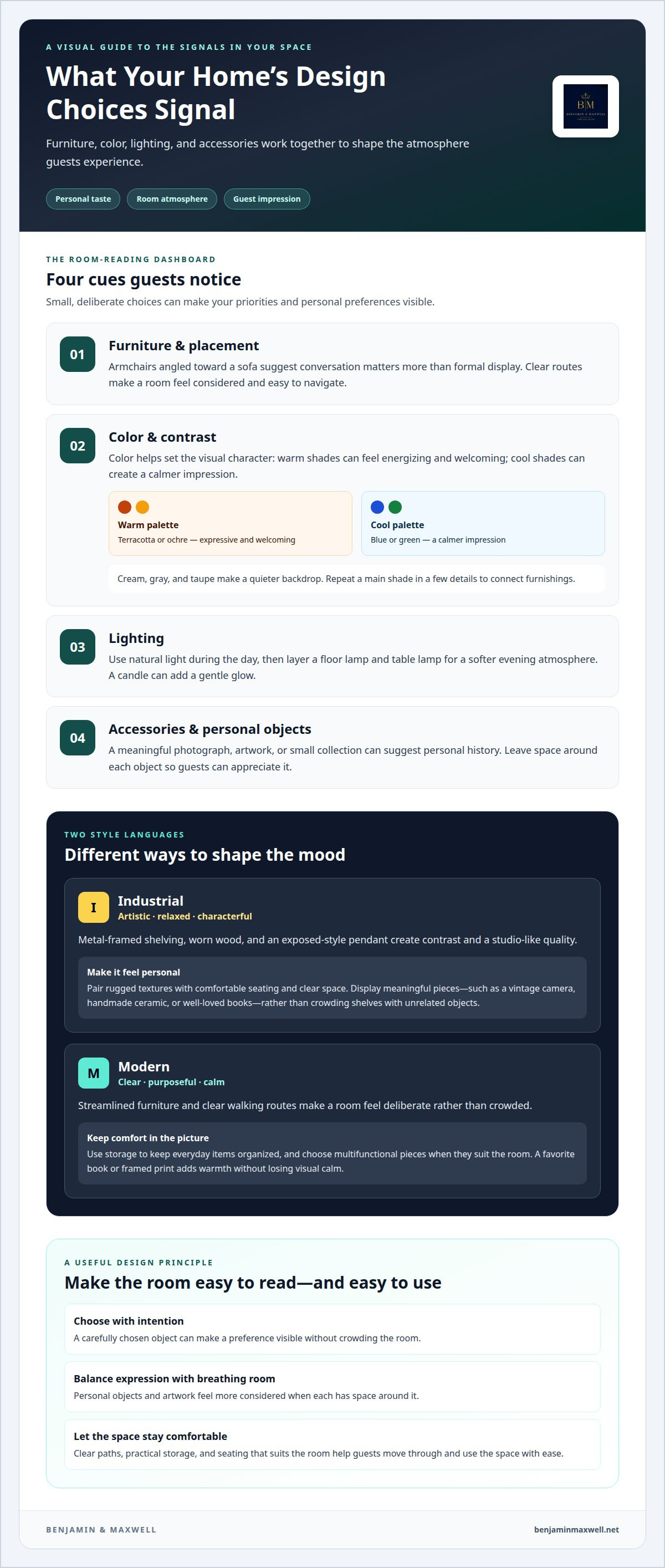
Your furniture, colors, lighting, and accessories give guests clues about your priorities. Armchairs angled toward a sofa suggest conversation matters more than formal display. A clear route between the seating area and doorway makes the room feel considered and easy to navigate. Even one carefully chosen object, such as a sculptural bowl on a console, can make a personal preference visible without crowding the room.
Colors shape a room’s visual character and the impression it gives guests. Warm shades such as terracotta or ochre can energize a space and lend it a welcoming, expressive quality. Cool shades, including blue and green, can create a calmer impression. The Centers for Disease Control and Prevention notes that people perceive differences in color as meaningful.
Neutral colors such as cream, gray, and taupe create a quieter backdrop for furniture and art. Textures can add depth: pair a pale wall with a woven rug or a dark wooden table. Neutral doesn’t have to mean impersonal. A framed print or distinctive chair can bring character into the scheme.
For a consistent color scheme, choose a main shade and repeat it in a few details. For example, carry muted green from a cushion to a ceramic vase, with warm wood for contrast. Repetition connects furnishings, while too many competing colors can make a room feel visually unsettled. Consider how the palette looks across walls, upholstery, and accessories.
Lighting changes how these choices appear. Use natural light during the day, then layer a floor lamp and table lamp for a softer evening atmosphere. A candle can add a gentle glow to a dining table or entry console. Choose accessories with intention: a meaningful photograph, artwork, or small collection can suggest personal history. Leave space around each object so guests can appreciate it.
2. How industrial decor can express an artistic, laid-back personality
Industrial decor can suggest a host who values character over polished uniformity. A metal-framed shelf beside a worn wooden table creates contrast, while an exposed-style pendant can give a dining area a studio-like quality. These details evoke workshops and converted lofts without requiring every surface to look unfinished. The effect feels relaxed when rugged textures are balanced with comfortable seating and clear space to move.
Let personal taste guide the objects you display. A vintage camera, handmade ceramic vessel, or stack of well-loved books can make an industrial room feel collected rather than staged. Choose pieces connected by a story, material, or memory, then give each one room to be noticed. A meaningful object can invite more conversation than a crowded shelf of unrelated ornaments.
Personal photographs bring a different kind of warmth. Place a framed family portrait beside a travel photograph, or group images from a memorable outdoor excursion on a narrow wall. The arrangement can prompt guests to ask about the people or places pictured. Sentimental objects work similarly: a concert poster, inherited keepsake, or handmade gift can reveal what you value without turning the room into a formal display.
Artwork offers another way to express an artistic, easygoing sensibility. Pair a bold abstract print with a simple frame, or lean a smaller piece on a console for an informal arrangement. Choose art that means something to you rather than selecting it solely to match the room. A restrained combination of personal artwork and utilitarian forms lets each element contribute its own character.
For a finishing touch, choose decorative accents that carry a story, such as distinctive glassware or a sculptural vessel. Decorative gifts and home accents can offer considered options for a personal display. The aim is not to create a showroom, but to let guests encounter traces of your interests, memories, and creative point of view.
3. How modern decor can signal organization and a preference for uncluttered spaces
Modern decor can suggest that you value clarity, purpose, and calm. A streamlined sofa, a simple side table, and clear walking routes make a living room feel deliberate rather than crowded. The impression comes from selective choices, not from removing every personal object. A single framed print above a console can provide a focal point while leaving the surrounding wall open.
In a compact apartment, storage helps preserve a sense of order. Choose a coffee table with a lower shelf for books, then use closed cabinets for games or spare chargers. A slim console can hold keys without taking over a narrow passage. Keep frequently used objects accessible, and group smaller belongings in a tray or drawer instead of spreading them across surfaces.
Multifunctional furniture can make small spaces easier to use. An ottoman can provide seating and hold extra blankets, while nesting tables can be separated when guests need room. Choose pieces that suit the room’s scale, then leave clear paths between the sofa, windows, and doorway. This arrangement keeps the space functional without turning every corner into storage.
A quiet guest space can also express thoughtful organization. Set a dedicated chair beside a small desk, with a reading lamp and enough surface space for a book or phone. Guests then have a place to read, work, or take a call without retreating to the dining table. In a bedroom, keep the bedside area simple, with a clear tabletop and a chair for clothing.
These choices can communicate that you appreciate visual calm and practical comfort. A tidy shelf, concealed cables, and a designated place for everyday items show how the room is meant to work. Keep the arrangement from feeling rigid: a well-chosen object, such as a favorite book on the side table, adds warmth. Modern style feels personal when each item has a purpose and guests can use the space with ease.
4. Making a strong first impression in the entryway
The entryway is the first area guests see, so its arrangement introduces your home before they enter the living room. A clear path from the front door, an uncluttered floor, and a clean console help visitors feel expected rather than inconvenienced. A seasonal wreath or fresh flowers can add a gracious detail without overwhelming the space.
Home decor helps guests feel welcome and comfortable when visual cues are paired with practical comforts. Give visitors an obvious place for coats, shoes, or a handbag, such as a coat rack beside a small bench. A soft rug can make a hard floor feel more inviting, while a seat gives guests a place to pause as they arrive.
Keep the entrance tidy by giving everyday items a defined place. Store shoes in a cabinet or basket, gather keys on a small tray, and clear mail from the console before guests arrive. Dusty surfaces and crowded floors can make the space feel neglected; a wiped tabletop and open walking route create a more composed first impression.
Choose entryway furniture to suit the room’s shape. A narrow console can hold a bowl or lamp without obstructing a passage, while a bench offers seating and a convenient place to set belongings. In a larger foyer, a chair can make the welcome feel more leisurely. Keep doors, drawers, and routes clear for comfortable movement.
Light and scent complete the arrival. A table lamp or candle can soften the entryway in the evening, while a subtle diffuser or open windows can freshen the air before visitors arrive. Avoid strong fragrances that dominate the space. For a polished, practical entrance, Benjamin & Maxwell offers console tables and entryway furnishings that give keys, flowers, and other useful details a considered place.
Benjamin & Maxwell
Benjamin & Maxwell offers considered furnishings and decorative objects for shaping a home that feels personal to guests. Cattelan Italia Furniture and Daum Crystal can bring distinct character to a room, while Kosta Boda Glassware offers another way to add personal expression to a display. The right choice depends on the atmosphere you want each space to convey, whether composed, artistic, or warmly welcoming.
If you’re weighing how a piece might work in your home, the In Home Visualizer lets you see how specific furnishings fit within your living space. Use it as a practical step when considering the scale and presence of a piece alongside your existing interiors. For guidance on furnishings and decor that suit the impression you want to create, contact Benjamin & Maxwell.
Let Your Home Keep Telling Your Story
Your home doesn’t have to communicate everything at once. Let its character develop as your routines, interests, and relationships change. Asking what message your home decor sends to guests can help you decide what belongs, what feels out of place, and what you’d like visitors to remember. Choose pieces because they carry meaning for you, not simply because they complete a prescribed look.
As you refine a room, notice how people use it. A space that encourages conversation, offers a moment of quiet, or makes guests feel at ease reflects care in a way no single style can define. Small, thoughtful adjustments can bring your home closer to the welcome you want to extend. If you’re ready to consider furnishings and decorative accents for your space, Contact Benjamin & Maxwell today. Shape a home that feels genuine to you and gracious to those who enter.
Frequently Asked Questions
What Does Your Home Decor Say About You?
Your decor can reveal what you notice, collect, and make room for in daily life. To consider what message your home decor sends to guests, look at the details you choose to display and use. A reading nook beside a bookcase may suggest that quiet pursuits matter, while a dining table set for shared meals places hospitality at the center. These are impressions, not complete portraits of your character.
What does home decor communicate about a homeowner’s personality and values?
Home decor can suggest whether you favor practicality, artistry, tradition, or change. Thinking about what message your home decor sends to guests can help you decide which belongings best express those values. Displaying a repaired family heirloom may signal attachment to its history, while choosing durable everyday pieces can express a preference for usefulness. Guests may interpret these details differently, so choose objects that genuinely matter to you.
What do different interior design styles say about the people who live there?
Design styles suggest broad impressions, not reliable biographies. Traditional interiors may feel rooted in continuity, while eclectic rooms can suggest comfort with varied influences. Industrial and modern spaces also carry recognizable visual cues, but personal choices shape their meaning. A traditional room with contemporary art, for instance, can express appreciation for heritage alongside present-day creativity.
What decor choices might make a home feel cluttered, formal, or uninviting?
Too many small objects competing on one surface can make a room feel busy, especially when none has space around it. Matching furniture arranged rigidly may appear formal, while delicate items placed where guests must avoid touching them can create distance. Edit by grouping related objects, keeping useful surfaces available, and arranging seating to invite relaxed use.
How do artwork, books, and personal objects shape guests’ impressions?
Artwork, books, and keepsakes give visitors glimpses of your interests and experiences. A shelf mixing novels, cookbooks, and a travel guide can feel more revealing than books arranged only by color. Art can show the subjects or forms that hold your attention. Leave a few meaningful items visible, but don’t treat them as proof of a particular personality.
What does a clean and well-maintained home communicate to visitors?
A clean, well-maintained home suggests care for shared spaces and consideration for visitors’ comfort. Details beyond spotless surfaces matter: a steady dining chair, a working lamp, and a door that opens easily make a home feel ready to use. Taking care of small repairs also helps guests relax, since they needn’t wonder which furnishings or fixtures are safe to handle.

Article by
Spencer Kay
Spencer is the founder and CEO of Benjamin & Maxwell and has created the most advanced technology-based website in the furniture industry. He has extensive experience in both technology and business operations having started a number of technology companies. Spencer holds a BA Degree in Economics and an MBA in International Business
Disclaimer
Benjamin & Maxwell does not intend for any of our products to be used for any specific purpose.


