

What defines the right chandelier: how it lights a room, or how it looks? Dimming is not guaranteed by Italian craftsmanship or a particular style. It depends on the fixture’s light source and compatibility with a dimmer. When considering luxury Italian chandeliers, weigh this practical detail alongside scale, finish, and the atmosphere you want to create.
Choosing a chandelier means balancing style, proportions, and lighting needs. Sculptural modern forms and graceful transitional designs create different impressions, while Murano glass brings distinctive artistry. This guide covers how to assess a chandelier’s style, size, and light count, and what sets Murano glass apart from modern Italian suspension lamps. The aim is to find a fixture that suits the room, not simply one that makes a bold impression.
Key Takeaways
- Distinguish contemporary silhouettes from traditional ornament, then choose the balance that complements your room.
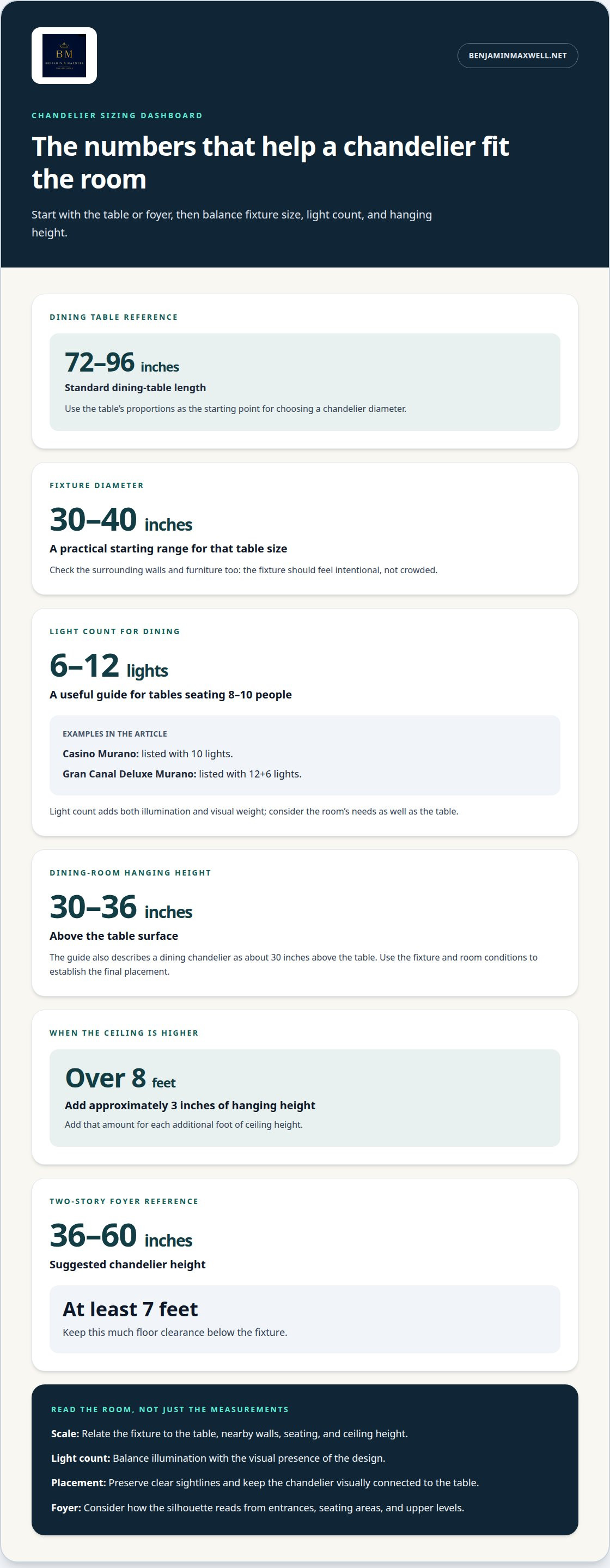
- For a standard 72-96-inch dining table, consider a chandelier 30-40 inches in diameter; light count should suit the table and the room’s needs.
- Compare Murano glass, crystal, and polished metal by the way each material shapes the fixture’s character and presence.
- Explore modern Italian suspension lamps for a more streamlined look, and consider how a visualizer can help you picture furnishings in your space.
What defines a contemporary or transitional chandelier?
Contemporary fixtures favor clean lines and deliberate shapes, while traditional designs draw on ornament and established Venetian craftsmanship. Transitional styles combine these qualities, allowing a sculptural fixture to sit comfortably among modern and classic furnishings.
Venetian Baroque and Modern Italian Designs
What styles of luxury Italian chandeliers are available? Options include ornate Venetian Baroque forms, modern Italian designs with pared-back shapes, and transitional fixtures that bring the two traditions together. A Murano glass chandelier, for example, can make traditional glasswork the room’s focal point.
Venetian Baroque lighting often emphasizes layered arms, decorative details, and expressive silhouettes. Modern Italian chandelier styles take a different approach, using restrained lines and sculptural forms. A Casino Murano glass chandelier is listed with 10 lights, an example of how light count can contribute to a fixture’s visual presence.
Choosing Styles and Finishes
Start with the room’s existing shapes. A long dining table, curved chairs, or geometric console can guide the chandelier’s form. In a dining room with streamlined furniture, an ornate Venetian design creates contrast; a simpler suspension lamp keeps the composition quieter.
Compare finishes with nearby materials. Polished metal can echo reflective details, while clear or colored glass adds texture. In a transitional interior, repeat one finish elsewhere, such as a metal accent on a table, rather than matching every surface.
What installation and electrical requirements apply to imported Italian chandeliers in the US? They depend on the fixture’s electrical specifications, weight, ceiling connection, and dimmer compatibility. Before installation, have a qualified electrician review those details, especially if the existing wiring or dimmer differs from the fixture’s requirements.
What should you consider about shipping, customs, and returns when buying an Italian chandelier online? Review the seller’s shipping terms, customs responsibilities, packaging arrangements, and return conditions before purchase. For a delicate Murano glass design, understand how transit damage is handled and whether the return process covers a large or fragile fixture.
Compare the chandelier’s silhouette with the room’s architecture and furnishings. A contemporary piece can sharpen a traditional interior; a Venetian design can add a deliberate note of tradition to a modern room. The strongest choice connects shape, lighting, and finishes without overwhelming the space.
Choosing chandelier size and number of lights
Begin with the room’s proportions, then consider how the chandelier will illuminate its main gathering place. For a standard 72-96-inch dining table, a 30-40-inch diameter fixture provides a practical starting point. The right scale should feel intentional above the table, not crowded by nearby walls or furniture.
Light count contributes to both illumination and visual weight. For dining tables seating 8-10 people, a fixture with 6-12 lights is a useful guide. The Gran Canal Deluxe Murano chandelier, listed with 12+6 lights, illustrates how a larger composition can make a strong statement. In living rooms, relate the fixture’s scale to seating and ceiling height; a minimalist suspension can preserve openness, while a more elaborate design can elevate a generous space.
For dining rooms, hang the chandelier 30-36 inches above the table surface. The page’s guidance also places a dining chandelier about 30 inches above the table. With ceilings higher than 8 feet, add approximately 3 inches of hanging height for each additional foot. These measurements help maintain clear sightlines while keeping the fixture visually connected to the table.
Entryways call for a different balance. A two-story foyer can accommodate a chandelier 36-60 inches tall, with at least 7 feet of floor clearance below it. In hotels and reception halls, consider how the fixture reads from entrances, seating areas, and upper levels. A striking silhouette should reflect the scale of the space without obstructing movement.
Color and light count vary by design collection. Compare glass tones and metal finishes with nearby surfaces, then decide whether the room suits a vivid accent or a quieter palette. Treat “custom” as referring to options offered for that particular fixture, not as an assumed alteration. In a dining area, consider how the chandelier relates to the dining table and surrounding furnishings.
When to choose a luxury Murano chandelier?
Choose Murano glass when you want a chandelier’s material and artistry to shape the room’s character. A crystal chandelier is prized for clear, light-catching facets, while colored glass can bring depth and variation. Polished metal adds another note, framing glass elements or creating restrained contrast.
Handmade glass chandeliers carry the marks of their making: subtle differences in form, color, and finish can distinguish individual pieces. Murano glass colors may be created by adding mineral powders to the glass mixture. Some Murano glass chandeliers feature pure 24 kt gold, bringing a warm metallic detail into the design. Consider how those qualities will appear beside the room’s existing materials and light.
To assess authenticity, look for clear information about the maker, place of origin, and glassmaking process. Product documentation and provenance can help distinguish a Murano-made piece from a design that merely uses Murano-inspired shapes. The description should identify the chandelier’s materials precisely, rather than relying on the word “Murano” alone.
The Sestiere modern glass-strip chandelier offers a contemporary interpretation of glasswork. Its strip-based form contrasts with traditional arrangements of curved arms and decorative drops. Consider this kind of design when you want glass to read as a clean, architectural gesture.
How do you clean and maintain Murano glass and crystal chandeliers? Turn off the fixture before cleaning, then gently dust accessible glass with a soft, dry cloth. Avoid abrasive materials and harsh cleaners, which can mark delicate surfaces or finishes. For intricate handmade pieces, follow the maker’s care instructions.
A Murano chandelier suits interiors where material character deserves attention, from restrained modern rooms to settings shaped by tradition. Compare glass color, crystal detail, and metal finish under the room’s actual lighting. This helps you judge whether the chandelier complements the furnishings or competes with them.
Italian modern chandelier and suspension lamp designs
Italian design ranges from spare modern forms to ornate glass compositions. Compare construction, silhouette, and finish to see how each fixture shapes an interior.
Italian Craftsmanship and Designer Brands
Assess craftsmanship through the fixture’s visible details: the balance of its arms, the alignment of glass elements, and the consistency of its finish. Some designs use over 80 square glass pieces, while others use over 40 four-sided pieces. These varied constructions show how the arrangement of individual components can define a chandelier’s character. Consider the whole composition, not just its materials.
Classic Venetian and Rezzonico Designs
Classic Venetian chandeliers bring sculptural glass and decorative forms into a room, while modern Italian suspension lamps favor a cleaner outline. Rezzonico chandeliers have been famous since the 18th century, a legacy reflected in their elaborate, tiered presence. In a contemporary interior, use a classic piece as a deliberate counterpoint; in a traditional space, its ornament can reinforce the room’s established character.
Luxury Designs and Finishes
A chandelier’s finish affects how it relates to the surrounding room. Chrome can add a crisp, reflective accent; glass creates visual transparency, while darker metal gives a composition more weight. Compare these surfaces with the room’s hardware, furniture, and architectural details. For a refined effect, choose one dominant finish and use contrasting materials for distinction, not competition.
Bespoke Italian Chandelier Design
A bespoke design shapes a fixture around a particular interior rather than choosing by appearance alone. Start with the room’s scale, ceiling position, preferred materials, and desired silhouette. Then consider how the chandelier will relate to nearby furniture and the light it needs to provide. For a coordinated setting, explore luxury furniture and home decor alongside your lighting concept.
Benjamin & Maxwell: Luxury furniture and home decor
Benjamin & Maxwell offers a natural next step for coordinating a chandelier with surrounding furnishings and decorative accents. Explore luxury furniture and home decor, including Cattelan Italia Furniture and Daum Crystal, to build a considered setting with complementary forms and materials.
The In Home Visualizer lets you picture selected pieces in your living space and consider their scale and placement alongside your lighting choice. It’s a practical way to assess furnishing decisions in the context of the room as a whole.
For help exploring furnishings and decor for your space, contact Benjamin & Maxwell.
Shape a room with lasting character
A room’s overall impression depends on how its lighting, furnishings, and decorative objects relate. As you refine the setting, decide whether you want a composed, dramatic, or quietly sculptural atmosphere. Luxury Italian chandeliers can anchor that intention, while surrounding pieces add scale and continuity. Let the fixture guide your choices without requiring every element to match.
Benjamin & Maxwell brings together Daum Crystal and Cattelan Italia Furniture, and its In Home Visualizer helps you picture selected pieces in your space. Use that view to consider how lighting relates to the room’s forms and which elements deserve emphasis. A considered contrast can feel more personal than a perfectly matched suite.
When you’re ready to explore furnishings and decor for your setting, Contact Benjamin & Maxwell. Each thoughtful choice can bring your vision closer to a home that feels distinctly yours.
Frequently Asked Questions
Are your lighting fixtures dimmable?
Some lighting fixtures are dimmable, but this depends on the light source and electrical components. The dimmer must also be compatible; otherwise, the light may not dim properly. An integrated LED system, for example, may have different dimmer requirements from replaceable bulbs. Confirm compatibility among the fixture, bulbs, and dimmer before installation.
What finishes are popular in contemporary chandeliers?
Chrome and polished metal suit contemporary interiors when a clean, reflective accent is appropriate. For a softer effect, pair a metallic finish with clear or colored glass instead of repeating reflective surfaces throughout the room. Consider existing hardware, furniture details, and wall colors together to create a considered palette that connects the chandelier to the wider interior.
Where can I buy a real Venetian chandelier online?
Choose an online listing that identifies the maker, country of origin, materials, and production method. For a Venetian chandelier, these details help distinguish documented provenance from a style description alone. Look for clear photographs of the fixture and its construction, along with written care and shipping terms. A detailed product record is more useful than an unsupported “Venetian” label.
What are the most prestigious Italian chandelier brands?
There is no universally accepted ranking of Italian chandelier makers. Prestige can reflect different qualities, including glass artistry, design heritage, materials, or contemporary form. Decide which matters most in your room, then assess makers on that basis. Look for specific construction and material details rather than treating “luxury” as a measure of craftsmanship on its own.
Which Italian chandelier makers are known for luxury craftsmanship and Murano glass?
Look for makers whose product information documents Murano origin and describes the glassmaking or finishing process. A Venetian-inspired silhouette alone does not establish where a chandelier was made. Review provenance and material descriptions, and how glass components are formed and assembled. These details help you assess craftsmanship without mistaking a regional style reference for proof of origin.
How much do luxury Italian chandeliers cost?
Prices vary with materials, dimensions, design complexity, and the amount of handwork involved. A small glass pendant and a large, multi-tier chandelier differ substantially in material and construction. Installation can also affect the overall project cost, particularly if the fixture is heavy or the ceiling is difficult to access. Compare specifications and scope, not appearance alone.

Article by
Spencer Kay
Spencer is the founder and CEO of Benjamin & Maxwell and has created the most advanced technology-based website in the furniture industry. He has extensive experience in both technology and business operations having started a number of technology companies. Spencer holds a BA Degree in Economics and an MBA in International Business
Disclaimer
Benjamin & Maxwell does not intend for any of our products to be used for any specific purpose.


