

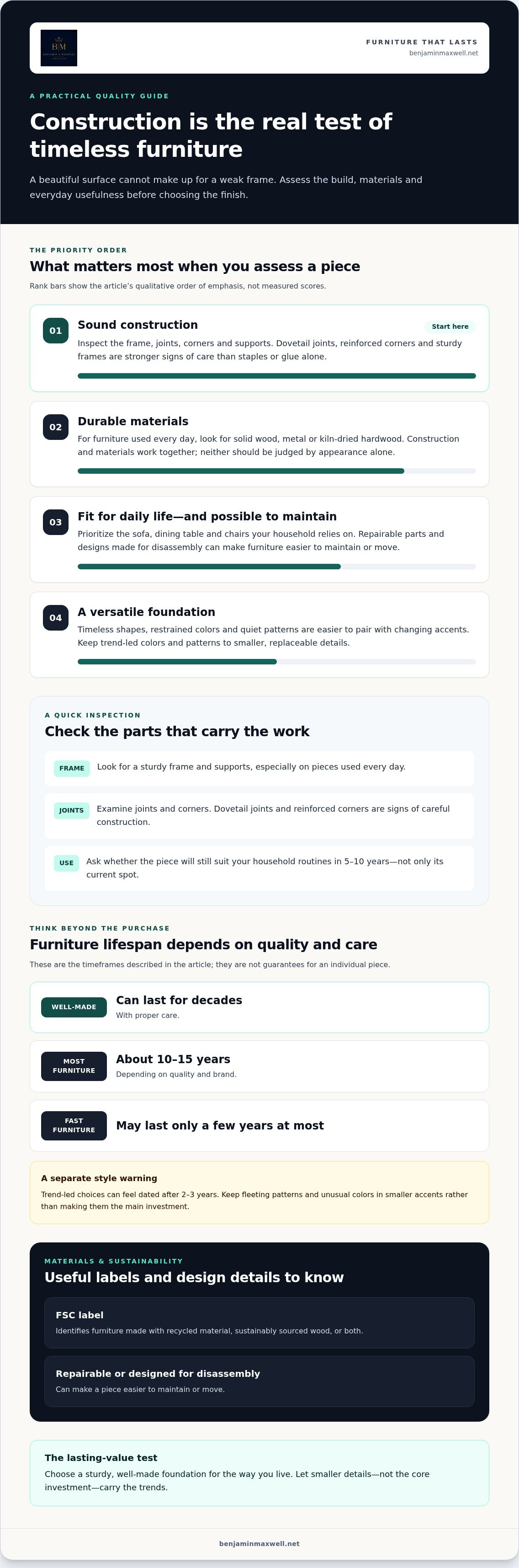
Construction matters as much as material when choosing furniture that won't go out of style. Look for solid frames, well-made joints, and durable materials such as solid wood, metal, or kiln-dried hardwood. A timeless silhouette helps, but sound craftsmanship is what keeps a piece useful and appealing over time.
It’s natural to focus first on the finish or wood grain, details that give furniture its presence. But lasting appeal comes from balancing quality, versatility, and character, not following a single look.
Learn how to assess construction, why mid-tone wood adapts to changing rooms, and how vintage finds bring depth to a home. Personal taste belongs at the center of the decision: classic choices create a strong foundation, while pieces you genuinely love make a room feel like your own.
Key Takeaways
- Judge a piece by the strength of its frame and joints, not its surface alone; restrained colors can also help it sit comfortably in changing rooms.
- Consider mid-tone wood for a balanced finish that works with a range of furnishings and palettes.
- Bring character into a room by pairing vintage or antique accents with newer pieces.
- Choose foundational furniture you genuinely enjoy, then use smaller accessories to refresh the room’s mood.
1. How important is furniture construction compared to materials?
Construction and materials work together: a beautiful surface cannot make up for a weak frame. Inspect joints, corners, and supports before choosing a finish. Dovetail joints, reinforced corners, and sturdy frames are stronger signs of care than staples or glue alone. Solid wood, metal, and kiln-dried hardwood are durable choices for furniture used every day.
Natural materials can gain character with age. Wood develops a lived-in quality, while restrained colors and quiet patterns are easier to pair with changing accents. Choose a timeless shape in a neutral color, then bring in brighter colors through smaller, replaceable details. To see how enduring design choices come together, watch this video:
For long-term use, prioritize the sofa, dining table, and chairs that your household relies on daily. Check whether each piece will still suit your routines in 5–10 years, not only its current place in the room. Well-made furniture can last for decades with proper care, while most furniture lasts about 10–15 years, depending on quality and brand.
How much should you spend on quality furniture that lasts? Set your budget according to how often you’ll use a piece, then prioritize sound construction and repairable parts over decorative extras. A dining table used every day deserves closer attention to its frame and finish than a rarely used accent piece.
Consider sustainability in construction, too. A Forest Stewardship Council (FSC) label identifies furniture made with recycled material, sustainably sourced wood, or both. Furniture designed for disassembly or repair can be easier to move or maintain.
Fast furniture may last only a few years at most, and trend-led choices can feel dated after 2–3 years. Avoid making a fleeting pattern or unusual color the main investment; introduce trends through pillows or other small accents instead. Timeless, durable foundations leave room for personal expression.
2. Mid-tone wood finishes as a versatile choice
Mid-tone brown wood balances pale oak and very dark walnut. It brings warmth without dominating a room, making it a versatile base for classic and contemporary furnishings. For a timeless design, look for brown finishes without strong red, orange, or gray undertones. Pronounced hues can be harder to coordinate when wall colors, rugs, or upholstery change. A mid-tone dining table, for example, can sit comfortably beside cream fabric, muted green, or charcoal accents.
Use the finish as a bridge when mixing materials. Pair a mid-tone wood console with a metal lamp, or set a wooden dining table against upholstered chairs. Repeat the wood tone in a frame or side table to create a composed rhythm. Avoid matching every surface exactly: subtle differences in grain and finish make a space feel collected rather than staged. This approach leaves room for a trendy accent, such as a colored cushion, without tying larger pieces to one moment.
Consider finish emissions alongside appearance, especially for furniture used in a bedroom or living room. Look for CARB2 and TSCA Title VI certifications, which can help ensure furniture does not emit formaldehyde or other volatile organic compounds. These labels are particularly relevant to pieces made with particleboard, plywood, or fiberboard. Certification supports a more informed choice, while the wood tone itself should suit the room’s natural light and surrounding colors.
For adhesives and surface treatments, water-based glues and finishes are a safer, more environmentally friendly alternative to solvent-based products. When comparing furniture, ask what finish it has and consider how it will look beside existing floors and cabinetry. Explore furniture and home furnishings with your palette in mind. A classic mid-tone foundation can make future updates feel deliberate rather than expensive.
3. Using vintage and antique pieces for character
A vintage or antique piece can give a room character that a matching furniture set rarely provides. Vintage-style furniture typically refers to designs or authentic pieces from 20 to 100 years ago, so the category spans many eras and expressions. A Chesterfield sofa, for example, has remained in style since the 17th century. Choose one distinctive piece, such as a carved side table, then let its materials and patina add history without making the room feel like a period display.
Mix eras with intention. Place a vintage wooden chest beside a clean-lined contemporary bed, or pair an antique dining table with modern chairs. Repeating a detail, such as warm wood or brass, helps connect the pieces. In a bedroom, a single vintage dresser can anchor the space, while crisp bedding and a modern lamp keep the arrangement current. This contrast makes older furniture feel at home rather than preserved behind glass.
When considering secondhand furniture, start with its structure and everyday function. Open drawers, examine the underside, and check for instability before deciding whether the piece suits your room. Simple silhouettes are often easiest to refresh: a classic upholstered chair can take new fabric, while a plain dresser can gain character with different hardware. These practical updates preserve the original shape while giving the piece a personal finish.
What furniture styles are easiest to update with new upholstery or hardware? Choose pieces with straightforward frames and accessible details, such as a traditional armchair, a simple sofa, or a drawer chest with removable pulls. Their clean forms take fresh fabric or hardware without competing with ornate features. To bring trends into the room without replacing core furniture, try a patterned cushion, a throw, or a small decorative accent. Keep larger vintage pieces steady, and let accessories change the mood as your taste evolves.
4. Choosing furnishings that reflect personal style
Timeless design doesn’t promise that furniture will stay fashionable forever. Styles change, so a more lasting choice is a room that reflects how you live and what you value. Before buying, name the qualities you want your interior to express, such as calm, formality, or warmth. Then consider a piece’s daily role: a dining table should suit shared meals, while a reading chair should invite regular use. Personal meaning gives furnishings deeper appeal than trends alone.
Try a simple test before committing: imagine the piece in your home through changing routines, not just in a showroom arrangement. Will the chair still suit the room if you move a desk? Can the table serve both weeknight meals and gatherings? Consider whether the furniture will work for your household in 5–10 years. The answer depends on function and personal preference, not on predicting which look will dominate next.
Let one or two expressive choices bring individuality to the room. A sculptural lamp, favorite artwork, or richly colored cushion can reveal your taste without requiring you to replace core furnishings. Simple furniture also works with new pillows and accessories, letting a living room shift from restrained to lively with modest changes. If you love a bold color, try it on a smaller accent before using it across every large surface.
Avoid buying a full interior around a trend that may feel dated after 2–3 years. Instead, keep the foundational pieces aligned with your habits and reserve more experimental choices for details that are easier to change. A classic sofa can sit comfortably beneath contemporary art, just as a clean-lined dining table can complement treasured objects from another century. The contrast feels personal when each choice has meaning.
Make a short list of what matters most, such as comfort, useful storage, or a particular silhouette. Use it to assess each purchase, then explore furniture for your home with those priorities in mind. A home’s character grows from considered choices, not from trying to preserve one look unchanged.
Benjamin & Maxwell: Daum Crystal
Benjamin & Maxwell brings together enduring furnishings and decorative pieces for a home with lasting character. Explore Daum Crystal or Kosta Boda Glassware for a distinctive accent, or consider Cattelan Italia Furniture for a considered furnishing choice. The In Home Visualizer lets you see how specific pieces fit within your living space, helping you weigh scale and placement alongside personal style.
Let the principles in this guide shape what you look for: thoughtful construction, versatile finishes, and pieces that feel meaningful in your home. For a closer look at the furnishings and crystalware, explore the collections.
For questions about your choices, contact Benjamin & Maxwell.
Make Your Next Choice Meaningful
A home takes shape through decisions made over time. Let choosing furniture that won't go out of style begin with a question only you can answer: what do you want this room to feel like in daily life? A quiet retreat, a welcoming gathering place, or a setting for treasured objects each calls for a different expression. Choose with that intention, and the room can evolve without losing its sense of self.
There’s no need to furnish everything at once. Start with the space that matters most, notice what serves you well, and let the next choice grow from there. A considered home is not fixed; it gathers meaning as your life changes. For guidance as you shape your choices, contact Benjamin & Maxwell for furniture advice. Take the next step at your own pace, and create a home that feels unmistakably yours.
Frequently Asked Questions
How important is furniture construction compared to materials?
Both matter, but construction determines how well materials perform through everyday use. A hardwood table with unstable joints may serve less reliably than a well-assembled alternative. Inspect how the legs connect to the frame, whether drawers move smoothly, and whether the piece feels steady in ordinary use. Choosing furniture that won't go out of style means weighing lasting function alongside the material’s appearance.
Is it Possible to Decorate Your Home in a Truly Timeless Fashion?
A home can have lasting appeal without staying unchanged forever. Treat timelessness as a flexible foundation: keep the main furnishings suited to your daily routines, then let art, lighting, and smaller decorative objects reflect new interests. For example, you can introduce new artwork or a family heirloom without replacing the room’s central furnishings.
What furniture styles are considered timeless and classic?
Simple silhouettes and clean lines tend to adapt across interiors because they don’t rely on elaborate ornament or a single fashion moment. Scandinavian design is known for simplicity and function, while transitional furniture bridges traditional elegance and modern minimalism. Instead of choosing by style label alone, consider whether a piece’s shape, comfort, and purpose suit your home.
Which furniture materials and finishes are most durable and age well?
Solid wood, metal, and kiln-dried hardwood are commonly used for durable furniture, while sturdy finishes help withstand regular use. In a busy family room, consider upholstery designed to resist stains and surfaces that are easy to care for. Protect wood with coasters, avoid prolonged direct sunlight, and follow the maker’s care instructions to preserve its appearance.
How to choose neutral furniture colors without making a room feel bland?
Add dimension to a neutral palette with contrasting textures and a few deliberate accents. For example, combine a warm ivory sofa with a woven rug, a darker wood table, and artwork in a deeper color. Varying materials keeps the room visually engaging, while repeating an accent shade in cushions or ceramics helps the elements feel connected.
What furniture proportions and shapes stay in style over time?
Balanced proportions and uncomplicated shapes are easier to place as rooms and needs change. Before choosing a sofa or table, measure its intended footprint and compare it with nearby doors, windows, and walkways. Leave room for movement and other furnishings. Clean-lined forms also provide a versatile backdrop for changing art, textiles, and decorative objects.

Article by
Spencer Kay
Spencer is the founder and CEO of Benjamin & Maxwell and has created the most advanced technology-based website in the furniture industry. He has extensive experience in both technology and business operations having started a number of technology companies. Spencer holds a BA Degree in Economics and an MBA in International Business
Disclaimer
Benjamin & Maxwell does not intend for any of our products to be used for any specific purpose.


