

Confidence in high-end design begins with a clear sense of what a room should do and how it should feel. To understand how to feel confident in high-end design choices, define the room’s purpose, consider who uses it, and let those priorities guide your decisions. A considered choice is not necessarily the most striking one; it is the one that suits the room and supports the way you live.
It’s natural to hesitate when a piece feels significant or the possibilities seem endless. Instead of searching for a perfect choice, narrow the options, notice what genuinely appeals to you, and give yourself room to assess the decision without pressure. This guide offers practical ways to trust your judgment, clarify your personal style, choose with the room’s needs in mind, and handle second thoughts.
Key Takeaways
- Build trust in your judgment by learning gradually, recording the reasons behind decisions, and treating missteps as useful feedback.
- Reduce decision fatigue by removing definite noes and noticing which details consistently reflect your personal taste.
- When second thoughts arise, step back and assess how well the choice fits rather than waiting for an impossible perfect option.
- Define a room’s purpose, users, and desired atmosphere before selecting furnishings or decor.
1. Building confidence through knowledge and practice
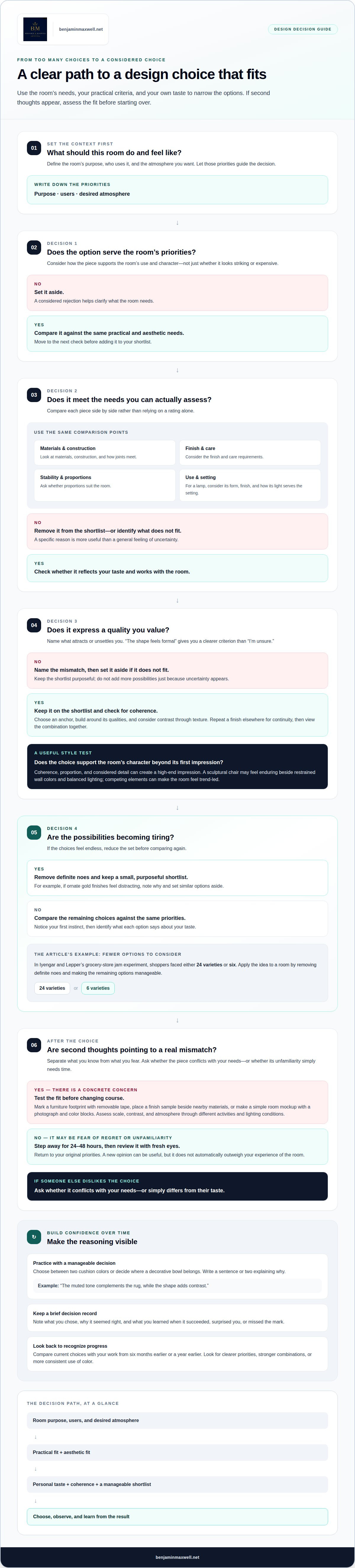
Confidence grows through deliberate study, not by memorizing design rules. Focus on one or two elements at a time, such as color, composition, layout, or finish. Then observe how each shapes a room, using a concrete example like a dark wood console against pale walls. Consider balance, contrast, and visual weight instead of asking whether the arrangement simply looks expensive.
To compare furniture, lighting, and home décor, look at materials, construction, finish, stability, and care requirements side by side. For a chair, examine how its joints meet and whether its proportions suit the room. For a lamp, consider its finish, form, and how its light serves the setting. Assess each piece against the same practical and aesthetic needs.
Use retailer product pages and independent design publications to learn about pieces. Prioritize reviews that identify the exact item, describe its use, and explain both strengths and drawbacks. To compare high-end brands, place product descriptions and reviews side by side, then assess craftsmanship, materials, design character, and fit for your room. A rating alone offers little context.
Practice with a manageable decision before making a larger change. You might choose between two cushion colors or decide where a decorative bowl belongs. Write down your reason in a sentence or two: “The muted tone complements the rug, while the shape adds contrast.” This brief note makes your thinking visible and gives you a basis for reviewing the result.
Keep a brief record when a decision succeeds, surprises you, or misses the mark. Note what you chose, why it seemed right, and what you learned from living with it. Later, compare your current choices with your work from six months earlier or a year earlier. Look for clearer priorities, stronger combinations, or more consistent use of color. Progress becomes easier to recognize when you can see the reasoning behind each choice, not just the finished room.
2. Eliminating options and identifying personal style
Too many alternatives can make decisions feel like a test of endurance. In Iyengar and Lepper’s grocery-store jam experiment, shoppers faced either 24 varieties or six. Apply that idea to a room: begin with a broad set of inspirations, then remove definite noes. If ornate gold finishes feel distracting, note why and set similar options aside. Each considered rejection makes your preferences clearer and keeps the remaining choices manageable.
A high-end impression comes from coherence, proportion, and considered detail, not simply a fashionable silhouette or expensive appearance. A sculptural chair, for example, can feel enduring beside restrained wall colors and balanced lighting. The same chair may seem trend-led if every element competes for attention. Ask whether a choice supports the room’s character and will appeal beyond its first impression.
To coordinate colors, materials, and finishes, choose one element as an anchor, then build around its qualities. If a defining piece has a cool stone surface, consider tones that complement its undertone. Introduce contrast through texture, such as smooth glass beside woven fabric, then repeat a finish elsewhere for continuity. View the combination together, since surrounding colors can change how each sample appears.
Keep your shortlist purposeful. Retain options that serve the room and express a quality you value, such as calm, warmth, or formality. Compare them against the same priorities rather than adding possibilities whenever uncertainty appears. Learning how to feel confident in high-end design choices means noticing your first instinct and identifying what attracts or unsettles you. “The shape feels formal” is more useful than “I’m unsure.” Turn those observations into criteria so your final selection reflects personal taste rather than a passing trend.
When hesitation remains, ask whether a choice feels unlike you or whether the volume of possibilities has become tiring; either can make a decision difficult. A designer can help by presenting a small, carefully selected group rather than adding more alternatives. Within that group, notice your first instinct, then consider what each option says about your taste. Naming a clear reason for setting one aside can make the remaining choice feel more personal and manageable.
Post-choice regret and missed opportunities
Second thoughts after a major purchase can reflect fear of regret, not a flaw in the piece. Before changing course, revisit why you chose it: perhaps a sculptural table suited the room’s proportions and daily use. Separate what you know from what you fear. Does the table obstruct movement, or does its unfamiliar shape simply need time to feel at home? That distinction offers a more useful next step than immediately searching for a replacement.
To test a bold choice before committing, make its presence visible in the room. Mark a furniture footprint on the floor with removable tape, or place a finish sample beside nearby materials. For a strong color, create a simple room mockup with a photograph and color blocks. Live with the arrangement through different activities and lighting conditions. These trials help you assess scale, contrast, and atmosphere without relying on imagination alone.
After choosing, allow 24-48 hours away from the project before reviewing it with fresh eyes. Then return to your original priorities and assess the choice against them. A new opinion can be useful, but it doesn’t automatically outweigh your own experience of the room. If a friend dislikes a bold accent, ask whether it conflicts with your needs or simply differs from their taste. Keep the decision tied to the space you’re creating.
Balance timeless design with current trends by giving each a distinct role. Let lasting elements, such as a well-proportioned sofa or a restrained wood finish, establish the room’s foundation. Introduce a trend through a smaller accent, such as a patterned cushion or decorative object, that can be changed more easily. This leaves room for personal expression without requiring the whole room to follow a passing look. Choose the best-fitting option rather than waiting for one that satisfies every desire and removes all uncertainty.
4. Defining the room's purpose and desired feel
Before selecting a sofa, table, or decorative object, define the room’s purpose. List its users, main activities, practical needs, and desired feeling. A living room for quiet reading calls for a different arrangement than one where family and guests gather. Write down words such as “calm,” “welcoming,” or “formal,” then use them to guide choices. This brief becomes a useful test: does each piece support the room’s purpose and atmosphere?
A luxury space can feel cheap or overdone when competing finishes, decorative statements, or trend-led details demand too much attention. Pairing ornate lighting, high-gloss surfaces, and bold patterns throughout a room, for example, can leave no visual pause. Choose a focal point, then give it space with supporting pieces. Restraint lets craftsmanship, shape, and material stand out.
Lighting, scale, and proportion shape whether a room feels composed. A pendant that overwhelms a modest dining table can disrupt the balance, while a small lamp may disappear beside a substantial sofa. Layer ambient light with focused task lighting where people read or work. Consider how each source changes the room’s mood after daylight fades, and arrange furnishings so the space feels comfortable rather than crowded.
Turn your purpose list into a simple layout. Mark the main paths people use, then arrange seating and tables around the room’s central activity. In a reading room, position a chair near useful light and leave space for a side table. In a gathering room, orient seats toward one another rather than only toward a screen. These choices connect function to visual character and make the overall feeling intentional.
Once the room’s needs are clear, explore luxury furniture and home décor with those priorities in mind. Let purpose, proportion, and atmosphere guide what belongs.
Writing down ideas, wishes, and priorities can clarify your thoughts before you make a choice. Luxury design decisions can also reflect needs for safety, identity, and connection, alongside the room’s practical demands.
Benjamin & Maxwell
Benjamin & Maxwell brings considered furnishings and decorative pieces together for readers shaping a room around lasting priorities. Explore Cattelan Italia Furniture, Daum Crystal, or Kosta Boda Glassware when a space calls for a distinctive focal point or a carefully chosen finishing detail. The In Home Visualizer lets you see how specific pieces fit within your living space, helping you consider scale and placement alongside your room’s purpose. This can make it easier to move from a considered idea to a choice that feels at home in your surroundings. For further guidance on selections, contact Benjamin & Maxwell.
Let Your Next Choice Take Shape
A room becomes more personal with each decision made in service of the life you want to live there. As you consider how to feel confident in high-end design choices, focus on the feeling you want to create and choose pieces that support it. You don’t need to settle every detail at once. A considered next step, such as exploring a focal piece or visualizing how it might sit in your space, can bring your intentions into clearer view.
Benjamin & Maxwell offers Daum Crystal and Cattelan Italia furniture, along with an In Home Visualizer that lets you view selected pieces in your space. Let the room’s purpose guide what you explore, whether you’re refining one detail or shaping a broader vision. The aim is not perfection, but a home that feels unmistakably yours.
Contact Benjamin & Maxwell today to continue considering the pieces that suit your home. Trust the thoughtful choices that make your space feel like your own.
Make Confident Design Choices with Benjamin & Maxwell
Benjamin & Maxwell offers luxury furniture and home decor, including Cattelan Italia, Bonaldo, Per/Use, and Italia lounge furniture, alongside Daum Crystal and Kosta Boda glassware and decor. When you’re ready to compare pieces and materials for your home, explore its sofas, chairs, dining tables, consoles, wall units, and outdoor furniture.
For finishing touches, Benjamin & Maxwell also offers glass bowls, vases, statues, figurines, gifts, and Schuller home décor. Use the In Home Visualizer to see how selected pieces might look in your space.
Frequently Asked Questions
How can I identify my personal style before investing in high-end design?
Study the pieces you already enjoy living with, then look for recurring qualities. Photograph a favorite chair, artwork, and table setting; note shared features such as curved silhouettes, warm wood, or sculptural shapes. Write a short style statement based on those observations, such as “quiet forms with tactile materials.” Use it to assess new possibilities and notice whether each choice feels connected to your home rather than borrowed from a display.

Article by
Spencer Kay
Spencer is the founder and CEO of Benjamin & Maxwell and has created the most advanced technology-based website in the furniture industry. He has extensive experience in both technology and business operations having started a number of technology companies. Spencer holds a BA Degree in Economics and an MBA in International Business
Disclaimer
Benjamin & Maxwell does not intend for any of our products to be used for any specific purpose.


